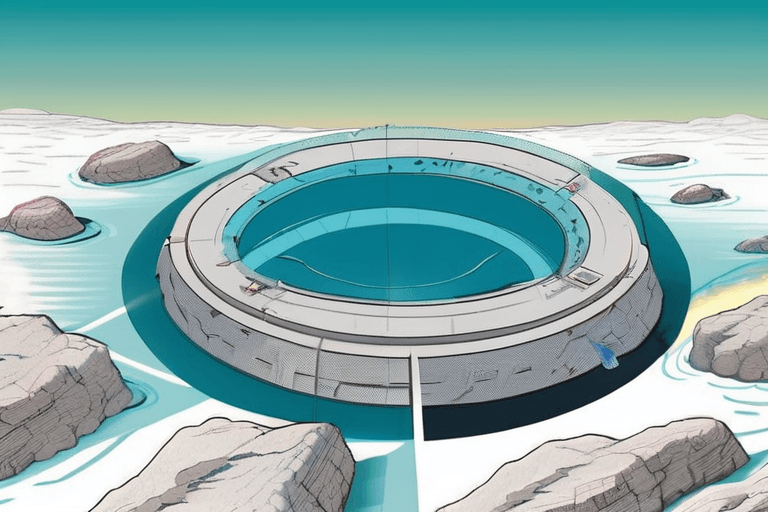
Scientists have discovered a massive hydrothermal vent field near the Greek island of Milos, revealing a hidden world of geological activity beneath the seafloor. The discovery, detailed in a new study published in Scientific Reports, occurred during the METEOR expedition M192, led by researchers from MARUM – Center for Marine Environmental Sciences, University of Bremen.
The extensive underwater vent system lies along active fault lines, acting as pathways for hot, gas-rich fluids escaping from Earth's interior. Researchers were surprised by the scale and visual diversity of the vent clusters, observing boiling fluids reaching temperatures of 180 degrees Celsius and vibrant microbial mats thriving in the extreme environment. "Milos now stands out as one of the Mediterranean's most important sites for studying Earth's dynamic interior," the MARUM research team stated.
Hydrothermal vents are geological features where heated water is discharged from the Earth's crust into the ocean. These vents often occur near volcanically active places, areas where tectonic plates are moving apart at spreading centers, and hotspots. The fluids released from these vents are rich in dissolved chemicals, providing energy and nutrients for unique ecosystems that exist independently of sunlight.
The discovery has significant implications for understanding the interplay between geological processes, ocean chemistry, and the evolution of life. The Milos vent field offers a unique opportunity to study how microbial communities adapt to extreme conditions and how these processes influence the broader marine environment.
The research team plans to continue studying the Milos hydrothermal field, focusing on the chemical composition of the vent fluids, the diversity of microbial life, and the potential for mineral resource formation. The findings could also provide insights into the search for life on other planets, where similar hydrothermal systems may exist.

















Discussion
Join the conversation
Be the first to comment