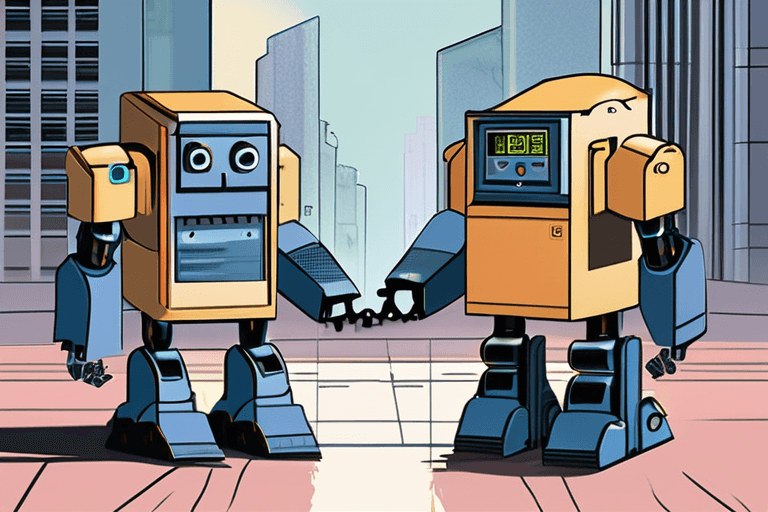
Robots are being utilized in post-cataclysm environments to clear rubble and rebuild infrastructure, showcasing advancements in artificial intelligence and robotics engineering. These robots, designed for resilience and strength, are equipped with solar panels for energy and sophisticated circulatory systems that filter and remix elements from the air to lubricate their joints, according to engineering reports. One such robot, identified as Twobit, was observed working within the remnants of a building with a deteriorated marble facade.
The use of AI-powered robots in disaster recovery highlights the potential of these technologies to address challenges posed by environmental changes and infrastructure damage. Engineers designed the robots to withstand tremors and lift heavy debris, making them suitable for navigating hazardous environments. The circulatory systems, described as "the peak of intelligent design," represent a significant advancement in autonomous maintenance for robotic systems.
The concept of robots maintaining themselves through environmental resource utilization has implications for long-term deployments in remote or hostile locations. Dr. Anya Sharma, a robotics ethicist at the Institute for Technological Advancement, noted that "the ability of these robots to adapt and sustain themselves raises questions about their autonomy and the potential for unforeseen consequences." She added, "While these advancements are promising, it's crucial to consider the ethical implications of increasingly independent AI systems."
The development of these robots reflects a broader trend in AI research toward creating more adaptable and self-sufficient machines. Recent developments include AI algorithms that can learn from experience and improve their performance over time. This capability is particularly relevant in dynamic environments where robots must respond to unexpected challenges.
The current status of the project involves ongoing monitoring of the robots' performance and further refinement of their AI algorithms. Engineers are also working on improving the robots' ability to identify and sort different types of debris, which would further enhance their efficiency in clearing rubble. The next developments are expected to focus on integrating these robots with other AI systems to create a more comprehensive disaster response network.



















Discussion
Join the conversation
Be the first to comment