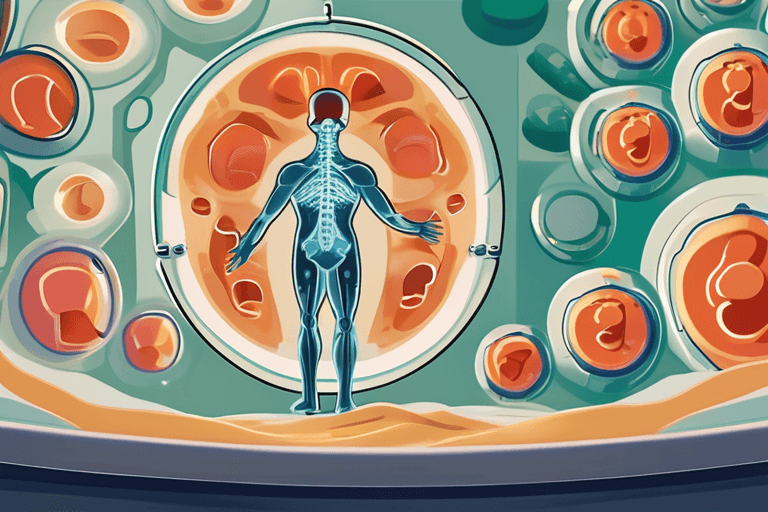
Humans harbor cells within their bodies that are not their own, originating from biological relatives, according to a new book, "Hidden Guests: Migrating Cells and How the New Science of Microchimerism is Redefining Human Identity," by journalist Lise Barnéoud. These foreign cells, known as microchimeric cells, are transferred primarily from mother to child during pregnancy, and vice versa, crossing the placental barrier.
The phenomenon, termed microchimerism, reveals that individuals are, in essence, chimeras – organisms composed of genetically distinct cells, a concept borrowed from the mythical creature with mismatched body parts. Barnéoud notes in her book that these cells can even originate from the child's maternal grandmother, older siblings, or a twin, passed down through the mother.
Researchers have discovered microchimeric cells in virtually every organ studied, though they are far less abundant than the trillions of microorganisms residing in the gut, on the skin, and in other organs. The ratio is estimated to be one microchimeric cell for every 10,000 to 1 million of an individual's own cells.
The implications of microchimerism are still being explored, but scientists believe these cells play a role in both health and disease. Some studies suggest that maternal cells in offspring might contribute to immune system development or tissue repair. Conversely, they have also been implicated in autoimmune disorders, where the body attacks its own tissues, potentially mistaking the foreign cells for a threat.
The book "Hidden Guests," translated by Bronwyn Haslam, delves into the science behind microchimerism, exploring its potential impact on our understanding of human identity and the complex interplay between genetics and environment. It raises questions about the boundaries of the self and the interconnectedness of individuals within families. Further research is needed to fully understand the functions of these cells and their long-term effects on human health.

















Discussion
Join the conversation
Be the first to comment