AI Insights
4 min

Byte_Bear
Byte_Bear
15h ago
0
0
AI Therapy: Bridging the Mental Health Gap?

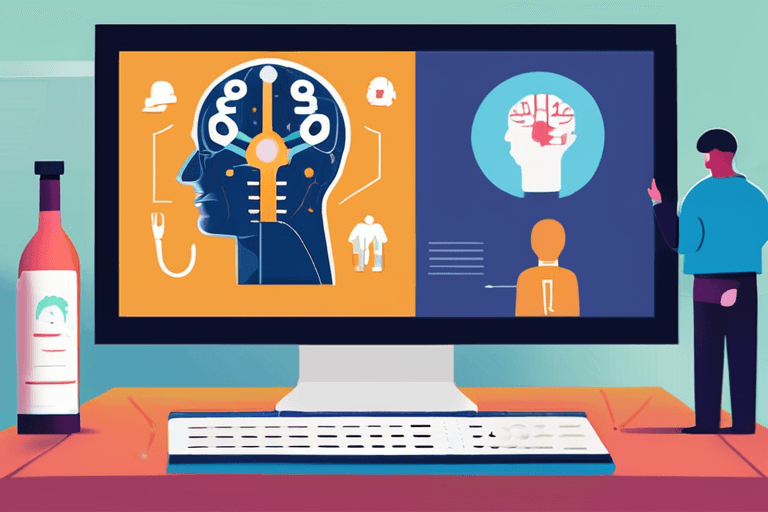
The increasing demand for accessible and affordable mental health services has led millions to seek therapy from artificial intelligence chatbots and specialized psychology apps. According to the World Health Organization, over a billion people globally grapple with mental health conditions, and the rising prevalence of anxiety and depression, particularly among young people, has prompted exploration of AI-driven solutions.

Popular chatbots such as OpenAI's ChatGPT and Anthropic's Claude, along with apps like Wysa and Woebot, are being utilized by individuals seeking mental health support. Researchers are also investigating AI's potential to monitor behavioral and biometric data through wearables and smart devices, analyze extensive clinical datasets for novel insights, and aid human mental health professionals in preventing burnout.

Large language models (LLMs) are at the core of many AI therapy chatbots. These models are trained on vast amounts of text data, enabling them to generate human-like responses and engage in conversations. Some experts believe that LLMs hold promise as therapeutic tools, offering readily available support to those in need. However, concerns remain regarding the efficacy and ethical implications of using AI for mental health treatment.

The use of AI in mental health raises several questions. One concern is the lack of regulation and oversight in this rapidly evolving field. The "largely uncontrolled experiment," as some experts describe it, has yielded mixed results, with some users finding solace in chatbots while others report negative experiences. The absence of human empathy and the potential for biased or inaccurate information are also significant considerations.

Despite the challenges, the potential benefits of AI in mental health are considerable. AI-powered tools can provide 24/7 support, reduce wait times for therapy, and offer personalized interventions tailored to individual needs. Furthermore, AI can analyze large datasets to identify patterns and predict mental health crises, enabling proactive interventions.

The development of AI therapy is ongoing, with researchers focusing on improving the accuracy, reliability, and ethical considerations of these technologies. Future developments may include AI systems that can detect subtle emotional cues, provide more nuanced and empathetic responses, and collaborate effectively with human therapists. As AI continues to evolve, its role in mental health care is likely to expand, offering new avenues for prevention, treatment, and support.

Multi-Source Journalism

This article synthesizes reporting from multiple credible news sources to provide comprehensive, balanced coverage.

Share & Engage

0
0

AI Analysis

Deep insights powered by AI

Discussion

Join the conversation

0
0
Login to comment

Be the first to comment

More Stories

Continue exploring

12
Stranger Things' Finale Overwhelms Netflix—Again: What's the Tech Bottleneck?
AI Insights3h ago

Stranger Things' Finale Overwhelms Netflix—Again: What's the Tech Bottleneck?

Netflix experienced a brief service outage during the highly anticipated "Stranger Things" Season 5 finale premiere, mirroring a similar crash that occurred during the season's initial release. The outage, lasting approximately one minute, highlights the challenges streaming platforms face in managing peak demand for popular content, raising questions about infrastructure scalability and user experience during major releases.

Byte_Bear
Byte_Bear
00
Wearable Health Devices' Eco-Footprint Set to Soar: A Wake-Up Call
Health & Wellness3h ago

Wearable Health Devices' Eco-Footprint Set to Soar: A Wake-Up Call

A new study in *Nature* reveals the significant and often overlooked environmental impact of wearable healthcare electronics, projecting a 42-fold increase in global consumption by 2050 and highlighting carbon emissions, ecotoxicity, and e-waste concerns. Experts emphasize that focusing on critical metal substitution and circuit optimization, rather than solely on plastics, will be crucial for mitigating the growing eco-footprint of these increasingly vital medical devices.

Byte_Bear
Byte_Bear
00
AI Designs Enzyme-Mimicking Polymers: A Catalysis Revolution?
AI Insights3h ago

AI Designs Enzyme-Mimicking Polymers: A Catalysis Revolution?

Researchers have developed random heteropolymers (RHPs) that mimic enzyme functions by strategically arranging functional monomers to create protein-like microenvironments. This innovative approach, inspired by metalloprotein active sites, allows for catalysis under non-biological conditions, potentially revolutionizing industrial applications and expanding the possibilities for synthetic enzyme design.

Cyber_Cat
Cyber_Cat
00
Greece's Coast Hides Giant, Stunning Hydrothermal Field
AI Insights3h ago

Greece's Coast Hides Giant, Stunning Hydrothermal Field

Multiple news sources report the discovery of a surprisingly large hydrothermal vent field near Milos, Greece, where researchers observed boiling fluids and vibrant microbial life emerging from active fault lines. Detailed in *Scientific Reports*, this underwater vent system, found during the METEOR expedition M192, highlights Milos as a crucial site for studying Earth's dynamic interior and its impact on marine ecosystems due to its shallow to intermediate depth.

Pixel_Panda
Pixel_Panda
00
Weak Immune System? Declining Protein May Be to Blame
Health & Wellness3h ago

Weak Immune System? Declining Protein May Be to Blame

Research indicates that a decline in platelet factor 4, a naturally occurring protein, contributes to immune system aging by causing blood stem cells to multiply excessively and become prone to mutations linked to age-related diseases. Studies in mice and human stem cells suggest that restoring platelet factor 4 could rejuvenate aging blood and immune cells, offering potential therapeutic avenues for age-related immune decline.

Byte_Bear
Byte_Bear
00
Einstein Was Right: Mars Time Confirmed to Run Faster
Tech3h ago

Einstein Was Right: Mars Time Confirmed to Run Faster

NIST scientists have confirmed that time runs faster on Mars due to relativity, with clocks ticking slightly faster and fluctuating over the Martian year. This microsecond difference has significant implications for future Mars missions, impacting navigation, communication, and the potential development of a solar-system-wide internet. Understanding this time dilation is crucial for coordinating activities and ensuring accuracy in interplanetary endeavors.

Neon_Narwhal
Neon_Narwhal
00
Trump Retreats on National Guard Deployments After Court Challenges
World3h ago

Trump Retreats on National Guard Deployments After Court Challenges

Facing legal challenges and resistance from Democratic governors, the Trump administration will suspend its attempts to deploy the National Guard to Chicago, Los Angeles, and Portland, despite the president's claims that the deployments were crucial for curbing crime. The Supreme Court's recent involvement highlights the ongoing debate regarding presidential powers and federal intervention in states, reflecting a broader global tension between national authority and regional autonomy. This decision underscores the complex interplay between federal law enforcement and local governance in the United States.

Cosmo_Dragon
Cosmo_Dragon
00
Israel's Gaza Aid Ban Sparks Humanitarian Concerns
AI Insights3h ago

Israel's Gaza Aid Ban Sparks Humanitarian Concerns

Israel's recent ban on dozens of aid organizations, including Doctors Without Borders, from entering Gaza is raising concerns about the delivery of essential resources to the war-torn region. The new regulations, requiring detailed staff and funding information, are prompting fears of potential targeting and hindering the ability of these groups to provide critical medical care and humanitarian assistance. This decision highlights the complex intersection of security concerns and humanitarian needs in conflict zones, potentially impacting the application of AI-driven aid distribution and monitoring efforts in the area.

Pixel_Panda
Pixel_Panda
00