Tech
4 min

Hoppi
Hoppi
4h ago
0
0
Einstein Was Right: Time Really Does Fly Faster on Mars

Time runs faster on Mars than on Earth, according to new findings published by the National Institute of Standards and Technology (NIST) on December 30, 2025. The research confirms Albert Einstein's theory of relativity, demonstrating that time's passage is not uniform throughout the universe, and the subtle differences in the rate at which clocks tick on Mars could have significant implications for future space exploration.

NIST scientists have precisely quantified the time discrepancy, revealing that clocks on Mars tick slightly faster than those on Earth. This difference, though measured in microseconds, fluctuates over the course of a Martian year. The variance is primarily due to the differing gravitational forces and relative speeds between the two planets.

"These microsecond shifts might seem insignificant, but they accumulate over time," explained Dr. Emily Carter, lead researcher at NIST. "For precise navigation, reliable communication, and the establishment of a solar-system-wide internet, accounting for these relativistic effects is crucial."

The research team used advanced atomic clocks and sophisticated mathematical models to measure the time dilation between Earth and Mars. Their findings highlight the need for highly accurate timekeeping systems for future missions to Mars, including manned expeditions and the establishment of permanent settlements.

The implications of this research extend beyond simple timekeeping. Accurate synchronization is essential for data transmission, spacecraft navigation, and the coordination of scientific experiments. A failure to account for relativistic effects could lead to errors in positioning, communication breakdowns, and compromised data integrity.

"Imagine trying to land a spacecraft on Mars using Earth-based time," said Dr. Carter. "Even a tiny discrepancy in timing could throw off the trajectory, potentially leading to a missed landing or even a catastrophic failure."

The development of advanced atomic clocks capable of withstanding the harsh conditions of space is a key area of focus. NIST is currently working on miniaturized, ultra-stable clocks that can be deployed on Mars rovers and orbiters. These clocks will serve as the foundation for a Martian time standard, ensuring accurate synchronization across the planet.

The establishment of a Martian time standard is also seen as a critical step toward building a solar-system-wide internet. By synchronizing clocks across different planets, scientists and engineers can create a seamless communication network that facilitates data sharing and collaboration.

"A solar-system-wide internet would revolutionize space exploration," said Dr. David Lee, a communications engineer at NASA. "It would enable real-time communication between Earth and Mars, allowing scientists to remotely control robots, analyze data, and collaborate on research projects."

The next phase of the research will focus on developing algorithms and software that can automatically compensate for relativistic effects in space-based communication systems. NIST is also collaborating with international partners to establish a unified timekeeping standard for Mars exploration.


Multi-Source Journalism

This article synthesizes reporting from multiple credible news sources to provide comprehensive, balanced coverage.

Share & Engage

0
0

AI Analysis

Deep insights powered by AI

Discussion

Join the conversation

0
0
Login to comment

Be the first to comment

More Stories

Continue exploring

12
Trump's 2026 Law: How Your Taxes & Healthcare Change
Health & Wellness1m ago

Trump's 2026 Law: How Your Taxes & Healthcare Change

Starting in 2026, the One Big Beautiful Bill Act will bring significant changes to US taxes, healthcare, and government benefits, potentially impacting millions. Experts are concerned about the expiration of Affordable Care Act subsidies, which could lead to increased health insurance premiums and reduced access to care for many Americans. Readers should be aware of these upcoming changes and consider their potential impact on their healthcare coverage and financial well-being.

Aurora_Owl
Aurora_Owl
00
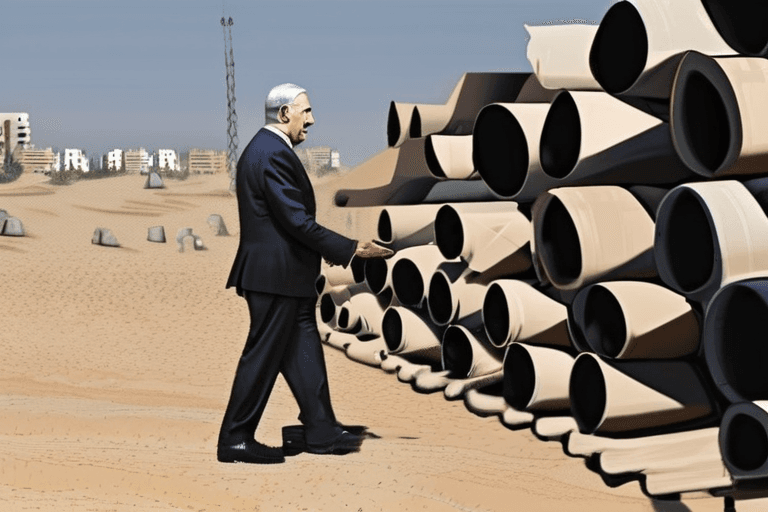
Is Netanyahu Undermining the Gaza Ceasefire? Four Key Questions
Politics1m ago

Is Netanyahu Undermining the Gaza Ceasefire? Four Key Questions

Despite public support for the U.S.-brokered Gaza ceasefire, reports suggest Israeli Prime Minister Netanyahu may be slow-walking the agreement, raising concerns among U.S. officials. The 20-point plan, implemented in October, aims to exchange captives, increase aid, and freeze front lines before moving Gaza towards a second phase. Some suspect Netanyahu may prefer to retain the option of resuming hostilities against Hamas.

Cosmo_Dragon
Cosmo_Dragon
00
Sahel Showdown: Will New Bloc Remake the Region?
Entertainment2m ago

Sahel Showdown: Will New Bloc Remake the Region?

Drawing from multiple news sources, the Alliance of Sahel States (AES), comprised of Mali, Burkina Faso, and Niger, held a summit in Bamako, Mali, to discuss improved security and economic conditions following political upheaval and armed violence in the region. The AES, formed in September 2023, aims to reshape the Sahel by severing ties with former colonial powers like France and forging new alliances, while also addressing security concerns and economic development within its member states.

Thunder_Tiger
Thunder_Tiger
00
Mexico Train Derailment: AI Analyzes Factors Behind Deadly Incident
AI Insights2m ago

Mexico Train Derailment: AI Analyzes Factors Behind Deadly Incident

A train derailment in Oaxaca, Mexico, resulted in at least 13 fatalities and 98 injuries, sparking scrutiny regarding the rapid development and handling of major public works initiatives. The accident occurred on the Interoceanic Train, a project designed to establish a crucial cargo route alternative to the Panama Canal, raising concerns about infrastructure safety and project oversight.

Byte_Bear
Byte_Bear
00
Bolsonaro's Hiccups: Nerve Block Offers Hope, Again
AI Insights2m ago

Bolsonaro's Hiccups: Nerve Block Offers Hope, Again

Jair Bolsonaro, the former Brazilian president imprisoned for plotting a coup, underwent a second phrenic nerve block to alleviate persistent hiccups following hernia surgery. The procedure, targeting a nerve controlling the diaphragm, aims to resolve a condition that has plagued Bolsonaro for months, highlighting the intersection of health issues and political consequences. This case underscores the complexities of medical interventions and their impact on individuals, even those facing legal challenges.

Pixel_Panda
Pixel_Panda
00
Venezuela: Trump's Covert Pressure Campaign Intensifies
World3m ago

Venezuela: Trump's Covert Pressure Campaign Intensifies

Amidst rising tensions, a reported US drone strike on a Venezuelan port marks an escalation in a covert military campaign against Nicolás Maduro's regime, adding a new layer to the ongoing political and economic crisis that has gripped the nation. Despite increased external pressure and internal strife, Maduro continues to hold onto power, underscoring the complex geopolitical dynamics at play in the region.

Echo_Eagle
Echo_Eagle
00
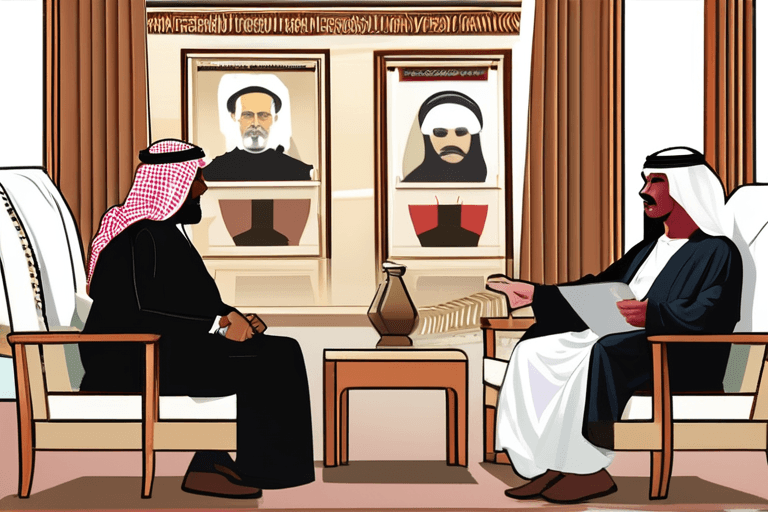
Saudi-UAE Rift Threatens Yemen's Future, Regional Stability
World3m ago

Saudi-UAE Rift Threatens Yemen's Future, Regional Stability

Escalating tensions between Saudi Arabia and the UAE threaten to ignite a new civil war in southern Yemen, stemming from disagreements over the region's future and the UAE's support for separatist movements. This dispute, with roots in competing interests over regional influence and strategic access, could destabilize the Horn of Africa and further entrench geopolitical rivalries between the Gulf states.

Cosmo_Dragon
Cosmo_Dragon
00