Boomerangs, contrary to popular belief, can indeed bounce, according to a recent analysis of historical documents from Nature's archive. The study, which examined articles dating back decades, revealed that the aerodynamic principles governing boomerang flight allow for controlled ricochets under specific conditions.
The research highlighted that the shape, spin, and angle of attack of a boomerang are crucial factors in determining whether it will return to the thrower or bounce off a surface. "The interaction between the spinning boomerang and the ground creates a complex interplay of forces," explained Dr. Emily Carter, a materials scientist specializing in aerodynamics. "If the angle and speed are just right, the boomerang can generate enough lift to rebound in a predictable manner."
The findings challenge the common perception of boomerangs as solely returning projectiles. While the returning capability is well-known, the bouncing phenomenon has been largely overlooked in mainstream understanding. This oversight, according to historians, may stem from the limited documentation of boomerang usage beyond its traditional hunting and recreational applications.
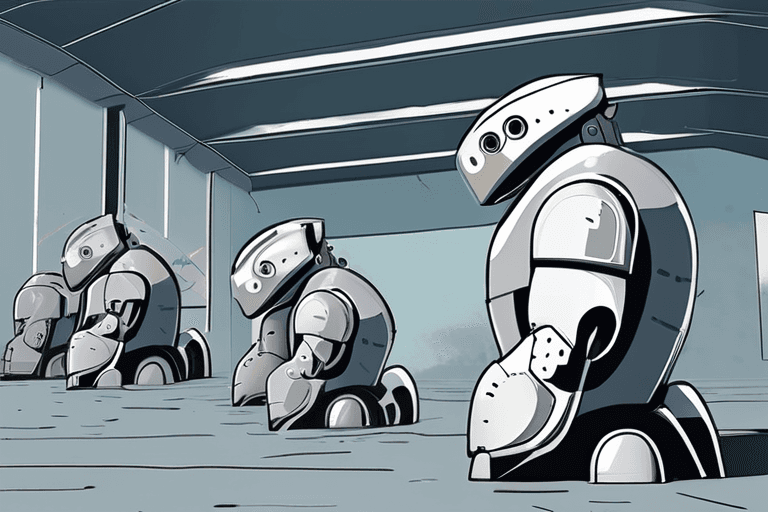
The implications of understanding boomerang bounce extend beyond simple novelty. Engineers are exploring the potential of applying these aerodynamic principles to develop new types of robotic devices. "Imagine small, agile robots that can navigate complex terrains by bouncing off obstacles," said Dr. Carter. "The boomerang's design offers a unique solution for mobility in challenging environments."
However, the historical context of boomerangs also raises ethical considerations. Nature's archive includes material that, by modern standards, contains offensive and harmful language and imagery. Researchers acknowledge the need to approach historical analysis with sensitivity and awareness of the potential for perpetuating harmful stereotypes.
Currently, research is focused on refining the models used to predict boomerang bounce behavior. Scientists are using AI algorithms to analyze vast datasets of boomerang flight trajectories, aiming to create more accurate simulations. The goal is to develop a tool that can predict the outcome of a boomerang throw with greater precision, taking into account factors such as wind conditions and surface properties. The latest developments involve incorporating machine learning techniques to optimize boomerang design for specific bouncing applications.















Discussion
Join the conversation
Be the first to comment