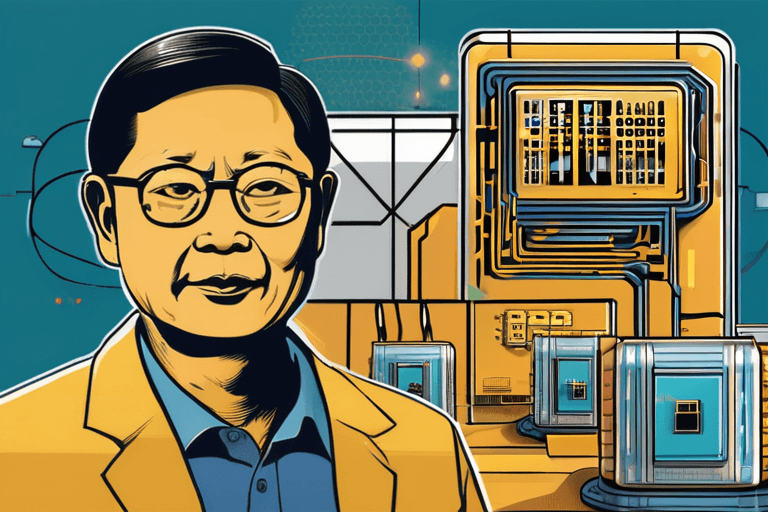
In the sprawling industrial landscape outside Wuxi, China, a refinery hums with quiet intensity. This is no ordinary factory; it's the world's only producer of ultrapure dysprosium, a rare-earth metal vital for the creation of artificial intelligence chips. The story of how China came to hold such a pivotal position is a six-decade saga of strategic planning, technological innovation, and unwavering national ambition.
The roots of China's rare earth dominance stretch back to April 1964, to an iron ore mine near Baotou, a city nestled 50 miles from the Mongolian border. Geologists stumbled upon a treasure trove: the world's largest deposit of rare earths. These 17 elements, with names like neodymium, praseodymium, and dysprosium, possess unique magnetic and conductive properties, making them indispensable for everything from smartphones and electric vehicles to wind turbines and, crucially, advanced AI systems.
Deng Xiaoping, then a rising star in the Chinese Communist Party, recognized the strategic importance of this discovery. He visited the remote mine, then owned by a military steel maker, and declared, "We need to develop steel, and we also need to develop rare earths." This statement, uttered decades ago, laid the foundation for a national strategy that would transform China into a global powerhouse.
Rare earth elements are not actually rare in terms of their abundance in the Earth's crust. However, they are rarely found in concentrated, easily extractable deposits. This geological reality, coupled with the complex and often environmentally damaging refining processes, made rare earth production a challenging endeavor. For years, the United States held the lead in rare earth production, but by the 1980s, China began to aggressively pursue dominance in the sector.
China's strategy was multifaceted. It involved heavy investment in research and development, attracting foreign expertise, and implementing policies that favored domestic production. The country also accepted the environmental costs associated with rare earth mining and processing, a factor that deterred some Western nations. As a result, China steadily increased its market share, eventually controlling over 80% of global rare earth production.
The implications of this dominance for the AI industry are profound. Dysprosium, refined in that unassuming Wuxi factory, is a key ingredient in the high-performance magnets used in AI chips. These chips power everything from self-driving cars and facial recognition systems to advanced medical diagnostics and complex financial models. Without a reliable supply of dysprosium, the development and deployment of cutting-edge AI technologies could be severely hampered.
"China's control of rare earths is not just about economics; it's about technological leadership," says Dr. Emily Carter, a materials scientist at MIT. "AI is the future, and rare earths are the key to unlocking that future. China understands this, and they have positioned themselves accordingly."
The concentration of rare earth production in China has raised concerns in other countries, particularly the United States and Europe. These nations are now actively seeking to diversify their supply chains, investing in domestic mining projects, and exploring alternative materials. However, catching up with China's decades-long head start will be a monumental task.
The story of China's rare earth campaign is a cautionary tale about the strategic importance of critical materials in the 21st century. It highlights the need for nations to secure their supply chains, invest in research and development, and address the environmental challenges associated with resource extraction. As AI continues to transform our world, the battle for control of the elements that power it will only intensify. The refinery in Wuxi, a symbol of China's strategic foresight, stands as a reminder of the stakes involved.















Discussion
Join the conversation
Be the first to comment