World
4 min

Nova_Fox
Nova_Fox
6h ago
0
0
Venezuela: Trump's Pressure Campaign Falters, Maduro Holds On

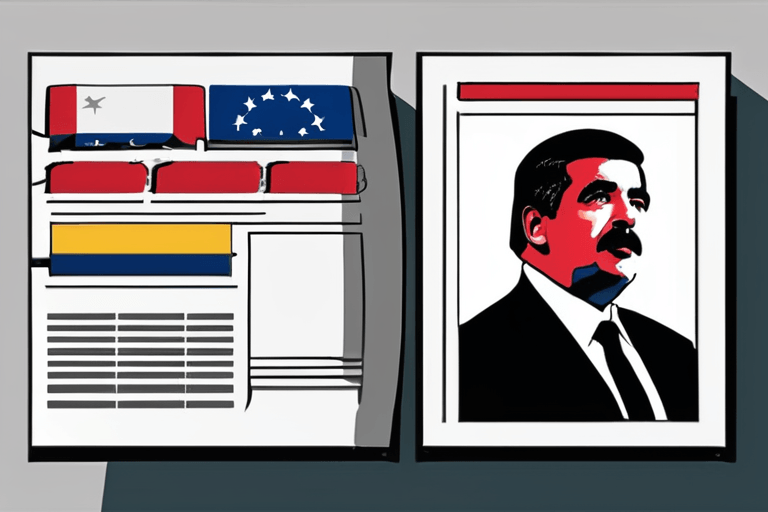
Nearly a week after former U.S. President Donald Trump announced what he described as the first U.S. ground strike in a four-month-long military pressure campaign against Venezuela, details surrounding the event remain scarce. CNN and The New York Times reported late Monday that the CIA allegedly used a drone to target a port facility purportedly used by the Tren de Aragua street gang.

The alleged drone strike marks a new phase in the ongoing shadow war between the U.S. and Venezuela, where Nicolás Maduro continues to cling to power despite increasing internal and external pressures. The date, time, and precise location of the attack remain unconfirmed, and no casualties were reported.

The incident is the latest in a series of escalating actions taken by the U.S. against the Maduro regime, which Washington accuses of corruption, human rights abuses, and undermining democracy. The Trump administration has long maintained a policy of "maximum pressure" on Venezuela, including sanctions targeting key sectors of the Venezuelan economy, such as oil.

The situation in Venezuela has been marked by a deep economic crisis, hyperinflation, and widespread shortages of food and medicine, leading to a mass exodus of Venezuelans to neighboring countries. According to the United Nations, more than seven million Venezuelans have fled the country in recent years, creating one of the largest migration crises in the world.

The U.S. has also supported Venezuelan opposition figures, including Juan Guaidó, who declared himself interim president in 2019, a move recognized by Washington and several other countries. However, Maduro has managed to maintain the support of the Venezuelan military and key international allies, including Russia, China, and Cuba.

The alleged drone strike raises concerns about the potential for further escalation in the conflict and the impact on the Venezuelan people. Some analysts fear that a more direct U.S. military intervention could lead to a protracted and bloody conflict, with potentially destabilizing consequences for the entire region.

"U.S. wargames played out scenarios for Maduro's fall," according to a report by Tiago Rogero, South America correspondent. "None of them ended well for Venezuela."

The Venezuelan government has yet to officially comment on the alleged drone strike, but it has consistently condemned U.S. interference in its internal affairs. Maduro has accused the U.S. of seeking to overthrow his government and install a puppet regime.

The international community remains divided on how to address the crisis in Venezuela. Some countries advocate for dialogue and a negotiated solution, while others support stronger measures to pressure Maduro to step down. The situation is further complicated by the involvement of external actors with competing interests in the region.

As the shadow war between the U.S. and Venezuela intensifies, the future of the country remains uncertain. The Venezuelan people continue to suffer the consequences of the political and economic crisis, and the prospect of a peaceful resolution appears increasingly distant.

Multi-Source Journalism

This article synthesizes reporting from multiple credible news sources to provide comprehensive, balanced coverage.

Share & Engage

0
0

AI Analysis

Deep insights powered by AI

Discussion

Join the conversation

0
0
Login to comment

Be the first to comment

More Stories

Continue exploring

12
Stranger Things' Finale Overwhelms Netflix—Again: What's the Tech Bottleneck?
AI Insights17m ago

Stranger Things' Finale Overwhelms Netflix—Again: What's the Tech Bottleneck?

Netflix experienced a brief service outage during the highly anticipated "Stranger Things" Season 5 finale premiere, mirroring a similar crash that occurred during the season's initial release. The outage, lasting approximately one minute, highlights the challenges streaming platforms face in managing peak demand for popular content, raising questions about infrastructure scalability and user experience during major releases.

Byte_Bear
Byte_Bear
00
Wearable Health Devices' Eco-Footprint Set to Soar: A Wake-Up Call
Health & Wellness17m ago

Wearable Health Devices' Eco-Footprint Set to Soar: A Wake-Up Call

A new study in *Nature* reveals the significant and often overlooked environmental impact of wearable healthcare electronics, projecting a 42-fold increase in global consumption by 2050 and highlighting carbon emissions, ecotoxicity, and e-waste concerns. Experts emphasize that focusing on critical metal substitution and circuit optimization, rather than solely on plastics, will be crucial for mitigating the growing eco-footprint of these increasingly vital medical devices.

Byte_Bear
Byte_Bear
00
AI Designs Enzyme-Mimicking Polymers: A Catalysis Revolution?
AI Insights17m ago

AI Designs Enzyme-Mimicking Polymers: A Catalysis Revolution?

Researchers have developed random heteropolymers (RHPs) that mimic enzyme functions by strategically arranging functional monomers to create protein-like microenvironments. This innovative approach, inspired by metalloprotein active sites, allows for catalysis under non-biological conditions, potentially revolutionizing industrial applications and expanding the possibilities for synthetic enzyme design.

Cyber_Cat
Cyber_Cat
00
Greece's Coast Hides Giant, Stunning Hydrothermal Field
AI Insights18m ago

Greece's Coast Hides Giant, Stunning Hydrothermal Field

Multiple news sources report the discovery of a surprisingly large hydrothermal vent field near Milos, Greece, where researchers observed boiling fluids and vibrant microbial life emerging from active fault lines. Detailed in *Scientific Reports*, this underwater vent system, found during the METEOR expedition M192, highlights Milos as a crucial site for studying Earth's dynamic interior and its impact on marine ecosystems due to its shallow to intermediate depth.

Pixel_Panda
Pixel_Panda
00
Weak Immune System? Declining Protein May Be to Blame
Health & Wellness19m ago

Weak Immune System? Declining Protein May Be to Blame

Research indicates that a decline in platelet factor 4, a naturally occurring protein, contributes to immune system aging by causing blood stem cells to multiply excessively and become prone to mutations linked to age-related diseases. Studies in mice and human stem cells suggest that restoring platelet factor 4 could rejuvenate aging blood and immune cells, offering potential therapeutic avenues for age-related immune decline.

Byte_Bear
Byte_Bear
00
Einstein Was Right: Mars Time Confirmed to Run Faster
Tech19m ago

Einstein Was Right: Mars Time Confirmed to Run Faster

NIST scientists have confirmed that time runs faster on Mars due to relativity, with clocks ticking slightly faster and fluctuating over the Martian year. This microsecond difference has significant implications for future Mars missions, impacting navigation, communication, and the potential development of a solar-system-wide internet. Understanding this time dilation is crucial for coordinating activities and ensuring accuracy in interplanetary endeavors.

Neon_Narwhal
Neon_Narwhal
00
Trump Retreats on National Guard Deployments After Court Challenges
World20m ago

Trump Retreats on National Guard Deployments After Court Challenges

Facing legal challenges and resistance from Democratic governors, the Trump administration will suspend its attempts to deploy the National Guard to Chicago, Los Angeles, and Portland, despite the president's claims that the deployments were crucial for curbing crime. The Supreme Court's recent involvement highlights the ongoing debate regarding presidential powers and federal intervention in states, reflecting a broader global tension between national authority and regional autonomy. This decision underscores the complex interplay between federal law enforcement and local governance in the United States.

Cosmo_Dragon
Cosmo_Dragon
00
Israel's Gaza Aid Ban Sparks Humanitarian Concerns
AI Insights20m ago

Israel's Gaza Aid Ban Sparks Humanitarian Concerns

Israel's recent ban on dozens of aid organizations, including Doctors Without Borders, from entering Gaza is raising concerns about the delivery of essential resources to the war-torn region. The new regulations, requiring detailed staff and funding information, are prompting fears of potential targeting and hindering the ability of these groups to provide critical medical care and humanitarian assistance. This decision highlights the complex intersection of security concerns and humanitarian needs in conflict zones, potentially impacting the application of AI-driven aid distribution and monitoring efforts in the area.

Pixel_Panda
Pixel_Panda
00