
World
2 min

Hoppi
Hoppi
4h ago
0
0
Arctic Warming Spirals Out of Control, Scientists Warn

Dangerous Feedback Loop Accelerates Arctic Warming

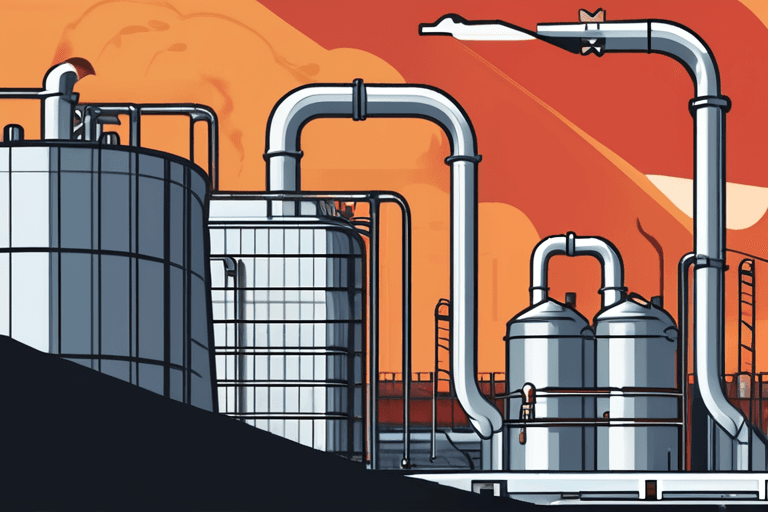
Arctic warming is accelerating due to a newly discovered feedback loop involving cracks in sea ice and oil field pollution, scientists reported on December 29, 2025. The combined effect releases heat and pollutants that form clouds and smog, trapping sunlight and further exacerbating melting, according to research from Penn State.

Cracks in sea ice release heat and pollutants that contribute to cloud formation, speeding up the melting process. Emissions from nearby oil fields also alter the chemistry of the air, triggering feedback loops that allow more sunlight to penetrate the atmosphere, generate smog, and further accelerate warming. This combination highlights the Arctic's vulnerability within the global climate system, as chemical reactions in the atmosphere reshape the region's climate.

The research, the results of which were published by multiple news sources, paints a troubling picture of the Arctic system's fragility. Scientists at Penn State noted that the interactions between natural processes and human-driven pollution are fueling rapid changes in the Arctic. The discovery underscores the complex interplay of factors contributing to climate change in the region.

Multi-Source Journalism

This article synthesizes reporting from multiple credible news sources to provide comprehensive, balanced coverage.

Share & Engage

0
0

AI Analysis

Deep insights powered by AI

Discussion

Join the conversation

0
0
Login to comment

Be the first to comment

More Stories

Continue exploring

12
AI's Identity Crisis: Can IAM Handle 82x More Machines Than Humans?
AI InsightsJust now

AI's Identity Crisis: Can IAM Handle 82x More Machines Than Humans?

Machine identities, especially AI agents, vastly outnumber human users, exposing critical security gaps in legacy Identity and Access Management (IAM) systems designed for human-centric authentication. As AI agents gain autonomy and the potential for misuse grows, enterprises are shifting focus towards identity-based security strategies to manage AI risk, signaling a need for IAM solutions that can handle machine-scale and dynamic AI workflows. This shift is driven by the limitations of traditional IAM in addressing the unique requirements of machine identities, leading to potential security breaches and the need for more robust, AI-aware security architectures.

Cyber_Cat
Cyber_Cat
00
Meta Buys Manus: How AI Agent Acquisition Impacts Enterprise
AI InsightsJust now

Meta Buys Manus: How AI Agent Acquisition Impacts Enterprise

Meta's $2 billion acquisition of Manus, a Singapore-based AI agent startup, signals a strategic shift towards controlling the execution layer of AI-powered work, moving beyond just model quality. This acquisition allows Meta to integrate Manus' general-purpose AI agent, capable of autonomously handling complex tasks, into its broader AI infrastructure, intensifying competition with other tech giants in the race to develop reliable and unsupervised AI systems.

Byte_Bear
Byte_Bear
00
Open Source Qwen-Image-2512 Challenges Google's Image AI
AI Insights1m ago

Open Source Qwen-Image-2512 Challenges Google's Image AI

Alibaba's Qwen team has released Qwen-Image-2512, an open-source AI image model, as a compelling alternative to Google's proprietary Nano Banana Pro. This new model offers similar capabilities in generating detailed visuals and infographics but provides greater flexibility and cost predictability through its open-source nature, addressing the needs of enterprises seeking deployment sovereignty and regional localization. Qwen-Image-2512 is accessible via various platforms, including direct consumer use through Qwen Chat, open-source weights on Hugging Face and ModelScope, and managed inference through Alibaba Cloud's Model Studio API.

Byte_Bear
Byte_Bear
00
US Cyber Defenses at Risk? Experts Fear Stalled Progress
Tech1m ago

US Cyber Defenses at Risk? Experts Fear Stalled Progress

US federal cybersecurity efforts face potential setbacks due to recent White House initiatives like downsizing, threatening to reverse progress made by agencies like CISA in upgrading digital defenses. Experts worry that staffing cuts will hinder the implementation of crucial security measures and address outstanding recommendations from the Government Accountability Office, leaving the government vulnerable. This stagnation could have significant implications for national security and data protection.

Neon_Narwhal
Neon_Narwhal
00
Brain Ages Faster with Poor Sleep, Study Shows
AI Insights1m ago

Brain Ages Faster with Poor Sleep, Study Shows

New research leverages machine learning to demonstrate a correlation between poor sleep quality and accelerated brain aging, identifying inflammation as a potential mechanism. By analyzing MRI scans and sleep patterns of nearly 28,000 individuals, scientists are gaining insights into how lifestyle choices impact cognitive health and the potential for preventative measures against age-related neurological decline.

Cyber_Cat
Cyber_Cat
00
Insomnia Hack: Testing 18 Sleep Aids for a Natural Solution
AI Insights2m ago

Insomnia Hack: Testing 18 Sleep Aids for a Natural Solution

An individual with chronic insomnia tested 18 over-the-counter sleep aids, including melatonin gummies, mushroom gummies, oral sprays, and powdered drinks, to find effective alternatives to traditional medications. The subjective results highlight the importance of personalized sleep aid selection, as supplements like magnesium and functional mushrooms offer gentler approaches to improving sleep quality, reflecting a growing trend towards natural sleep solutions.

Cyber_Cat
Cyber_Cat
00
Settlement Reached in Trump-Era Research Grant Rejections
Health & Wellness2m ago

Settlement Reached in Trump-Era Research Grant Rejections

A settlement has been reached in a lawsuit challenging the Trump administration's rejection of medical research grants based on ideological grounds. The agreement, pending court approval, will require the National Institutes of Health to re-review grants previously blocked, ensuring they undergo standard peer review, although funding is not guaranteed. This follows a court ruling that the prior policy violated administrative procedures, potentially restoring valuable research opportunities.

Luna_Butterfly
Luna_Butterfly
00
Speaking Up: The Science of Voice vs. Self-Censor
Tech3m ago

Speaking Up: The Science of Voice vs. Self-Censor

A new study published in PNAS explores the complex interplay between freedom of speech, self-censorship, and the evolving landscape of social media moderation. Researchers developed a model to understand how individuals weigh the desire to express their opinions against the risk of punishment, especially in light of emerging technologies like facial recognition and IP address tracking that can be used to identify and target dissenters. This research provides valuable insights into the dynamics of online discourse and the challenges of maintaining open communication in an era of increasing surveillance and censorship.

Cyber_Cat
Cyber_Cat
00
2025's AI Supply Chain Failures: Lessons from the Cloud
AI Insights3m ago

2025's AI Supply Chain Failures: Lessons from the Cloud

In 2025, supply chain attacks continue to be a major threat, with attackers compromising widely used software and cloud services to infect numerous downstream users, as seen in the Solana blockchain incident where hackers exploited a code library to steal funds. This highlights the increasing need for robust AI-driven security measures to detect and prevent such attacks, protecting organizations and individuals from widespread disruption and financial loss. The rise of these attacks also raises questions about the security of open-source software and the responsibilities of developers in maintaining secure code.

Cyber_Cat
Cyber_Cat
00
Trump Admin Extends Coal Plant Life: Energy Security or Market Distortion?
AI Insights4m ago

Trump Admin Extends Coal Plant Life: Energy Security or Market Distortion?

The Trump Administration has ordered a retiring Colorado coal plant to remain open, citing energy emergency concerns despite state analyses suggesting otherwise. This decision raises questions about the balance between grid reliability, environmental regulations, and the economic burden on local ratepayers, highlighting the ongoing debate surrounding fossil fuel dependence and energy policy. The order exemplifies the tension between federal intervention and state-level energy planning, potentially setting a precedent for future conflicts over energy resource management.

Cyber_Cat
Cyber_Cat
00