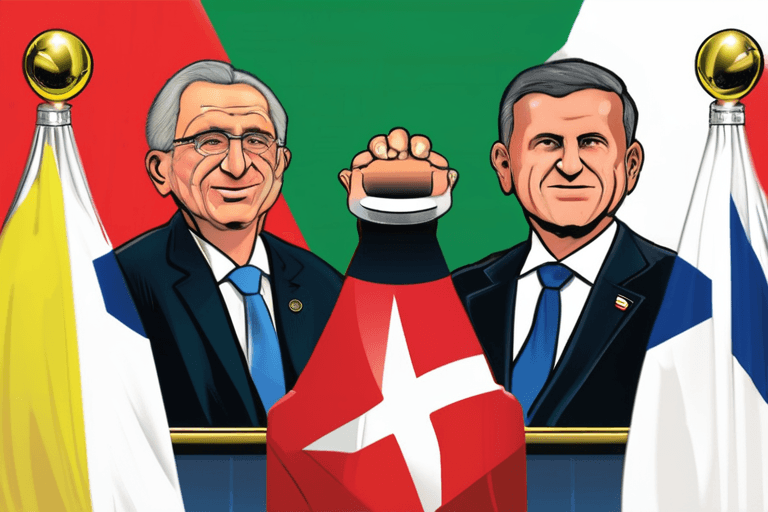
Bulgaria became the 21st member of the eurozone, despite political turmoil and divided public opinion, integrating the Balkan nation further into the European mainstream. The move, finalized recently, positions Bulgaria alongside other eurozone members, replacing the Bulgarian lev with the euro.
The transition marks a significant step for Bulgaria, the poorest country in the European Union, leapfrogging more prosperous candidates like Poland, the Czech Republic, and Hungary. Since August, shops in Bulgaria have displayed prices in both lev and euros, preparing citizens for the change.
The Bulgarian lev, meaning lion, has been the national currency since 1881. However, it has been pegged to other European currencies since 1997, first to the Deutschmark and then to the euro, effectively linking its value to the European economy for over two decades.
Opinion polls indicate a near even split among Bulgaria's 6.5 million residents regarding the adoption of the euro. While younger, urban, and entrepreneurial Bulgarians view the euro as an optimistic and potentially lucrative step, older, rural, and more conservative segments of the population expressed fear and resentment toward the change.
Political instability further complicated the transition. Prime Minister Rosen Zhelyazkov's coalition government lost a confidence vote on Dec. 11, adding uncertainty to the economic landscape as the country prepared to adopt the new currency.
According to Reuters, Bulgaria's path to the eurozone includes prior integration into other European structures, such as NATO and the EU, and joining the Schengen zone. This latest move signifies a deeper alignment with European economic policies and standards.

















Discussion
Join the conversation
Be the first to comment