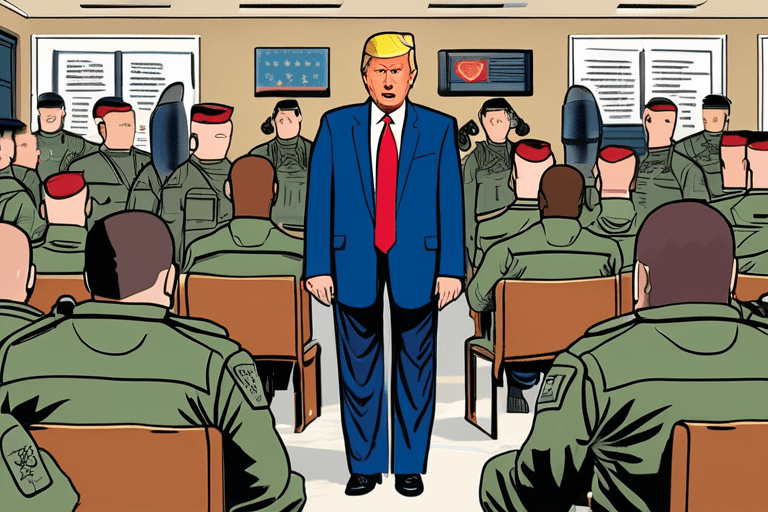
Nearly a week after former U.S. President Donald Trump announced what he described as the first U.S. ground strike in a four-month-long military pressure campaign against Venezuela, details surrounding the event remain scarce. CNN and The New York Times reported late Monday that the CIA allegedly used a drone to target a port facility reportedly used by the Tren de Aragua street gang.
The alleged drone attack marks a new phase in the ongoing shadow war between the U.S. and Venezuela, where Nicolás Maduro continues to cling to power despite increasing internal and external pressures. No casualties were reported in the alleged attack, but the date, time, and location remain unknown.
The incident follows months of escalating tensions between Washington and Caracas. Trump, who has long been critical of Maduro's socialist regime, has ramped up economic sanctions and diplomatic pressure in an attempt to force him from office. The U.S. has also supported Venezuelan opposition leader Juan Guaidó, though his influence within Venezuela has waned in recent years.
The situation in Venezuela is complex, rooted in a history of political instability, economic mismanagement, and deep social divisions. The country, once one of the wealthiest in Latin America due to its vast oil reserves, has suffered a severe economic collapse under Maduro's rule, leading to widespread poverty, hyperinflation, and mass emigration. Millions of Venezuelans have fled the country in recent years, seeking refuge in neighboring nations and beyond, creating a regional humanitarian crisis.
The international community remains divided on how to address the crisis in Venezuela. While the U.S. and some of its allies in Latin America and Europe have recognized Guaidó as the legitimate interim president, other countries, including Russia, China, and Cuba, continue to support Maduro. These divisions have hampered efforts to find a peaceful resolution to the conflict.
The alleged drone strike raises concerns about the potential for further escalation and the impact on the Venezuelan people. Critics of U.S. policy argue that military intervention, even in the form of covert operations, risks destabilizing the country further and exacerbating the humanitarian crisis. They advocate for a negotiated solution that involves all relevant stakeholders.
The future of Venezuela remains uncertain. Maduro has shown no signs of relinquishing power, and the opposition remains fragmented. The U.S. continues to exert pressure, but it is unclear whether this will ultimately lead to a change in leadership or further entrench the country in a protracted conflict. The situation is further complicated by the involvement of external actors with competing interests, making a peaceful resolution all the more challenging.

















Discussion
Join the conversation
Be the first to comment