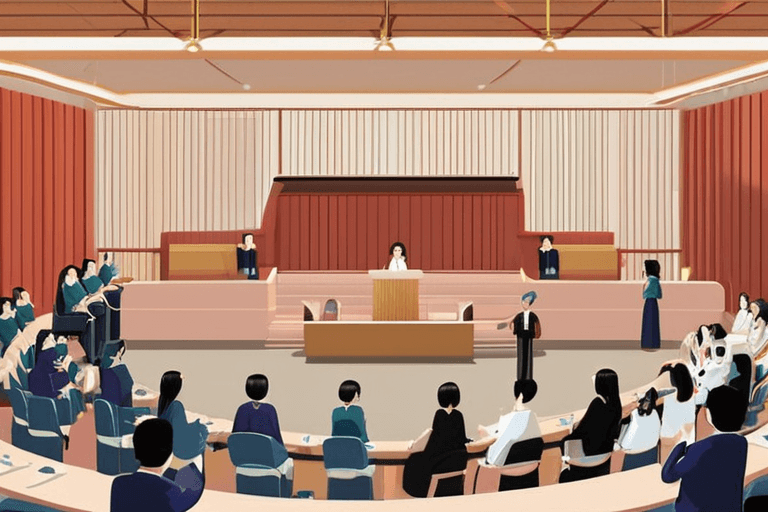
Nearly 60 female lawmakers in Japan, including Prime Minister Sanae Takaichi, submitted a petition calling for more toilets in the parliament building to accommodate their increased numbers. The petition highlights a significant disparity: only one lavatory, containing two cubicles, is available for the 73 women in the lower house near the Diet's main plenary session hall in central Tokyo.
The lack of adequate facilities reflects the ongoing challenges women face in Japanese politics, which remains largely male-dominated despite recent progress. According to reports, long queues frequently form outside the restroom before plenary sessions, underscoring the urgent need for improved infrastructure.
Takaichi's involvement in the petition is particularly noteworthy. While she expressed a desire for Nordic levels of gender balance before becoming prime minister, she appointed only two other women to her cabinet. This situation underscores the complexities of achieving gender equality within the existing political framework.
The increased representation of women in the Japanese parliament, while a positive step, has exposed infrastructural shortcomings that hinder their full participation. The petition serves as a reminder that true gender equality requires not only increased representation but also the provision of basic necessities and a supportive environment.
The situation in Japan mirrors broader global challenges faced by women in politics, where inadequate facilities and systemic biases can impede their progress. Advocates hope that the petition will prompt meaningful change within the Japanese parliament and inspire similar initiatives in other countries striving for gender equality. The next steps involve parliamentary review of the petition and potential allocation of resources for the construction of additional restroom facilities.

















Discussion
Join the conversation
Be the first to comment