In Ukraine, the nature of drone warfare is evolving with the introduction of artificial intelligence, enabling drones to autonomously identify, track, and engage targets. This development marks a significant shift from remotely piloted systems, raising ethical and strategic questions about the future of armed conflict.
The use of AI-powered drones aims to overcome limitations of traditional drone technology, particularly in environments with heavy electronic warfare. According to reports, Russian forces have been effective at jamming radio frequencies, disrupting the communication links between drone pilots and their aircraft, causing mission failures.
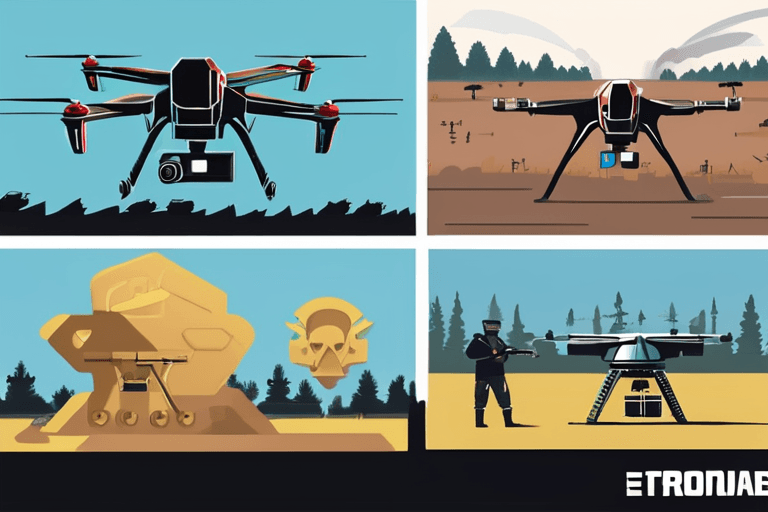
One such instance involved a Ukrainian drone team attempting to eliminate a Russian drone unit stationed in abandoned warehouses near Borysivka, a village bordering Russia. Previous attempts using standard kamikaze quadcopters failed due to Russian jamming. Lipa, a Ukrainian drone pilot, and his navigator, Bober, were then tasked with deploying a "Bumblebee" drone, an AI-enhanced system provided by a venture led by Eric Schmidt, former CEO of Google.
The Bumblebee represents a new generation of drones that can operate with minimal human guidance. Once a target is designated, the drone uses onboard AI to pursue and strike it, reducing reliance on vulnerable communication links. This capability is particularly valuable in contested areas where jamming is prevalent.
The integration of AI into drone technology has broad implications. Experts suggest that autonomous weapons systems could increase the speed and scale of conflict, potentially leading to unintended consequences. There are also concerns about accountability and the potential for algorithmic bias in target selection.
"The development of AI-powered drones raises serious ethical questions," said Dr. Paul Scharre, a technology and foreign policy expert at the Center for a New American Security. "We need to carefully consider the implications of delegating lethal decisions to machines."
The Ukrainian conflict is serving as a testing ground for these technologies, accelerating their development and deployment. The use of AI drones is not limited to Ukraine; militaries around the world are investing heavily in autonomous systems.
The current status of the Bumblebee project and similar initiatives remains largely confidential. However, the trend toward greater autonomy in drone warfare is clear. Future developments are likely to focus on improving the reliability and accuracy of AI algorithms, as well as addressing the ethical and legal challenges posed by these new weapons.


















Discussion
Join the conversation
Be the first to comment