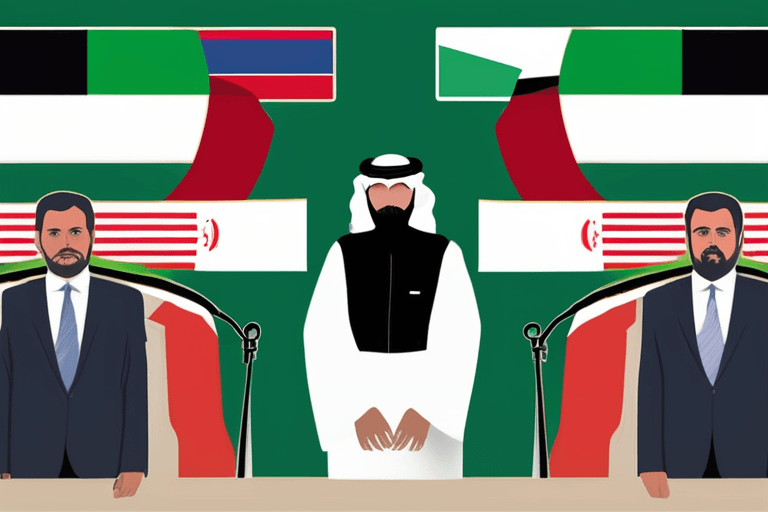
Tensions between Saudi Arabia and the United Arab Emirates regarding the future of Yemen have escalated, driven by the prospect of a declaration of independence in southern Yemen. The dispute, according to diplomatic sources, has the potential to ignite a civil war in southern Yemen and destabilize neighboring regions, including Sudan and the Horn of Africa, where the two nations often support opposing factions.
The core of the disagreement lies in the UAE's backing of the separatist Southern Transitional Council (STC), which seeks to establish an independent state in southern Yemen. Saudi Arabia views this ambition as a direct threat to its own security and regional stability. The STC, supported militarily and financially by the UAE, has been a key player in the ongoing Yemeni conflict, which began in 2014.
Yemen's civil war initially pitted the internationally recognized government, backed by a Saudi-led coalition, against the Houthi rebels, who are aligned with Iran. The conflict has evolved into a complex web of alliances and rivalries, with various factions vying for control. The UAE's support for the STC has further complicated the situation, creating a parallel power structure in the south that challenges the authority of the Saudi-backed government.
The Saudi-led coalition intervened in Yemen in 2015 with the stated goal of restoring the government of President Abdrabbuh Mansur Hadi. However, the war has resulted in a humanitarian crisis, with millions of Yemenis facing starvation and disease. International organizations have repeatedly called for a ceasefire and a negotiated settlement to the conflict.
The UAE, while officially part of the Saudi-led coalition, has pursued its own strategic interests in Yemen, focusing on securing key ports and combating Islamist groups. This divergence in objectives has led to increasing friction with Saudi Arabia, particularly over the future of southern Yemen.
The potential for a civil war within southern Yemen raises concerns about the further fragmentation of the country and the potential for increased regional instability. The conflict could also draw in other actors, exacerbating existing tensions in the Horn of Africa, where Saudi Arabia and the UAE have been competing for influence.
The coming weeks are seen as critical in determining whether the tensions between Saudi Arabia and the UAE can be de-escalated and a compromise reached on the future of Yemen. Diplomatic efforts are underway to mediate between the parties and prevent a further descent into conflict. The international community is closely monitoring the situation, with the United Nations playing a leading role in seeking a peaceful resolution to the Yemeni crisis.

















Discussion
Join the conversation
Be the first to comment