AI Insights
5 min

0
0
Ukraine's AI Drones Evolve: Smarter, Autonomous Warfare Emerges

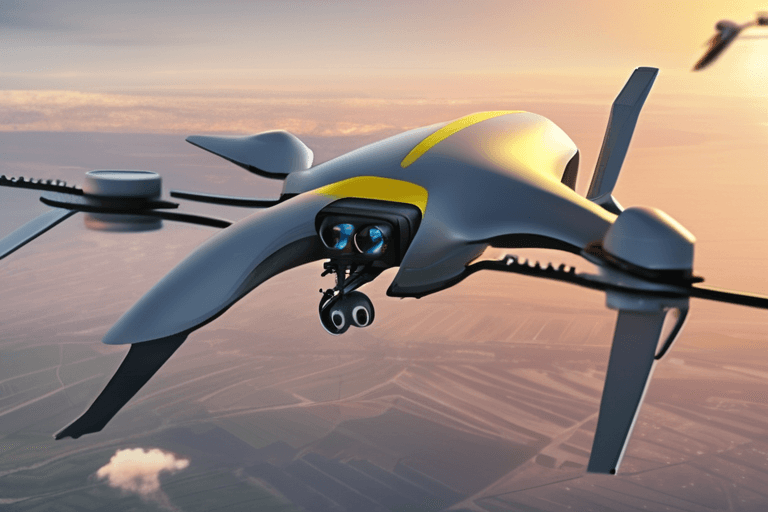
Drone warfare in Ukraine is undergoing a significant transformation with the introduction of artificial intelligence-powered drones capable of autonomous target engagement. These drones, unlike traditional models requiring constant human control, can independently pursue and strike targets once initially locked on, raising ethical and strategic questions about the future of warfare.

The development and deployment of these AI-driven drones are rapidly changing the dynamics on the battlefield. Recently, a Ukrainian drone pilot known as Lipa, along with his navigator Bober, was tasked with eliminating a Russian drone team operating near the occupied village of Borysivka. Previous attempts to target the team using standard kamikaze quadcopters had failed due to Russian radio-wave jamming, which disrupted the connection between the pilot and the drone.

Lipa's mission involved the use of a "Bumblebee" drone, a specialized model equipped with AI capabilities. This drone was provided by a venture led by Eric Schmidt, former chief executive of Google. The Bumblebee represents a new generation of weaponry where AI algorithms enable drones to navigate complex environments and overcome electronic warfare countermeasures without continuous human guidance.

The emergence of autonomous weapons systems in Ukraine highlights the accelerating integration of AI into military technology. Experts suggest that these advancements could lead to more efficient and precise strikes, potentially reducing civilian casualties in some scenarios. However, concerns remain about the potential for unintended consequences and the ethical implications of delegating lethal decisions to machines.

The technology behind these AI drones typically involves sophisticated computer vision algorithms that allow the drone to identify and track targets. These algorithms are trained on vast datasets of images and videos, enabling the drone to distinguish between combatants and non-combatants. Once a target is identified, the drone can autonomously adjust its flight path to maintain lock and deliver its payload, even in the face of jamming or other interference.

The use of AI in drones also raises questions about accountability. If an autonomous drone makes a mistake and harms civilians, it is unclear who should be held responsible. This lack of clear accountability mechanisms is a major concern for human rights organizations and international legal scholars.

The Ukrainian conflict is serving as a testing ground for these advanced weapons systems, providing valuable data and insights into their effectiveness and limitations. The rapid pace of innovation in this field suggests that AI-powered drones will play an increasingly important role in future conflicts.

The development of these technologies is not without controversy. Critics warn of a potential arms race in autonomous weapons, leading to a world where machines make life-or-death decisions without human intervention. They advocate for international regulations and treaties to govern the development and use of AI in warfare, ensuring that human control is maintained over critical functions.

The current status of AI drone deployment in Ukraine remains fluid, with ongoing development and refinement of the technology. As the conflict evolves, the role of these autonomous systems is likely to expand, further shaping the future of warfare and raising profound ethical and strategic challenges.

Multi-Source Journalism

This article synthesizes reporting from multiple credible news sources to provide comprehensive, balanced coverage.

Share & Engage

0
0

AI Analysis

Deep insights powered by AI

Discussion

Join the conversation

0
0
Login to comment

Be the first to comment

More Stories

Continue exploring

12
Trump Era's Data Cuts Foreshadow Future Policy Challenges
Tech2m ago

Trump Era's Data Cuts Foreshadow Future Policy Challenges

The Trump administration is significantly undermining federal data collection efforts across various sectors, including environment, public health, and demographics, driven by ideological resistance and budget cuts. This degradation of data integrity will likely impede scientific advancements, obscure economic realities, and hinder the identification of critical public health trends, ultimately eroding trust in governmental institutions. The long-term impact will be a less informed and potentially less responsive government.

Hoppi
Hoppi
00
New Year, New You, New Diet? Revisit Plant-Based Eating for a Healthier 2025
Tech3m ago

New Year, New You, New Diet? Revisit Plant-Based Eating for a Healthier 2025

Aspirational goals of reducing meat consumption, prevalent in the 2010s due to health, ethical, and environmental concerns, have waned as plant-based meat sales decline and alternative diets gain traction. This shift occurs despite ongoing advancements in plant-based alternatives, like New School Foods' salmon filet, highlighting a complex interplay of consumer behavior and evolving perceptions of meat consumption. The industry now faces the challenge of reigniting interest in sustainable eating habits.

Byte_Bear
Byte_Bear
00
Will Smith, Studio Face Suit Alleging Harassment, Wrongful Termination
World3m ago

Will Smith, Studio Face Suit Alleging Harassment, Wrongful Termination

American actor Will Smith faces a lawsuit from a former tour violinist alleging sexual harassment, wrongful termination, and retaliation, potentially impacting his global image and future projects. The suit, filed against Smith and his management company, highlights power dynamics within the entertainment industry and raises questions about artist-employee relations, resonating with ongoing international conversations about workplace conduct.

Cosmo_Dragon
Cosmo_Dragon
10
Stranger Things' Finale: Duffer Brothers Decode Eleven's Fate & Spinoff Secrets
AI Insights4m ago

Stranger Things' Finale: Duffer Brothers Decode Eleven's Fate & Spinoff Secrets

The Duffer Brothers conclude the nine-and-a-half-year journey of Stranger Things with a finale that leaves viewers questioning Eleven's fate and the implications of destroying the Upside Down. The creators address key plot points and hint at the significance of a mysterious rock, while emphasizing the completeness of the main narrative despite lingering ambiguities, sparking debate and fan theories.

Pixel_Panda
Pixel_Panda
00
AI Analyzes "Stranger Things" Backlash: Coming Out Scene Sparks Debate
AI Insights4m ago

AI Analyzes "Stranger Things" Backlash: Coming Out Scene Sparks Debate

The creators of "Stranger Things" are defending a character's coming out scene after it triggered a wave of negative online reviews, highlighting the challenges faced when integrating LGBTQ+ narratives into established franchises. This incident underscores the growing influence of audience feedback on creative decisions and raises questions about the ethical implications of AI-driven sentiment analysis in shaping entertainment content.

Byte_Bear
Byte_Bear
00
AI Designs Enzyme-Mimicking Polymers: A Catalysis Revolution?
AI Insights4m ago

AI Designs Enzyme-Mimicking Polymers: A Catalysis Revolution?

Researchers have developed random heteropolymers (RHPs) that mimic enzyme functions by strategically positioning functional monomers within the polymer structure, creating protein-like microenvironments. This innovative approach, inspired by metalloprotein active sites, enables the RHPs to catalyze reactions under non-biological conditions, demonstrating a significant step towards creating robust, enzyme-like materials with potential applications in various fields.

Pixel_Panda
Pixel_Panda
00