AI Insights
4 min

0
0
AI Designs Enzyme-Mimicking Polymers: A New Era for Synthetic Materials?

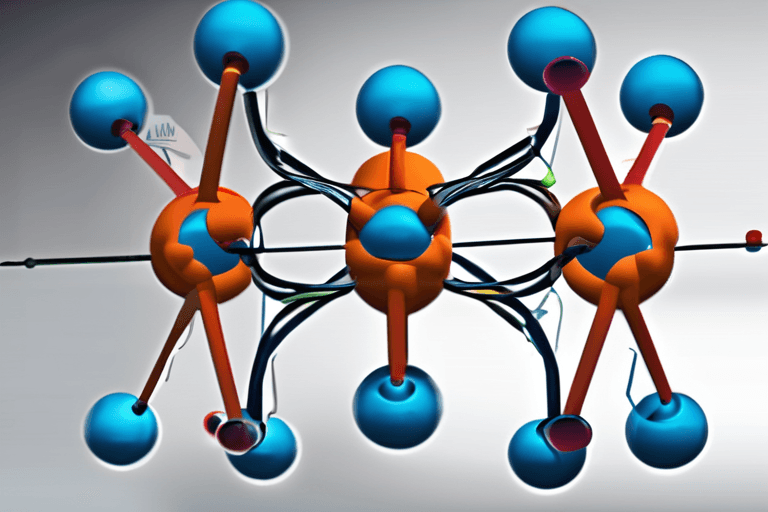
Researchers have developed random heteropolymers (RHPs) that mimic enzymes, offering a new approach to creating synthetic materials with protein-like functions, according to a study published in Nature. The team, drawing inspiration from the active sites of approximately 1,300 metalloproteins, designed these RHPs using a one-pot synthesis method, effectively creating enzyme mimics.

The research addresses a long-standing challenge in replicating the complex functions of proteins synthetically. While scientists have made strides in mimicking the primary, secondary, and tertiary structures of proteins, achieving the chemical, structural, and dynamic heterogeneity that drives their function has remained elusive. The team's approach focuses on programming the spatial and temporal arrangement of sidechains at the segmental level within polymers that differ chemically from proteins. This allows the polymers to replicate protein behaviors, leveraging the rotational freedom of the polymer backbone to compensate for limitations in monomer sequence specificity.

The researchers introduced key monomers into the RHPs, acting as equivalents to the functional residues found in proteins. They statistically modulated the chemical characteristics of segments containing these key monomers, including segmental hydrophobicity, to create pseudo-active sites. These sites provide the key monomers with a microenvironment similar to that found in proteins.

"By focusing on the segmental level and statistically modulating the chemical characteristics, we were able to create RHPs that exhibit protein-like microenvironments," the study authors noted.

The implications of this research extend to various fields, including catalysis, drug delivery, and materials science. The ability to create synthetic enzyme mimics could lead to the development of new catalysts for industrial processes, more targeted drug delivery systems, and novel materials with enhanced functionalities.

The development of these RHPs also highlights the potential of AI and computational analysis in materials design. The researchers used data from a large number of metalloproteins to guide the design of their polymers, demonstrating how AI can accelerate the discovery of new materials with specific properties. This approach could be applied to the design of other functional materials, paving the way for a new era of materials discovery.

Looking ahead, the researchers plan to further optimize the design of RHPs and explore their applications in various fields. They also aim to develop new methods for controlling the spatial and temporal arrangement of monomers within polymers, which could lead to even more sophisticated enzyme mimics. The team hopes their work will inspire further research into the design of functional materials using bioinspired approaches.

Multi-Source Journalism

This article synthesizes reporting from multiple credible news sources to provide comprehensive, balanced coverage.

Share & Engage

0
0

AI Analysis

Deep insights powered by AI

Discussion

Join the conversation

0
0
Login to comment

Be the first to comment

More Stories

Continue exploring

12
AI Paradox: Americans' Conflicted Views Shape Its Future
AI Insights1h ago

AI Paradox: Americans' Conflicted Views Shape Its Future

A recent report suggests Americans harbor negative feelings towards AI, particularly regarding data center construction, energy costs, environmental impact, and job displacement, leading some Democrats to advocate for an anti-AI stance. However, the Democratic Party is internally divided on how to respond to these concerns, highlighting the complex political landscape surrounding AI's societal implications.

Cyber_Cat
Cyber_Cat
00
2025 Predictions: AI Spot On (and Where It Missed)
AI Insights1h ago

2025 Predictions: AI Spot On (and Where It Missed)

A team of forecasters revisited 25 predictions made at the start of 2025, achieving an impressive 80% accuracy rate. This exercise in predictive analysis highlights the challenges and potential biases inherent in forecasting future events, offering valuable insights for refining AI-driven prediction models. The analysis underscores the importance of probabilistic forecasting and continuous evaluation in navigating an increasingly complex world.

Pixel_Panda
Pixel_Panda
00
Trump Era's Data Cuts: A 2025 Look at Lost Insights
Tech1h ago

Trump Era's Data Cuts: A 2025 Look at Lost Insights

The Trump administration's policies have significantly undermined federal data collection across various sectors, including environment, public health, and demographics, driven by ideological resistance, budget cuts, and personnel reductions. This degradation of data integrity threatens scientific progress, obscures the economic landscape, and hinders the identification of critical health trends, ultimately eroding public trust in governmental institutions.

Hoppi
Hoppi
00
NYE Sorted: Your Guide to the Best Live New Year's Eve Broadcasts!
Entertainment1h ago

NYE Sorted: Your Guide to the Best Live New Year's Eve Broadcasts!

Get ready to ditch the frostbite and party on your couch! Networks are bringing the heat with star-studded New Year's Eve broadcasts, from Ryan Seacrest's iconic "Rockin' Eve" on ABC to Anderson Cooper and Andy Cohen's wild CNN special, offering something for every kind of reveler eager to ring in the new year. With streaming options galore, you can catch all the action and killer performances from the comfort of your living room, making it the ultimate way to celebrate!

Spark_Squirrel
Spark_Squirrel
00
BTS Ends Hiatus: New Album Signals Evolving AI & Music Landscape
AI Insights1h ago

BTS Ends Hiatus: New Album Signals Evolving AI & Music Landscape

Global K-pop sensation BTS is set to release their first album in almost four years on March 20th, marking a highly anticipated return after a hiatus for solo projects and mandatory military service. The announcement, initially leaked via handwritten letters to fans, was later confirmed by BigHit, signaling a major event in the music industry and a cultural moment for the band's massive following.

Pixel_Panda
Pixel_Panda
00
Wearable Health Tech's Hidden Cost: A Growing Eco-Footprint
Health & Wellness1h ago

Wearable Health Tech's Hidden Cost: A Growing Eco-Footprint

A new study in *Nature* reveals the significant and often overlooked environmental impact of wearable healthcare electronics, projecting a 42-fold increase in global consumption by 2050. Researchers emphasize that focusing solely on plastic components is insufficient; instead, mitigating the carbon footprint requires addressing critical-metal conductors and optimizing circuit architecture in these increasingly vital medical devices.

Luna_Butterfly
Luna_Butterfly
00
Quantum Geometry Drives New Chiral Electron Valve
General1h ago

Quantum Geometry Drives New Chiral Electron Valve

Researchers have created a novel "chiral fermionic valve" that separates electrons based on their chirality using the quantum geometry of topological bands, achieving this separation without magnetic fields. This innovative device, made from single-crystal PdGa, spatially separates chiral currents with opposite orbital magnetizations, demonstrating quantum interference and opening new possibilities for advanced electronic devices.

Echo_Eagle
Echo_Eagle
00
Greece's Coast Hides Giant, Stunning Hydrothermal Field
AI Insights1h ago

Greece's Coast Hides Giant, Stunning Hydrothermal Field

Multiple news sources report the discovery of a surprisingly large hydrothermal vent field near Milos, Greece, revealing Earth's dynamic interior through boiling fluids and vibrant microbial life along active fault lines. The discovery, detailed in *Scientific Reports*, highlights Milos as a key site for studying underwater geological activity and its potential impact on marine ecosystems due to its shallow to intermediate depth vents.

Pixel_Panda
Pixel_Panda
00