On New Year's Eve, astronomers discovered a massive galaxy cluster collision, dubbed the Champagne Cluster, offering a unique opportunity to study the behavior of dark matter during such events. The Chandra X-ray Center announced the discovery, explaining that the cluster is the result of two galaxy clusters merging to form an even larger structure.
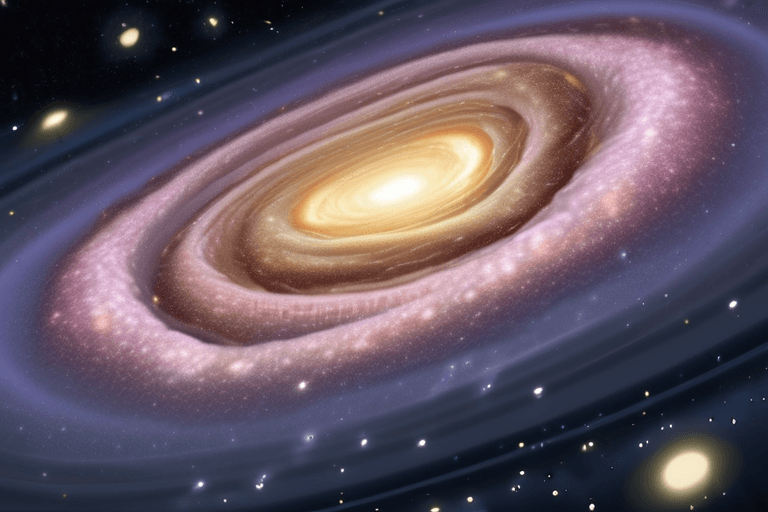
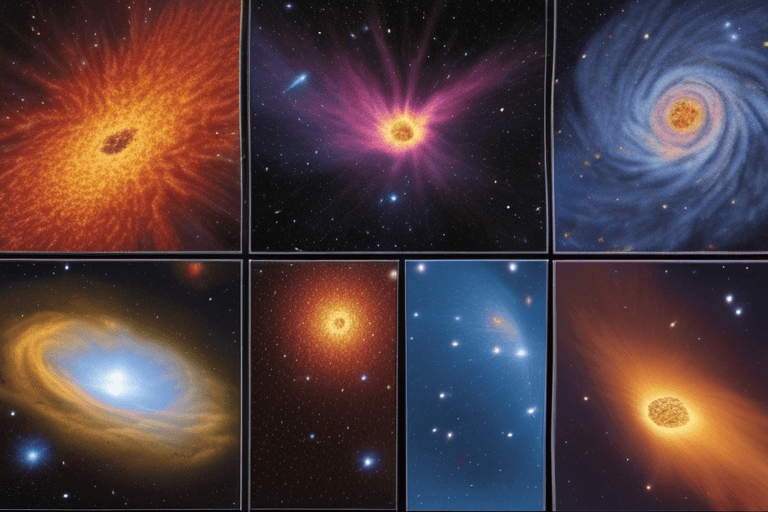
Images of the Champagne Cluster reveal a chaotic scene of superheated gas and galaxies spread across a vast collision zone. The "bubbly" appearance, combined with the New Year's Eve discovery, inspired the festive name. According to the Chandra X-ray Center, the hot gas within the cluster outweighs the combined mass of all the individual galaxies it contains.
Galaxy clusters are the largest known gravitationally bound structures in the universe. When these massive structures collide, the resulting interactions generate immense amounts of energy and provide valuable insights into the distribution of matter, including dark matter. Dark matter, which makes up a significant portion of the universe's mass, does not interact with light, making it difficult to observe directly. However, its presence can be inferred through its gravitational effects on visible matter.
Researchers believe that studying the Champagne Cluster will help them understand how dark matter behaves during these colossal collisions. By analyzing the distribution of hot gas and galaxies, astronomers can map the underlying distribution of dark matter and test existing models of its properties. The way dark matter interacts (or doesn't interact) with itself and other matter during these collisions can provide crucial clues about its fundamental nature.
The discovery and analysis of the Champagne Cluster rely heavily on advanced imaging technologies and data processing techniques, including AI-powered algorithms. These algorithms help astronomers sift through vast amounts of data from telescopes like Chandra to identify and characterize faint and complex structures like galaxy clusters. AI also plays a role in simulating galaxy cluster collisions, allowing researchers to compare their models with observational data and refine their understanding of the underlying physics.
Further study of the Champagne Cluster is planned, with astronomers using additional telescopes to gather more data on its composition, dynamics, and dark matter distribution. These observations will provide a more complete picture of this spectacular cosmic collision and its implications for our understanding of the universe.











Discussion
Join the conversation
Be the first to comment