Scientists have discovered a remarkably large hydrothermal vent field near the Greek island of Milos, revealing a dynamic underwater landscape teeming with geological activity. The discovery, detailed in a study published in Scientific Reports, occurred during the METEOR expedition M192, led by researchers from MARUM - Center for Marine Environmental Sciences, University of Bremen.
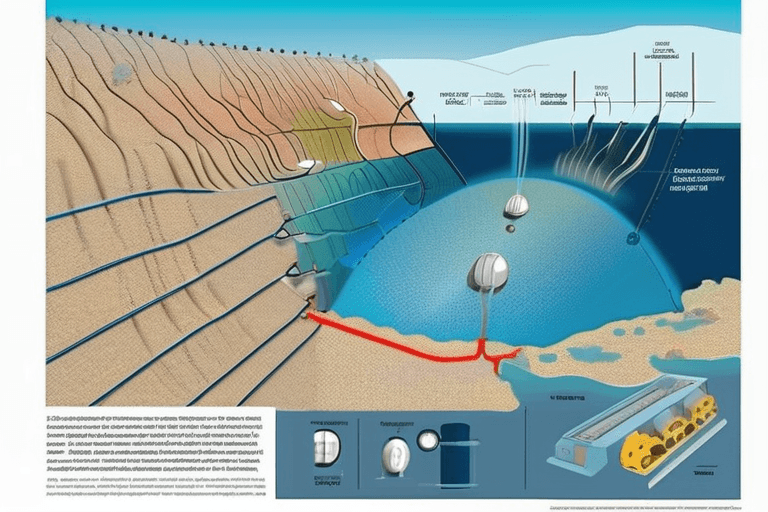
The vent system, located along active fault lines beneath the seafloor, features geological fractures that act as conduits for hot, gas-rich fluids escaping from the Earth's interior. Researchers were surprised to observe boiling fluids and vibrant microbial mats during deep-sea dives, indicating a thriving ecosystem fueled by chemosynthesis. According to MARUM, Milos is now considered one of the Mediterranean's most significant sites for studying the Earth's dynamic interior.
Hydrothermal vents are essentially underwater hot springs, formed where seawater seeps into the Earth's crust, is heated by magma or hot rocks, and then expelled back into the ocean. These vents are often found near volcanically active areas, such as mid-ocean ridges or, as in this case, along fault lines. The fluids released from these vents are rich in minerals and chemicals, providing energy for unique ecosystems that thrive in the absence of sunlight. The "White Sealhound structure," one area studied, was found to have fluids reaching 180 degrees Celsius.
The discovery has significant implications for understanding the interplay between geological activity, ocean chemistry, and the evolution of life. The microbial mats observed near the vents are of particular interest, as they represent a form of life that obtains energy from chemical compounds rather than photosynthesis. Studying these organisms can provide insights into the origins of life on Earth and the potential for life on other planets.
"This discovery underscores the importance of continued exploration of our oceans," said a lead researcher from the University of Bremen. "These hydrothermal systems are not only fascinating geological features, but also vital ecosystems that can teach us a great deal about the Earth and the potential for life in extreme environments."
The ongoing research at the Milos vent field will involve further sampling and analysis of the fluids, rocks, and microbial communities. Scientists plan to use advanced technologies, including AI-powered image analysis, to map the extent of the vent field and to identify new species of microorganisms. The data collected will be used to develop more accurate models of hydrothermal vent processes and their impact on the global ocean.



















Discussion
Join the conversation
Be the first to comment