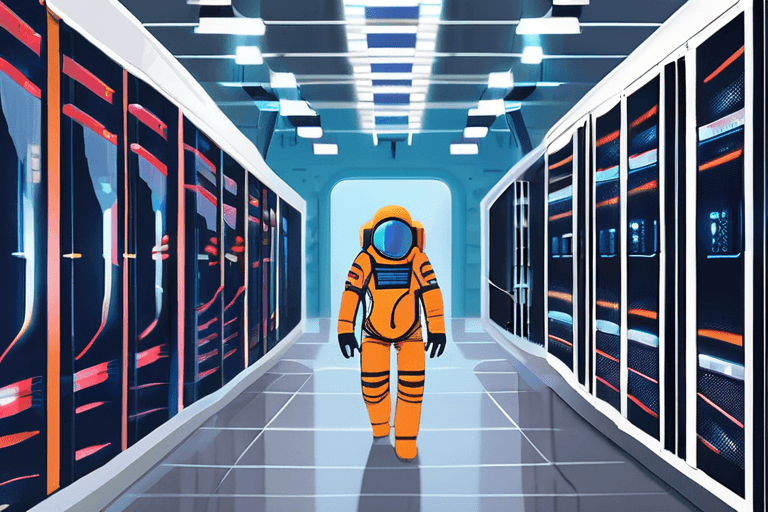
Artificial intelligence leaders are considering building data centers in space to address growing energy and land demands on Earth. The concept, once relegated to science fiction, is gaining traction as a potential solution to the escalating resource needs of AI computing.
The increasing computational power required to train and operate AI models is driving the demand for larger and more energy-intensive data centers. These facilities, which house the powerful computers that run AI algorithms, are currently located on Earth, consuming significant amounts of electricity and occupying vast tracts of land. Experts worry that these demands will eventually outstrip available resources.
Google announced Project Suncatcher in November, a space data center initiative slated for test launches in 2027. Elon Musk stated at a recent conference that space-based data centers could become the most cost-effective method for AI training within five years. Jeff Bezos, founder of Amazon and Blue Origin; Sam Altman, CEO of OpenAI; and Jensen Huang, CEO of Nvidia, have also expressed support for the idea.
The primary advantage of space-based data centers is access to abundant solar energy, which could significantly reduce their carbon footprint. Additionally, locating data centers in orbit would free up valuable land resources on Earth. The vacuum of space also offers a natural cooling environment, potentially reducing the energy needed for temperature regulation.
However, the construction and maintenance of data centers in space present significant technological and logistical challenges. Launching equipment and personnel into orbit is expensive, and ensuring the reliability and security of these facilities in the harsh space environment will require innovative engineering solutions.
Despite the challenges, proponents argue that the long-term benefits of space-based data centers outweigh the risks. They envision a future where these facilities become a critical part of the global AI infrastructure, enabling continued advancements in artificial intelligence while minimizing environmental impact. The feasibility of this vision will depend on the success of upcoming test launches and the continued development of space technologies.













Discussion
Join the conversation
Be the first to comment