Have you ever felt velvetmist? It’s a complex and subtle emotion, a tapestry woven with threads of comfort, serenity, and a gentle sense of floating. Imagine the peacefulness of contentment, but more ephemeral, more intangible. Perhaps it’s evoked by the sight of a fiery sunset bleeding into the horizon, or the melancholic strains of a low-key album washing over you. If you haven't experienced this sensation, or even heard of it, you're not alone. Velvetmist is a neo-emotion, a feeling given a name by a Reddit user, noahjeadie, who used ChatGPT to conjure it into existence, complete with instructions on how to cultivate it. Essential oils and a curated soundtrack, and apparently, you too can feel like a soft, fuzzy, draping ghost floating through a lavender suburb.
While it might sound like a whimsical internet oddity, the emergence of velvetmist and other neo-emotions points to a profound shift in how we understand and experience our inner lives. Researchers are noticing a surge in these newly coined terms online, each attempting to capture previously undefined nuances of feeling. Velvetmist, in fact, was a key example cited in a July 2025 journal article exploring this very phenomenon. But the vast majority of these neo-emotions aren't the product of sophisticated AI algorithms. They are born from human experience, reflecting a dynamic and evolving emotional landscape shaped by our rapidly changing world.
The sociological implications are significant. For decades, psychology has largely operated under the assumption that we possess a finite set of core emotions – happiness, sadness, anger, fear, surprise, and disgust. These were considered the fundamental building blocks of our emotional experience. However, the rise of neo-emotions challenges this established framework. It suggests that our emotional repertoire is far more expansive and adaptable than previously thought. We are not simply experiencing the same emotions in different contexts; we are actively creating new ones to make sense of our increasingly complex reality.
Consider the concept of "digital fatigue," a feeling of exhaustion and overwhelm stemming from constant connectivity and information overload. While not a formally recognized emotion, it encapsulates a shared experience of the digital age, driving individuals to seek out and articulate this feeling. The act of naming it, of giving it a linguistic form, validates the experience and allows others to recognize and connect with it. This shared understanding, in turn, can lead to the development of coping mechanisms and strategies for managing the challenges of the digital world.
"We're seeing a democratization of emotional expression," explains Dr. Anya Sharma, a leading researcher in the field of affective computing. "The internet provides a platform for individuals to share their experiences and connect with others who feel the same way. This shared experience can lead to the creation of new emotional categories, which then become part of our collective emotional vocabulary."
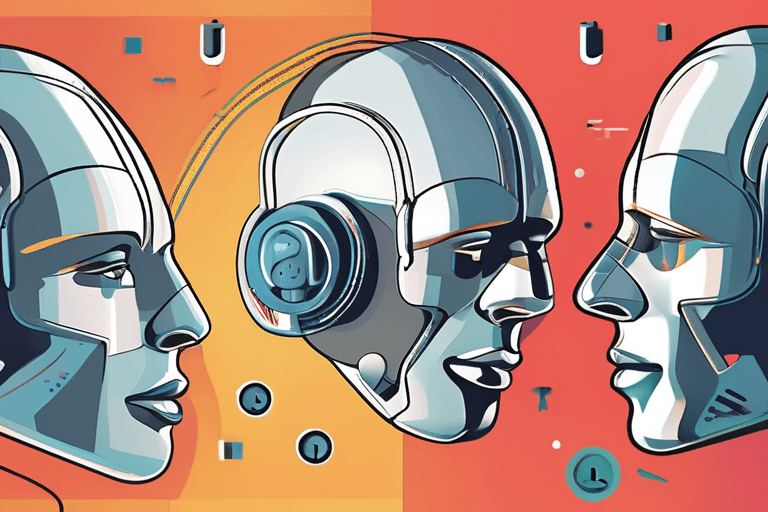
The role of AI in this process is also noteworthy. While humans are the primary drivers of neo-emotion creation, AI tools like ChatGPT can act as catalysts, helping us to articulate and refine our feelings. By providing a space for exploration and experimentation, these tools can empower us to delve deeper into our emotional landscape and discover new dimensions of feeling. However, Dr. Sharma cautions against over-reliance on AI in this process. "It's important to remember that AI is a tool, not a replacement for human connection and introspection. The most meaningful neo-emotions are those that arise from genuine human experience and are shared within communities."
Looking ahead, the exploration of neo-emotions promises to reshape our understanding of human consciousness and well-being. By recognizing and validating the full spectrum of our emotional experiences, we can foster greater self-awareness, empathy, and connection. The ability to invent new emotions, to give voice to the subtle nuances of our inner lives, is not just a linguistic exercise; it's an act of self-discovery and a testament to the boundless capacity of the human spirit. As we continue to navigate an ever-changing world, the creation of neo-emotions will likely become an increasingly important tool for understanding ourselves and each other. The future of feeling, it seems, is one of continuous innovation and expansion.








Discussion
Join the conversation
Be the first to comment