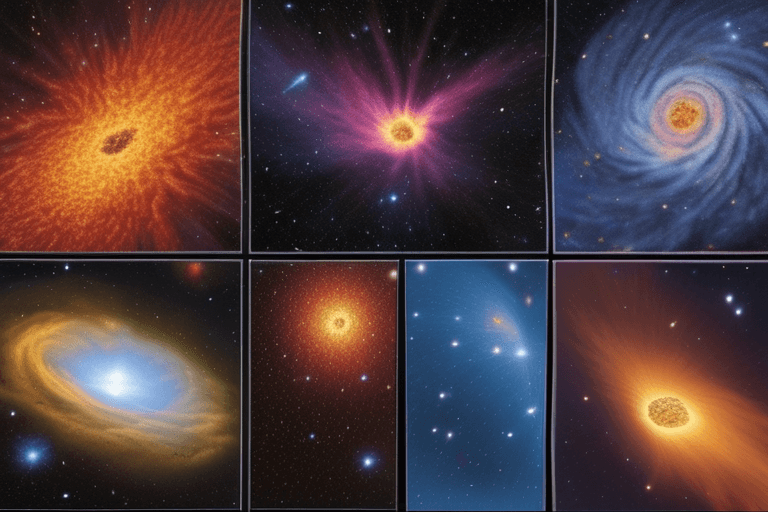
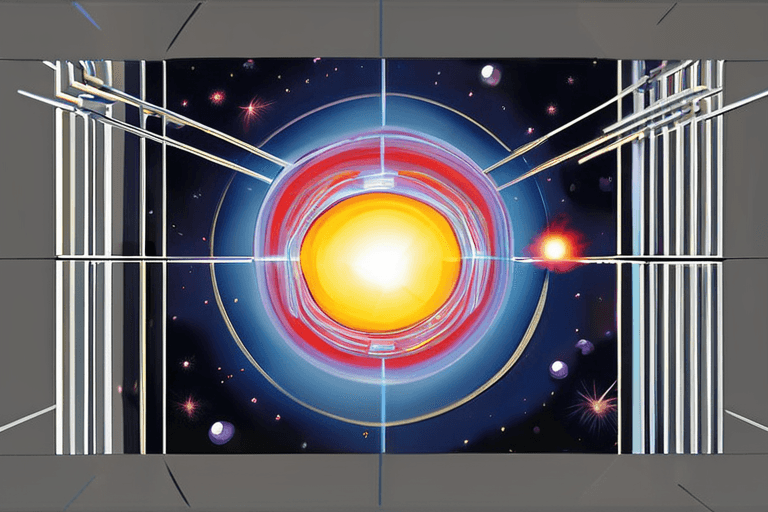
New images reveal stellar explosions are far more complex than previously thought. Astronomers at Georgia State University captured detailed images of two novae just days after they began. The findings, released December 31, 2025, shatter the long-held belief of novae as simple stellar fireworks.
The images reveal chaotic, multi-stage cosmic dramas unfolding in real time. One nova exhibited multiple gas streams colliding almost immediately after the initial explosion. Another nova surprisingly delayed its major eruption by over 50 days. These complex outflows generate shock waves, producing intense gamma rays.
The visual evidence confirms theories about novae that scientists have held for years. The detailed observations will likely impact future astrophysical models. Researchers are now re-evaluating the dynamics of stellar explosions.
Novae occur in binary star systems. One star, a white dwarf, pulls matter from its companion star. This accumulated material eventually ignites, causing a thermonuclear explosion.
Scientists plan further observations using the CHARA Array to study more novae. They hope to understand the diverse range of behaviors exhibited by these stellar events. The goal is to refine our understanding of stellar evolution and the creation of elements in the universe.















Discussion
Join the conversation
Be the first to comment