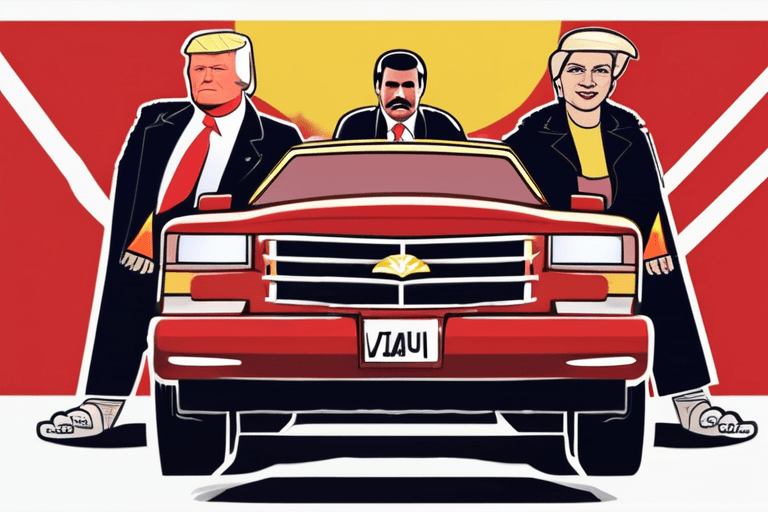
Nearly a week after former U.S. President Donald Trump announced what he described as the first U.S. ground strike in a four-month-long military pressure campaign against Venezuela, details surrounding the event remain scarce. CNN and The New York Times reported late Monday that the CIA allegedly used a drone to target a port facility purportedly used by the Tren de Aragua street gang.
The alleged drone strike marks a potential escalation in the ongoing shadow war between the U.S. and Venezuela, where Nicolás Maduro continues to cling to power despite increasing internal and external pressures. The date, time, and precise location of the attack remain unconfirmed, and no casualties were reported.
The incident occurs within a complex geopolitical landscape. Venezuela, once one of Latin America's wealthiest nations due to its vast oil reserves, has suffered a severe economic collapse under Maduro's leadership, leading to widespread poverty, hyperinflation, and mass emigration. The United Nations estimates that over seven million Venezuelans have fled the country in recent years, creating one of the largest migration crises in the world.
The U.S. has long been critical of Maduro's socialist regime, accusing it of corruption, human rights abuses, and undermining democracy. Trump's administration implemented a series of sanctions aimed at crippling Venezuela's economy and ousting Maduro from power. These sanctions, however, have had a devastating impact on the Venezuelan population, exacerbating the humanitarian crisis.
The current military pressure campaign, initiated by the Trump administration, represents a more aggressive approach. While the U.S. government has not officially confirmed the drone strike, the reports have fueled speculation about the extent of U.S. involvement in Venezuela.
The Tren de Aragua, the alleged target of the drone strike, is a powerful Venezuelan criminal organization with a presence in several countries across South America. The gang is involved in a range of illicit activities, including drug trafficking, extortion, and human smuggling. Its alleged use of Venezuelan port facilities highlights the extent of criminal activity within the country.
Prior to the reported drone strike, reports indicated that the U.S. military had played out war game scenarios for Maduro's fall. According to Tiago Rogero, South America correspondent, none of the scenarios ended well for Venezuela.
The situation in Venezuela has drawn international concern. Neighboring countries, including Colombia and Brazil, have struggled to cope with the influx of Venezuelan refugees. International organizations, such as the UN and the Organization of American States (OAS), have called for a peaceful resolution to the crisis and for humanitarian aid to reach those in need.
As of now, Maduro remains in power, bolstered by the support of the military and key international allies, including Russia and China. The future of Venezuela remains uncertain, with the country caught in a complex web of political, economic, and social challenges, further complicated by the ongoing shadow war with the United States.

















Discussion
Join the conversation
Be the first to comment