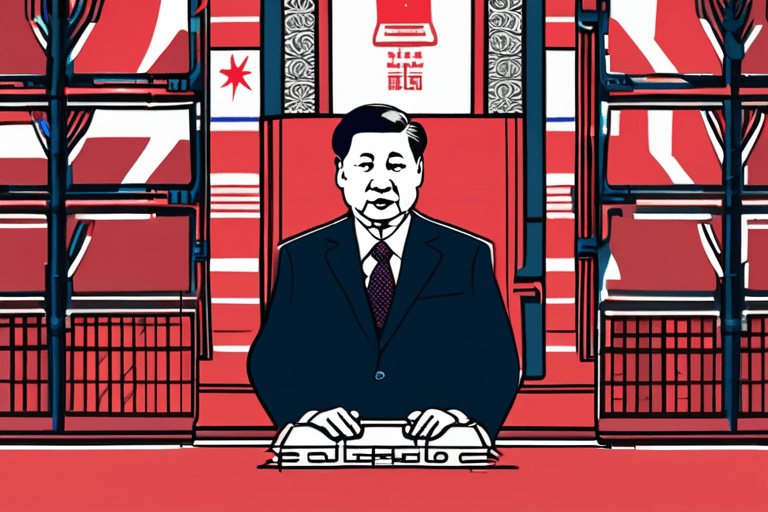
Chinese President Xi Jinping stated in his annual New Year's Eve speech in Beijing that the reunification of China and Taiwan is inevitable. The statement, made a day after the conclusion of extensive Chinese military exercises near Taiwan, reiterated China's long-held position on the island.
Xi Jinping emphasized the inevitability of reunification, stating, "The reunification of our motherland, a trend of the times, is unstoppable." China considers Taiwan, a self-governing island, to be a part of its territory and has consistently asserted its intention to annex it, even if it requires the use of force.
These remarks follow two days of live-fire military drills conducted by China's People's Liberation Army (PLA) around Taiwan. These exercises simulated a blockade of key Taiwanese ports and involved naval and air force assets. The drills were interpreted by many as a demonstration of China's military capabilities and a warning to Taiwan and its allies.
The situation is further complicated by the increasing concern within US intelligence circles regarding China's growing military capabilities. There is a rising apprehension that China may be developing the capacity to launch a successful attack on Taiwan should Xi Jinping decide to initiate such action.
The concept of "reunification" is central to China's national identity and political ideology. The Chinese Communist Party views Taiwan as a breakaway province that must eventually be brought back under mainland control. This stance is rooted in historical claims and nationalistic sentiments.
Taiwan, officially known as the Republic of China, has been self-governed since 1949 after the Chinese Civil War. The island has a democratically elected government and a distinct political identity. The majority of Taiwanese citizens do not support unification with China under the current political system.
The United States maintains a policy of "strategic ambiguity" regarding Taiwan, meaning it does not explicitly state whether it would intervene militarily in the event of a Chinese attack. However, the US has increased its military presence in the region and has strengthened its ties with Taiwan in recent years.
The ongoing tensions between China and Taiwan have significant implications for regional and global stability. Any military conflict in the Taiwan Strait could have devastating consequences for the global economy and international relations. The international community continues to closely monitor the situation, urging both sides to exercise restraint and pursue peaceful dialogue. The future of Taiwan remains uncertain, with the potential for both peaceful resolution and armed conflict.















Discussion
Join the conversation
Be the first to comment