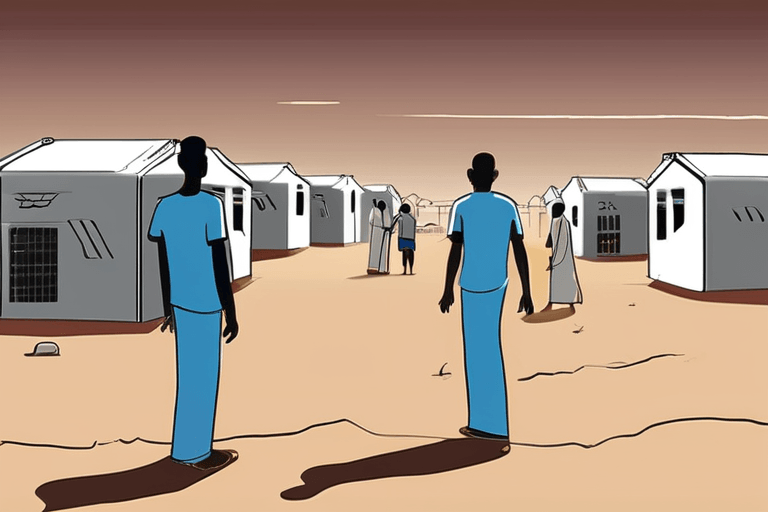
On the outskirts of Kosti, Sudan, displaced families are facing dire conditions with limited access to adequate shelter. Aziza, a displaced woman, and her children are among those seeking refuge in the city, which has become a central point for individuals fleeing the ongoing conflict.
Aziza and her family are currently living in a makeshift shelter constructed from thin sheets, offering minimal protection from the elements. The lack of proper shelter exposes them to the harsh sun and extreme weather conditions prevalent in the region. "There is no man to lead us; our sons are in one place, and we are in another," Aziza told Al Jazeera Arabic correspondent Taher Almardi. "We are sitting in this heat. Nothing pro."
Kosti, located in south-central Sudan, has experienced a significant influx of displaced people due to the conflict. The city's infrastructure is struggling to accommodate the growing number of individuals seeking safety, leading to overcrowded conditions and limited resources. The humanitarian crisis is further compounded by the disruption of supply chains and restricted access to essential services.
The ongoing conflict in Sudan has resulted in widespread displacement, with civilians forced to flee their homes in search of safety. The United Nations and other humanitarian organizations have warned of a potential humanitarian collapse if the conflict continues and access to affected populations remains restricted. The situation is exacerbated by the approaching rainy season, which could further deteriorate living conditions for displaced families.
Efforts are underway to provide humanitarian assistance to displaced populations in Kosti and other affected areas. However, the scale of the crisis requires a coordinated and sustained response from the international community. Aid organizations are working to provide shelter, food, water, and medical care to those in need, but face significant challenges in reaching all affected populations due to security concerns and logistical constraints. The current status of Aziza and her family remains precarious, as they continue to rely on limited resources and face an uncertain future.













Discussion
Join the conversation
Be the first to comment