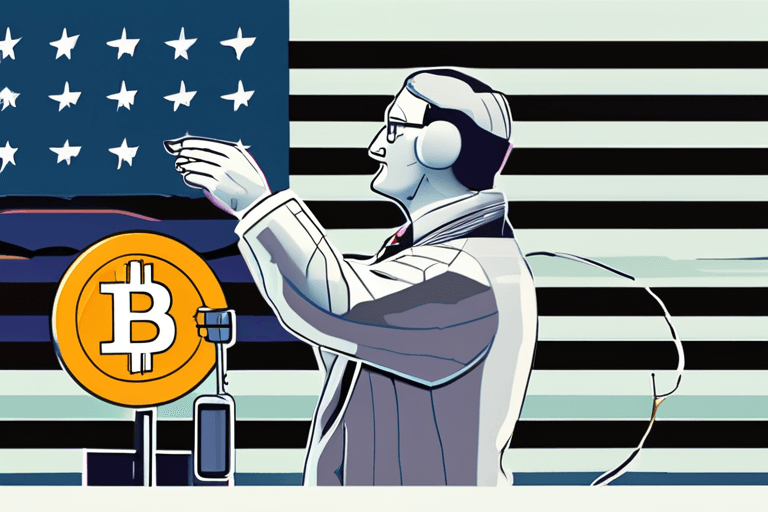
Cryptocurrencies experienced a significant surge in value throughout 2025 before a market downturn in October. The year was marked by increased government support for the crypto sector, spurred by the election of President Trump, who pledged to establish the U.S. as "the crypto capital of the world."
The Trump administration took steps to integrate cryptocurrency into the nation's financial system, including the appointment of Paul Atkins, a consultant with prior involvement in the crypto industry, as the chair of the Securities and Exchange Commission (SEC). Atkins' appointment signaled a shift toward a more accommodating regulatory environment for digital assets.
Congress also passed the GENIUS Act, which established a regulatory framework for stablecoins, a type of cryptocurrency designed to maintain a stable value relative to a traditional asset like the U.S. dollar. This legislation aimed to provide clarity and legitimacy to the growing stablecoin market, facilitating their use in everyday transactions. The GENIUS Act allows for near instantaneous transfer of digital currency.
However, the cryptocurrency market experienced a sharp correction in October, leading to significant losses for investors. The reasons for the downturn are varied, with analysts pointing to factors such as profit-taking after the year's gains, regulatory uncertainty, and concerns about the long-term sustainability of some crypto projects.
The crash has prompted renewed debate about the role of government regulation in the crypto market. Some argue that stricter rules are needed to protect investors and prevent fraud, while others contend that excessive regulation could stifle innovation and drive crypto activity overseas.
"The events of 2025 highlight the inherent volatility of the cryptocurrency market," said Eleanor Holmes, a financial analyst at the Brookings Institution. "While government support can boost adoption, it cannot eliminate the risks associated with these assets."
The future of cryptocurrency regulation in the U.S. remains uncertain. While the Trump administration has signaled a willingness to embrace the technology, the October crash may lead to increased scrutiny from lawmakers and regulators. The SEC, under the leadership of Paul Atkins, is expected to play a key role in shaping the regulatory landscape for cryptocurrencies in the coming years.




















Discussion
Join the conversation
Be the first to comment