Have you ever felt velvetmist? It's a complex and subtle emotion that elicits feelings of comfort, serenity, and a gentle sense of floating. Peaceful, yet more ephemeral and intangible than contentment. Imagine being draped in a soft, fuzzy ghost, drifting through a lavender suburb. Sounds… specific? It is. This feeling, dubbed "velvetmist," wasn't discovered in a dusty psychology textbook. It was generated by a Reddit user, noahjeadie, using ChatGPT, complete with instructions on how to evoke it through essential oils and a curated soundtrack.
While velvetmist might sound like a quirky internet novelty, it represents something much larger: the burgeoning world of neo-emotions. These newly coined terms, describing nuanced and previously unnamed feelings, are popping up across the digital landscape. A recent journal article, published in July 2025, even highlighted velvetmist as a prime example of this phenomenon. But are these just fleeting digital fads, or do they signify a fundamental shift in how we understand and experience emotions?
The rise of neo-emotions reflects a growing understanding that our emotional landscape isn't fixed. It's a dynamic, ever-evolving terrain shaped by our experiences, our culture, and, increasingly, our interactions with technology. While AI can certainly contribute to the creation of these new emotional concepts, the driving force behind them remains distinctly human. We are constantly inventing new ways to feel, to articulate the complex tapestry of our inner lives in response to a rapidly changing world.
"The traditional view of emotions often paints them as innate and universal," explains Dr. Anya Sharma, a leading researcher in affective computing at the Massachusetts Institute of Technology. "But what we're seeing now is that emotions are also constructed. They're influenced by our environment, our language, and our social interactions. The internet, with its ability to connect people across cultures and expose them to new ideas, is a fertile ground for the creation of new emotional categories."
Consider the feeling of "digital fatigue," a weariness born from constant connectivity and information overload. Or "FOMO" (fear of missing out), a distinctly modern anxiety fueled by social media. These emotions, while relatively new to our lexicon, resonate deeply with many people, reflecting the unique challenges and anxieties of the digital age.
The act of naming an emotion, even a seemingly frivolous one like velvetmist, can be incredibly empowering. It allows us to recognize and validate our experiences, to connect with others who feel the same way, and to develop a deeper understanding of ourselves. "When we give a name to a feeling, we give it legitimacy," says Dr. Sharma. "It becomes something we can talk about, something we can explore, something we can potentially manage."
But the rise of neo-emotions also raises important questions. Are we simply creating new labels for existing feelings, or are we genuinely expanding the range of human emotional experience? And what role will AI play in shaping our emotional future?
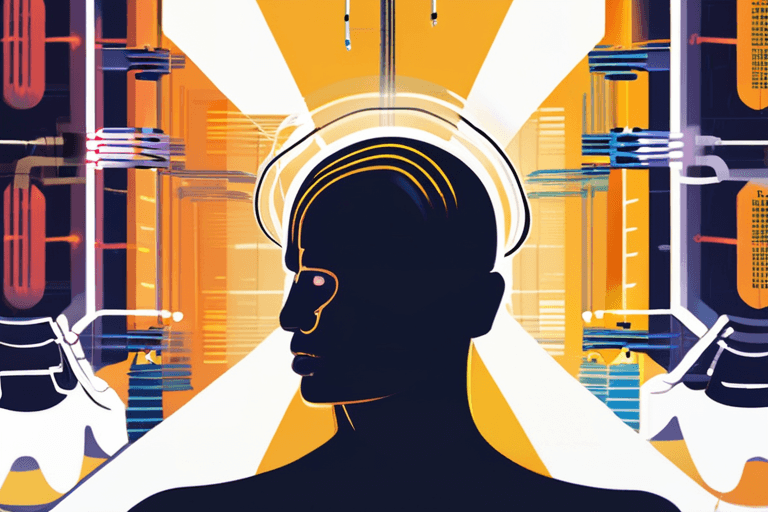
As AI becomes more sophisticated, it's likely that we'll see even more AI-generated emotions entering our vocabulary. While some may dismiss these as mere algorithmic outputs, others may find them to be surprisingly insightful, offering new ways to understand and navigate the complexities of human existence. The key, according to Dr. Sharma, is to approach these developments with a critical and open mind. "We need to be aware of the potential for AI to manipulate our emotions, but we also need to recognize its potential to help us understand ourselves better," she says. "The future of emotions is likely to be a collaborative one, with humans and AI working together to explore the vast and uncharted territory of the human heart."














Discussion
Join the conversation
Be the first to comment