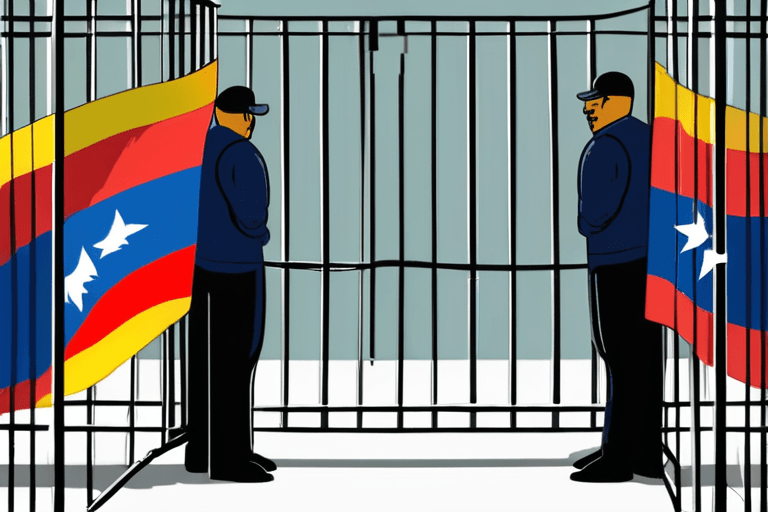
The Venezuelan government released at least 80 political prisoners on Thursday, according to rights groups monitoring the situation in the country. The move, while a recurring event around the holiday season, occurs against a backdrop of increasing restrictions on dissent within Venezuela.
This latest release follows a similar action in late December, bringing the total number of political detainees freed in the past month to nearly 200, rights organizations reported. Among those released on Thursday was Jonathan Torres Duque, a Venezuelan national who had been residing in the United States before returning to Venezuela, where he was detained in late 2024. Torres Duque had been legally residing in the U.S. under Temporary Protected Status, a designation that was terminated by the Trump administration.
According to the Committee for the Liberation of Political Prisoners, a Venezuelan rights group, the majority of those released were imprisoned for their involvement in protests following Venezuela's disputed 2024 presidential election. Independent analyses of tally sheets released after the election indicated that President Nicolás Maduro lost decisively.
The freeing of political prisoners is often viewed with skepticism by international observers, who point to the cyclical nature of such releases. These observers argue that the releases are often timed to deflect international criticism of the Maduro government's human rights record. The releases also come as Venezuela faces continued economic hardship and international isolation, with many countries questioning the legitimacy of Maduro's presidency.
Venezuela has been in a state of political and economic crisis for years, marked by hyperinflation, shortages of basic goods, and a mass exodus of its citizens. The political landscape is deeply polarized, with the opposition accusing Maduro of authoritarianism and the government accusing the opposition of attempting to destabilize the country with the backing of foreign powers. The United Nations and various international human rights organizations have repeatedly expressed concern over the erosion of democratic institutions and the suppression of dissent in Venezuela. The releases are seen by some as a superficial attempt to appease international pressure rather than a genuine commitment to improving human rights.

















Discussion
Join the conversation
Be the first to comment