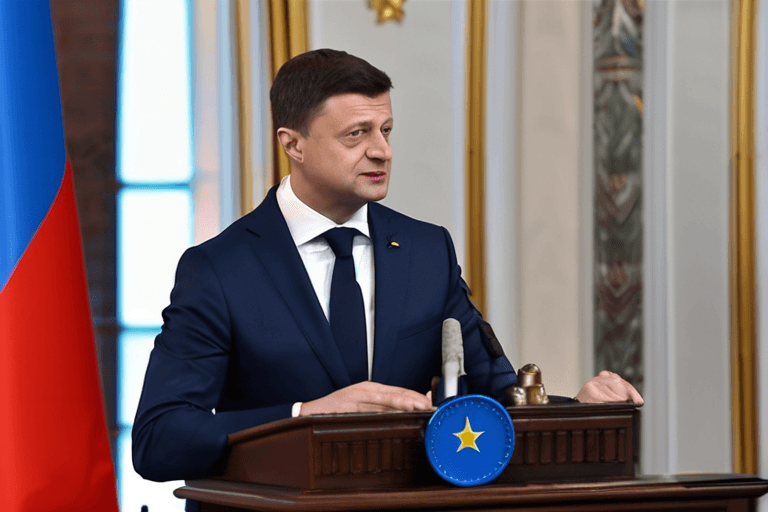
Ukrainian President Volodymyr Zelensky said in a New Year address that a peace agreement to end the war with Russia is "90% ready." The remaining 10%, according to Zelensky, would "determine the fate of peace, the fate of Ukraine and Europe."
Zelensky's address, delivered as Ukraine approaches the second anniversary of Russia's full-scale invasion in February 2022, largely focused on Ukrainian resistance to Moscow. The conflict, which began in 2014 following Russia's annexation of Crimea, has seen fluctuating levels of intensity, with the recent full-scale invasion marking a significant escalation.
In his own New Year's message, Russian President Vladimir Putin told his troops that "we believe in you and our victory," signaling Russia's continued commitment to its military objectives in Ukraine.
Adding to the tensions, Moscow released what it claimed was evidence of Ukraine using drones to target Putin's private residence on Lake Valdai in north-west Russia. The allegations, which Kyiv has strenuously denied, included a map purportedly showing the drones were launched from the Sumy and Chernihiv regions of Ukraine and a video of a downed drone. A serviceman in the video claimed the wreckage was a Ukrainian Chaklun drone. The BBC reported it was unable to verify the footage or the location where it was shot.
Negotiations between Ukraine and Russia have been ongoing, albeit intermittently, since the beginning of the full-scale invasion. International actors, including the United Nations and various European nations, have attempted to mediate and facilitate dialogue. The complexities of the conflict, rooted in historical, political, and cultural factors, have made reaching a comprehensive and lasting peace agreement challenging. Key points of contention include the status of Crimea, the territorial integrity of Ukraine, and security guarantees for both nations.
Russia's position on the ongoing peace process remains under review, according to sources in Moscow. The international community continues to monitor the situation closely, with concerns over the humanitarian impact of the conflict and its broader implications for European security.

















Discussion
Join the conversation
Be the first to comment