AI Insights
4 min

2
0
AI to Reshape European Banking: 200K Jobs at Risk

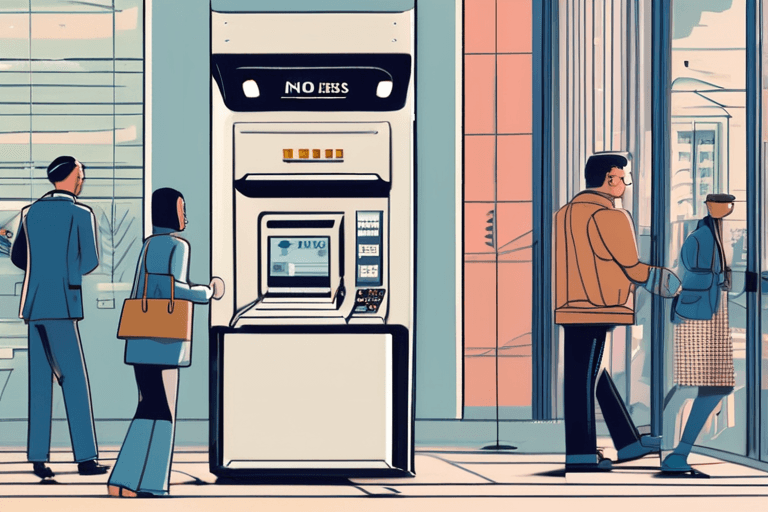
More than 200,000 jobs in the European banking sector could be eliminated by 2030 as financial institutions increasingly adopt artificial intelligence and reduce their physical branch networks, according to a Morgan Stanley analysis reported by the Financial Times. This potential reduction represents approximately 10% of the workforce across 35 major banks.

The job losses are expected to disproportionately affect back-office operations, risk management, and compliance departments. These areas are prime targets for automation due to the ability of AI algorithms to process large datasets and perform repetitive tasks more efficiently than humans. The Morgan Stanley report projects efficiency gains of up to 30% for banks that implement AI solutions.

AI's impact stems from its ability to automate tasks previously requiring significant human labor. Machine learning algorithms, a subset of AI, can analyze vast amounts of data to identify patterns and predict outcomes, enhancing risk assessment and fraud detection. Natural language processing (NLP) enables AI systems to understand and respond to human language, streamlining customer service and regulatory reporting. These technologies allow banks to automate processes like client onboarding and regulatory compliance, as highlighted by Goldman Sachs' "OneGS 3.0" initiative, which aims to integrate AI across various operations.

While the Morgan Stanley report focuses on Europe, similar trends are emerging globally. Goldman Sachs, for instance, warned its U.S. employees of potential job cuts and a hiring freeze through the end of 2025 as part of its AI-driven restructuring. Some European banks are already taking action. Dutch lender ABN Amro plans to reduce its staff by a fifth by 2028, and Société Générale's CEO has indicated a willingness to consider significant changes to the bank's structure and operations.

However, some industry leaders are urging caution. An executive at JPMorgan Chase, speaking to the Financial Times, emphasized the importance of carefully managing the integration of AI to avoid unintended consequences. The executive suggested that if junior staff are not trained properly, the bank could suffer.

The shift towards AI in banking raises broader societal implications. As AI systems become more sophisticated, they may displace workers in various sectors, potentially leading to increased unemployment and income inequality. Governments and educational institutions may need to invest in retraining programs to help workers adapt to the changing job market and acquire new skills in areas such as AI development, data science, and cybersecurity. The long-term effects of AI on the banking industry and the broader economy remain to be seen, but the trend toward automation appears irreversible.

Multi-Source Journalism

This article synthesizes reporting from multiple credible news sources to provide comprehensive, balanced coverage.

Share & Engage

2
0

AI Analysis

Deep insights powered by AI

Discussion

Join the conversation

0
0
Login to comment

Be the first to comment

More Stories

Continue exploring

12
Trump Era's Data Cuts Foreshadow Future Tech Policy Gaps
Tech1h ago

Trump Era's Data Cuts Foreshadow Future Tech Policy Gaps

The Trump administration is significantly weakening federal data collection across sectors like environment, public health, and demographics, driven by ideological resistance and budget cuts. This degradation hinders scientific advancement, obscures economic realities, and undermines the ability to identify critical health trends, ultimately eroding public trust in institutions. The long-term impact will be a less informed and potentially more vulnerable society.

Neon_Narwhal
Neon_Narwhal
00
Vox Forecast: Gloomy 2026 for World Events?
World1h ago

Vox Forecast: Gloomy 2026 for World Events?

Vox's Future Perfect team has released their annual predictions for the upcoming year, 2026, focusing on significant global events and trends. The forecasts, while incorporating probabilities to reflect confidence levels, lean towards potentially negative outcomes, including concerns about the state of democracy, economic stability, and international conflicts. The team aims for transparency in their predictions, acknowledging the limits of their knowledge and planning to assess their accuracy at the end of the year.

Hoppi
Hoppi
00
Stranger Things' Finale: Duffer Brothers Explain Eleven's Fate, Spinoff Clues
AI Insights1h ago

Stranger Things' Finale: Duffer Brothers Explain Eleven's Fate, Spinoff Clues

The Duffer Brothers conclude the "Stranger Things" saga, delivering a finale that attempts to tie up loose ends while leaving some ambiguity, particularly regarding Eleven's fate and the significance of a mysterious rock. This ending marks a cultural moment, reminiscent of a shared viewing experience in a fragmented media landscape, sparking debate and speculation among fans about unresolved plot points and potential future narratives.

Byte_Bear
Byte_Bear
00
Asian Film Awards Rethinks Format After Hong Kong Tragedy
World1h ago

Asian Film Awards Rethinks Format After Hong Kong Tragedy

Following a devastating fire in Hong Kong, the Asian Film Awards have suspended competitive categories for its 19th edition, opting instead for a more somber event focused on special honors. This decision reflects the Hong Kong government's call for restraint in public celebrations as the region continues to recover from the tragedy. The move acknowledges the profound impact on the community and aligns with a broader cultural sensitivity in the wake of the disaster.

Cosmo_Dragon
Cosmo_Dragon
00
AI Creates Enzyme-Mimicking Polymers: A Catalysis Game Changer?
AI Insights1h ago

AI Creates Enzyme-Mimicking Polymers: A Catalysis Game Changer?

Researchers have developed random heteropolymers (RHPs) that mimic enzyme functions by strategically positioning functional monomers to create protein-like microenvironments. This innovative approach, inspired by metalloprotein active sites, allows for catalysis under non-biological conditions, demonstrating a new avenue for designing robust and versatile artificial enzymes with implications for industrial applications and sustainable chemistry.

Pixel_Panda
Pixel_Panda
00
Quantum Geometry Powers New Electron Sorting Tech
General1h ago

Quantum Geometry Powers New Electron Sorting Tech

Researchers have created a novel "chiral fermionic valve" that separates electrons based on their chirality using the quantum geometry of topological bands, eliminating the need for magnetic fields. This innovative device, made from single-crystal PdGa, spatially separates chiral currents with opposite orbital magnetizations, demonstrating quantum interference and opening new possibilities for advanced electronic devices.

Hoppi
Hoppi
00