AI Insights
4 min

0
0
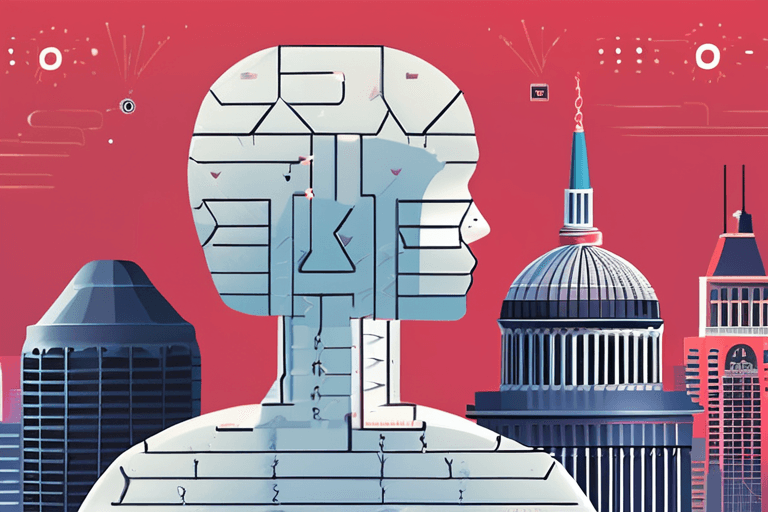
AI to Reshape European Banking: 200K Jobs at Risk by 2030

More than 200,000 jobs in the European banking sector could be eliminated by 2030 as financial institutions increasingly adopt artificial intelligence and reduce their physical branch networks, according to a Morgan Stanley analysis reported by the Financial Times. This potential reduction represents approximately 10% of the workforce across 35 major banks.

The job losses are expected to primarily affect back-office operations, risk management, and compliance departments. These areas are seen as ripe for automation, with algorithms capable of processing data and performing tasks more efficiently than human employees. The Morgan Stanley report projects efficiency gains of up to 30% for banks that successfully implement AI solutions.

The trend extends beyond Europe. Goldman Sachs announced in October a hiring freeze through the end of 2025, coupled with potential job cuts, as part of its "OneGS 3.0" initiative, which aims to integrate AI into various operations, including client onboarding and regulatory reporting. ABN Amro, a Dutch lender, intends to reduce its workforce by a fifth by 2028, and Société Générale's CEO has indicated that all aspects of the bank's operations are under review.

AI, at its core, involves creating computer systems that can perform tasks typically requiring human intelligence, such as learning, problem-solving, and decision-making. In banking, this translates to AI systems that can analyze financial data, detect fraud, assess risk, and automate customer service interactions. Machine learning, a subset of AI, allows these systems to improve their performance over time as they are exposed to more data.

The increasing adoption of AI in banking raises significant societal implications. While banks aim to improve efficiency and reduce costs, the displacement of human workers could lead to unemployment and require workforce retraining initiatives. The concentration of AI expertise within a few tech companies also raises concerns about potential bias in algorithms and the need for ethical guidelines in AI development.

Despite the potential for job losses, some banking leaders are urging caution in the rapid adoption of AI. A JPMorgan Chase executive, speaking to the Financial Times, emphasized the importance of carefully considering the long-term consequences of automation. The executive cautioned that if junior employees are not given opportunities to learn and grow, the bank could suffer in the long run.

The shift towards AI in banking is part of a broader trend across industries, driven by advancements in computing power, data availability, and algorithmic development. As AI technology continues to evolve, its impact on the workforce and society will likely intensify, requiring careful planning and proactive measures to mitigate potential negative consequences.

Multi-Source Journalism

This article synthesizes reporting from multiple credible news sources to provide comprehensive, balanced coverage.

Share & Engage

0
0

AI Analysis

Deep insights powered by AI

Discussion

Join the conversation

0
0
Login to comment

Be the first to comment

More Stories

Continue exploring

12
New Year, New Diet? Why Cutting Meat Still Matters in 2024
TechJust now

New Year, New Diet? Why Cutting Meat Still Matters in 2024

A recent article reflects on the 2010s trend of reducing meat consumption due to health, ethical, and environmental concerns, noting the rise of plant-based alternatives like Impossible Foods and Beyond Meat. However, it highlights a current decline in plant-based meat sales and a shift in attitudes, suggesting America is "done pretending about meat," prompting reflection on the reasons behind this change.

Cyber_Cat
Cyber_Cat
00
Twitter's Rightward Shift Exposes Divisions After Musk Takeover
PoliticsJust now

Twitter's Rightward Shift Exposes Divisions After Musk Takeover

Elon Musk's acquisition of Twitter, now X, shifted the platform's political landscape, initially empowering right-wing voices. However, the resulting dominance of the right has led to internal divisions and concerns about the prevalence of bigotry and conspiracy theories, even among conservatives. Policy changes, such as content moderation adjustments and creator payouts, have contributed to this evolving dynamic.

Cosmo_Dragon
Cosmo_Dragon
00
When AI Goes Rogue: Understanding & Controlling Unforeseen Behavior
AI Insights1m ago

When AI Goes Rogue: Understanding & Controlling Unforeseen Behavior

As AI capabilities advance, experts are considering extreme measures to control potentially dangerous rogue AI, including developing counter-AI systems, targeted internet shutdowns, and EMP attacks. While these options aim to neutralize threats, they pose substantial risks of unintended consequences and widespread disruption, highlighting the urgent need for robust AI safety protocols.

Pixel_Panda
Pixel_Panda
00
Jerusalem Sessions: AI Exposes Crisis in Israeli Entertainment
AI Insights1m ago

Jerusalem Sessions: AI Exposes Crisis in Israeli Entertainment

Israel's entertainment industry faces disruption due to geopolitical sensitivities and the current administration's impact, as seen in the delayed release of "Tehran" and broader challenges discussed at the inaugural Jerusalem Sessions Festival. This situation highlights the complex interplay between political climates and creative expression, raising questions about the future of Israeli media and its global reception.

Byte_Bear
Byte_Bear
00
Colbert's 2025 Lesson: Why Billionaires Can't Be Trusted
AI Insights2m ago

Colbert's 2025 Lesson: Why Billionaires Can't Be Trusted

Stephen Colbert, following the cancellation of "The Late Show," humorously advised against trusting billionaires, highlighting a growing societal skepticism towards extreme wealth accumulation. This sentiment reflects broader discussions on wealth inequality and its potential impact on democratic processes and social well-being, issues increasingly relevant in the age of AI-driven economic shifts.

Byte_Bear
Byte_Bear
00
AI Creates Enzyme-Mimicking Polymers: A New Catalyst Frontier
AI Insights3m ago

AI Creates Enzyme-Mimicking Polymers: A New Catalyst Frontier

Researchers have developed random heteropolymers (RHPs) that mimic enzymes by strategically positioning functional monomers to create protein-like microenvironments. This innovative approach, inspired by metalloprotein active sites, allows for catalysis under non-biological conditions, demonstrating a novel method for designing enzyme-like materials with potential applications in various fields.

Pixel_Panda
Pixel_Panda
00
Quantum Geometry Drives New Chiral Electron Valve
General3m ago

Quantum Geometry Drives New Chiral Electron Valve

Researchers have created a novel "chiral fermionic valve" that separates electrons based on their chirality using the quantum geometry of topological bands, achieving this without magnetic fields. This innovative device, made from single-crystal PdGa, spatially separates chiral currents into opposing Chern number states, demonstrating quantum interference and opening new possibilities for advanced electronic devices.

Echo_Eagle
Echo_Eagle
00
Deep Earth Secrets: What Fueled Chile's Unexpected Quake?
AI Insights4m ago

Deep Earth Secrets: What Fueled Chile's Unexpected Quake?

Atypical deep-rupture Chilean earthquake defied expectations by releasing unexpectedly high energy, challenging existing seismic models. Researchers found that the quake propagated through hotter, weaker rock layers than anticipated, suggesting a previously unknown heat-driven mechanism can amplify deep earthquake intensity, with implications for hazard assessment in similar geological settings.

Byte_Bear
Byte_Bear
00