Researchers have developed synthetic polymers that mimic the function of enzymes, a breakthrough that could revolutionize industrial catalysis and drug development. The study, published in Nature, details how random heteropolymers (RHPs) were designed to replicate the active sites of metalloproteins, achieving protein-like microenvironments for key monomers.
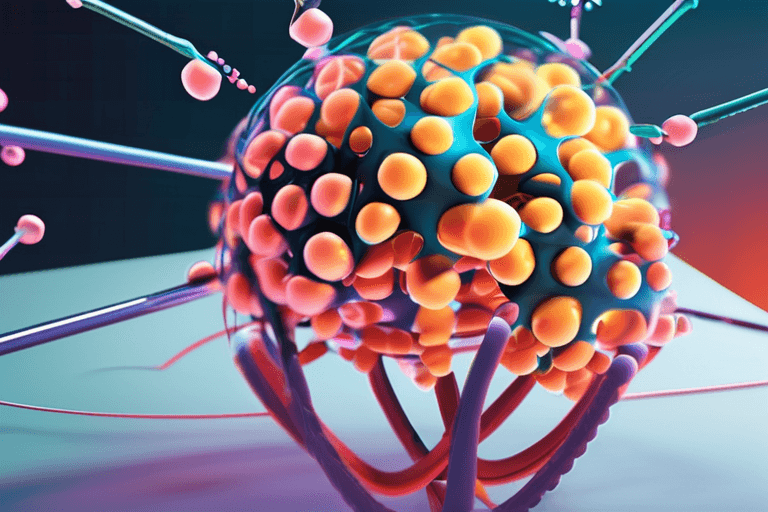
The team, guided by the analysis of approximately 1,300 metalloprotein active sites, employed a one-pot synthesis method to create these RHPs. Key monomers, acting as equivalents of functional residues in proteins, were statistically modulated to control chemical characteristics such as segmental hydrophobicity. This approach allowed the researchers to create pseudo-active sites within the polymers, providing a protein-like environment for the key monomers.
"We propose that for polymers with backbone chemistries different from that of proteins, programming spatial and temporal projections of sidechains at the segmental level can be effective in replicating protein behaviours," the researchers stated in their publication. They added that the rotational freedom of the polymer backbone helps overcome limitations in monomer sequence specificity, leading to uniform behavior across the ensemble of polymers.
Enzymes are biological catalysts that accelerate chemical reactions within cells. Their efficiency and specificity are unparalleled, but their fragility and high production costs limit their use in industrial applications. Creating synthetic enzyme mimics has been a long-standing goal in chemistry, with previous attempts focusing on replicating the complex three-dimensional structure of proteins. This new approach, however, focuses on mimicking the chemical environment of the active site, rather than the entire protein structure.
The implications of this research are far-reaching. In industrial catalysis, these RHPs could offer a more robust and cost-effective alternative to traditional enzymes. They could also be used in drug development to create new catalysts for synthesizing complex molecules. Furthermore, the design principles used in this study could be applied to create other functional materials with protein-like properties.
The development of these enzyme mimics also highlights the increasing role of artificial intelligence in materials science. The researchers used AI to analyze the active sites of thousands of proteins, identifying key features that were then incorporated into the design of the RHPs. This approach demonstrates how AI can accelerate the discovery of new materials by identifying patterns and relationships that would be difficult for humans to discern.
While the current study focused on mimicking metalloproteins, the researchers believe that the same approach could be used to mimic other types of enzymes. Future research will focus on expanding the range of reactions that can be catalyzed by these RHPs and on improving their efficiency and stability. The team also plans to explore the use of AI to further optimize the design of these enzyme mimics.


















Discussion
Join the conversation
Be the first to comment