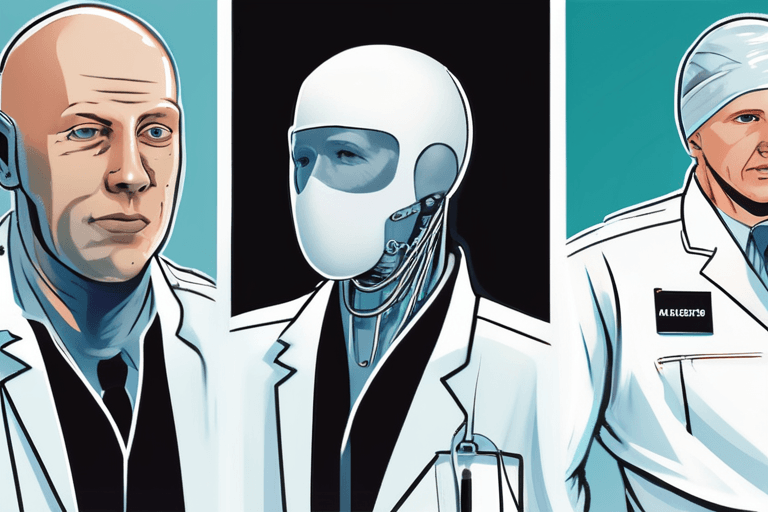
The concept of head transplantation, once relegated to the realm of science fiction, is experiencing renewed interest, potentially paving the way for a highly specialized medical field and the emergence of "head-transplant surgeons." This resurgence follows controversial claims made by Italian neurosurgeon Sergio Canavero, who in 2017 announced a team he advised in China had performed a head transplant between two corpses.
Canavero's work, though met with skepticism, has sparked discussion and exploration within life-extension communities and, reportedly, within some Silicon Valley startups. The procedure, theoretically, would involve transplanting a patient's head, or potentially just the brain, onto a younger, healthier body. The primary goal is to offer a radical solution for individuals suffering from debilitating conditions like muscular dystrophy or those facing age-related decline, where other treatments have proven ineffective.
The technical challenges are immense. The procedure would require meticulous reconnection of the spinal cord, a process Canavero has previously described as using a "fusogen" chemical to encourage nerve regeneration. Vascular connections would need to be established to ensure proper blood flow to the brain, and the body would need to be suppressed immunologically to prevent rejection of the new host.
Canavero's initial claims and demonstrations were met with significant criticism from the medical community. The Chicago Tribune, for example, labeled him the "P.T. Barnum of transplantation." Skeptics questioned the feasibility of spinal cord reconnection and the long-term viability of such a transplant.
Despite the controversy, Canavero maintains that his work is driven by a desire to find solutions for aging and debilitating diseases. "It's become absolutely clear over the past years that the idea of some incredible tech to rejuvenate elderly [people] is not on the horizon," he stated.
The potential industry impact of successful head transplantation is significant. It could create a new market for organ donors, specifically bodies suitable for head or brain recipients. It would also necessitate the development of advanced surgical tools, immunosuppressant drugs, and rehabilitation protocols. Furthermore, the ethical implications are profound, raising questions about identity, consciousness, and the definition of death.
While the field remains largely theoretical, the renewed interest suggests that research and development in related areas, such as spinal cord regeneration and advanced transplantation techniques, may continue. Canavero, who says he received a pink slip from Molinette Hospital in Turin after 22 years on staff, acknowledges the challenges he faces as an "out-of-the-establishment guy." However, he remains committed to exploring the possibilities of head transplantation, even if the path forward is uncertain.

















Discussion
Join the conversation
Be the first to comment