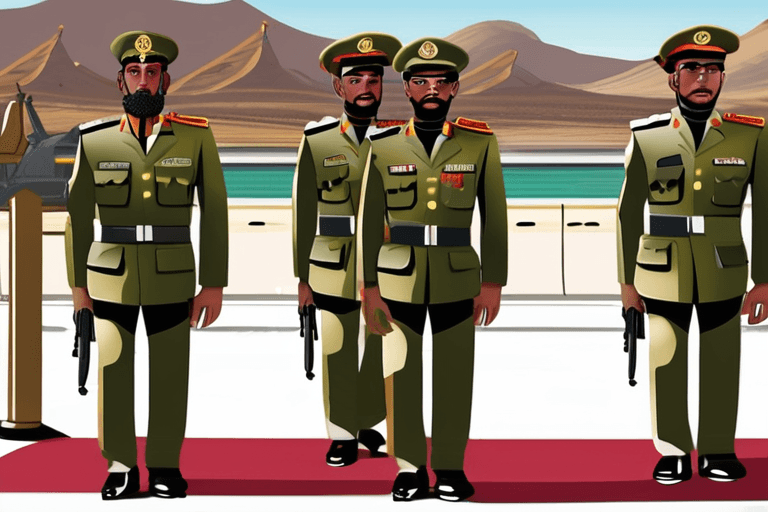
The Yemeni government announced Friday it was deploying its armed forces to Hadhramaut, an oil-rich territory in southern Yemen, in an effort to dislodge the Southern Transitional Council (STC), a separatist faction that has seized control of parts of the country. The move escalates the conflict between the internationally recognized Yemeni government, backed by Saudi Arabia, and the STC, which seeks to establish an independent state in southern Yemen and has received support from the United Arab Emirates.
An armed group aligned with the separatists declared they were now at war with the Yemeni government in Hadhramaut, further complicating the already volatile situation. Mohammed Qizan, deputy information minister of the Yemeni government, stated that the Saudi-led coalition had been involved in Friday's military operations at the request of the Yemeni government. As of press time, neither the Saudi government nor the military coalition had responded to requests for comment regarding their involvement.
Yemen has been embroiled in a civil war since 2014, when the Houthi rebels, a Zaidi Shia Muslim group, seized control of the capital, Sanaa, and much of northern Yemen, prompting a military intervention by a Saudi-led coalition in 2015. The conflict has created one of the world's worst humanitarian crises, with millions facing starvation and displacement. The emergence of the STC as a significant player in the south has added another layer of complexity to the conflict, fracturing the anti-Houthi alliance and opening new fronts in the war.
The rivalry between Saudi Arabia and the United Arab Emirates, both key members of the coalition fighting the Houthis, has been exacerbated by the recent events. While both countries initially supported the Yemeni government, the UAE has increasingly backed the STC, reflecting differing strategic priorities in the region. This divergence has weakened the coalition's efforts against the Houthis and further destabilized Yemen.
The current escalation in Hadhramaut raises concerns about the potential for further fragmentation of Yemen and the intensification of the humanitarian crisis. The international community has repeatedly called for a negotiated settlement to the conflict, but progress has been hampered by the multiplicity of actors and their conflicting interests. The United Nations has warned that the fighting could further disrupt vital aid deliveries and exacerbate the suffering of the Yemeni people. The coming days will be critical in determining whether the situation can be de-escalated and a path towards a lasting peace can be found.
















Discussion
Join the conversation
Be the first to comment