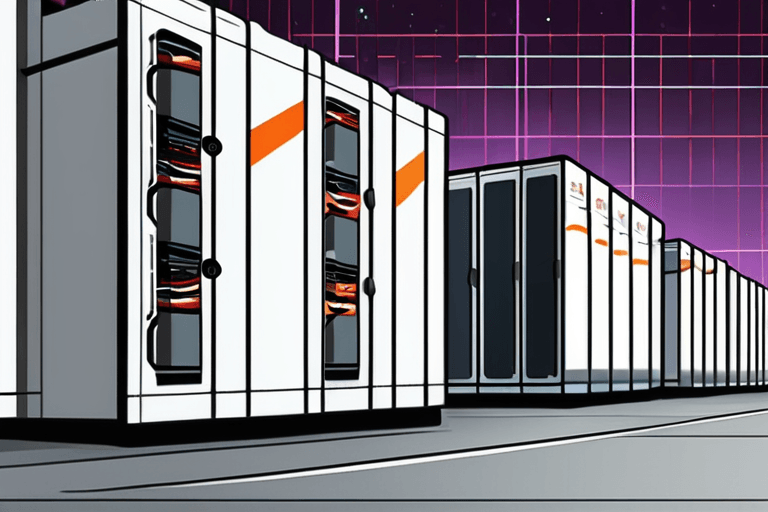
Artificial intelligence and space industry leaders are considering building data centers in space to address growing concerns about energy and land constraints on Earth. The concept, once relegated to science fiction, is gaining traction as the demand for computing power to fuel AI development intensifies.
Google announced Project Suncatcher in November, a space data center initiative with test launches planned for 2027. Elon Musk stated at a recent conference that space-based data centers could become the most cost-effective method for AI training within five years. Jeff Bezos, founder of Amazon and Blue Origin; Sam Altman, CEO of OpenAI; and Jensen Huang, CEO of Nvidia, have also expressed support for the idea.
Data centers are the massive computing facilities that power AI, requiring vast amounts of energy and land. As AI models become more complex, the resources needed to train and operate them are increasing exponentially. The current infrastructure may soon be insufficient to meet the demands of the AI boom, prompting the search for alternative solutions.
Building data centers in space could offer several advantages. Space-based facilities could harness solar energy more efficiently, reducing reliance on terrestrial power grids. The vacuum of space provides a natural cooling environment, potentially lowering energy consumption for cooling systems. Locating data centers in orbit could also free up valuable land resources on Earth.
However, the concept also presents significant challenges. The cost of launching and maintaining data centers in space would be substantial. Ensuring the reliability and security of these facilities in the harsh space environment would require advanced engineering and robust cybersecurity measures. The environmental impact of frequent rocket launches and potential space debris also needs careful consideration.
Despite the challenges, the potential benefits of space-based data centers are attracting serious attention from industry leaders. "Space data centers would be the cheapest way to train A.I. not more than five years from now," Musk said. As AI continues to advance, the search for innovative solutions to meet its growing infrastructure demands is likely to intensify, potentially pushing the boundaries of technology beyond Earth's atmosphere.















Discussion
Join the conversation
Be the first to comment