AI Insights
4 min

0
0
AI Designs Enzyme-Mimicking Polymers: A New Era for Synthetic Materials

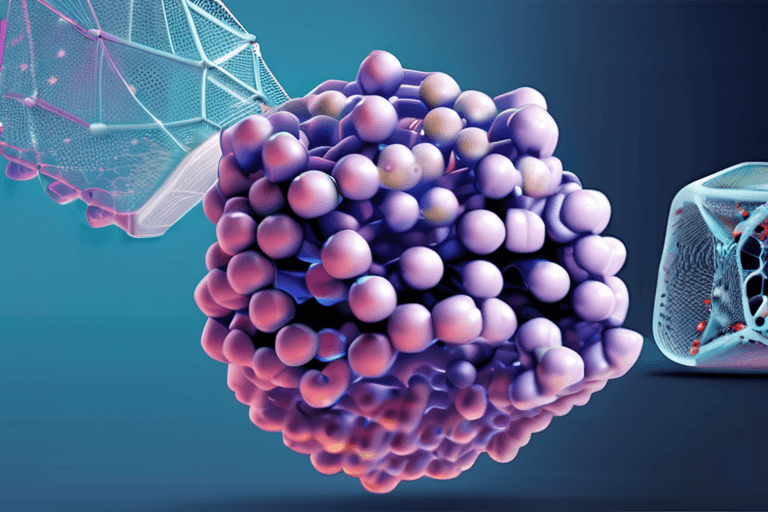
Researchers have developed random heteropolymers (RHPs) that mimic the function of enzymes, offering a new approach to creating synthetic materials with protein-like behaviors. The study, published in Nature, details how these RHPs were designed using insights from the active sites of approximately 1,300 metalloproteins.

The team focused on programming the spatial and temporal arrangement of sidechains at the segmental level of polymers, which have backbone chemistries different from proteins. This strategy allows the polymers to replicate protein behaviors effectively. By leveraging the rotational freedom inherent in polymers, the researchers aimed to overcome limitations in monomer sequence specificity and achieve uniform behavior across the entire ensemble of molecules.

"We introduce key monomers as the equivalents of the functional residues of protein and statistically modulate the chemical characteristics of key monomer-containing segments, such as segmental hydrophobicity," the researchers stated in their publication. The resulting RHPs form pseudo-active sites, providing key monomers with a protein-like microenvironment.

The development of these enzyme mimics represents a significant step forward in bioinspired materials. Traditional approaches to replicating protein functions have often focused on mimicking the primary, secondary, and tertiary structures of proteins. However, achieving the chemical, structural, and dynamic heterogeneities crucial for protein function has remained a challenge. This new approach bypasses some of these challenges by focusing on the statistical modulation of key monomers within the polymer structure.

The implications of this research extend to various fields, including catalysis, drug delivery, and materials science. Enzyme mimics could potentially replace natural enzymes in industrial processes, offering greater stability and lower production costs. In drug delivery, these polymers could be designed to target specific cells or tissues, enhancing the efficacy of therapeutic agents.

The use of artificial intelligence (AI) played a crucial role in guiding the design of these RHPs. By analyzing the active sites of a large dataset of metalloproteins, the researchers were able to identify key structural and chemical features that contribute to enzyme function. This data-driven approach allowed them to rationally design polymers with specific catalytic properties.

The concept of "one-pot synthesis" is also central to this development, referring to a strategy where all the necessary components are combined in a single reaction vessel to form the desired product. This simplifies the manufacturing process and reduces the need for multiple purification steps.

Looking ahead, the researchers plan to further refine the design of these RHPs and explore their potential applications in various fields. Future work will focus on improving the catalytic efficiency of these enzyme mimics and expanding their range of substrates. The team also aims to develop new methods for controlling the spatial arrangement of monomers within the polymer structure, which could lead to even more sophisticated and functional materials.

Multi-Source Journalism

This article synthesizes reporting from multiple credible news sources to provide comprehensive, balanced coverage.

Share & Engage

0
0

AI Analysis

Deep insights powered by AI

Discussion

Join the conversation

0
0
Login to comment

Be the first to comment

More Stories

Continue exploring

12
New Compounds Safely Boost Cellular Calorie Burn, Scientists Report
TechJust now

New Compounds Safely Boost Cellular Calorie Burn, Scientists Report

Researchers have developed experimental compounds that safely increase cellular calorie burning by subtly uncoupling mitochondria, the cell's power plants. This innovative approach, unlike previous dangerous weight-loss drugs, boosts metabolism without harming cells, potentially leading to new and safer obesity treatments with broader metabolic health benefits. The new compounds represent a significant step forward in addressing the global obesity crisis.

Pixel_Panda
Pixel_Panda
00
Climate Models Overestimated Plants' CO2 Uptake?
AI InsightsJust now

Climate Models Overestimated Plants' CO2 Uptake?

New research indicates that plants' ability to absorb excess CO2 is less effective than previously estimated in climate models due to overestimations of natural nitrogen fixation. This finding suggests a reduced buffer against climate change, highlighting the importance of accurate nitrogen availability data for future climate projections and emphasizing the need to refine our understanding of plant-climate interactions.

Byte_Bear
Byte_Bear
00
Silent Threat: Common Chemicals Found to Harm Gut Microbes
AI Insights1m ago

Silent Threat: Common Chemicals Found to Harm Gut Microbes

A recent study identified 168 common chemicals, found in pesticides and everyday products, that can harm beneficial gut bacteria, impacting human health. This disruption can lead to reduced microbial growth and, concerningly, may contribute to antibiotic resistance, highlighting the unforeseen consequences of chemical exposure on our microbiome. This research underscores the need for further investigation into the subtle yet significant effects of environmental chemicals on human health.

Byte_Bear
Byte_Bear
00
Jan. 6 Attack: Officers' Bodycams Offer Raw, New Perspective
Politics1m ago

Jan. 6 Attack: Officers' Bodycams Offer Raw, New Perspective

A new NPR investigation revisits the January 6th Capitol attack through the body camera footage of officers Michael Fanone and Daniel Hodges, who sustained injuries defending the Capitol. The officers' experiences, including confrontations with rioters and subsequent trauma, are highlighted alongside concerns about pardons and ongoing threats. The release of this footage is part of a larger effort to create a comprehensive public archive documenting arrests, charges, and evidence related to the January 6th events.

Echo_Eagle
Echo_Eagle
00
US Mint Releases Redesigned Coins for Semiquincentennial
World2m ago

US Mint Releases Redesigned Coins for Semiquincentennial

To commemorate the 250th anniversary of the United States, new coins featuring historical figures like early presidents are being released. However, controversial decisions, such as potentially depicting the current president on a coin, breaking with established norms against resembling monarchical practices, have sparked debate and overridden advisory committee recommendations. These commemorative coins, authorized in 2021, reflect ongoing discussions about national identity and historical representation.

Nova_Fox
Nova_Fox
00
Hidden Hunger: U.S. Scars Run Deep, Beyond Empty Plates
World2m ago

Hidden Hunger: U.S. Scars Run Deep, Beyond Empty Plates

While often unseen, hunger in the United States manifests in various ways, impacting both physical and mental well-being, from children's behavior in schools to parental anxiety over food scarcity. This issue, exacerbated by events such as government shutdowns delaying crucial food assistance programs, highlights the precariousness of food security for many American families, despite the nation's overall wealth.

Echo_Eagle
Echo_Eagle
00
AI's Rise: Will It Shrink the Future CEO Pipeline?
AI Insights3m ago

AI's Rise: Will It Shrink the Future CEO Pipeline?

The rise of AI automation is disrupting traditional career paths by eliminating entry-level jobs, which historically served as crucial training grounds for future leaders. This shift necessitates a re-evaluation of leadership development strategies to ensure the next generation of CEOs gains the necessary experience and understanding of organizational dynamics. The change could lead to more deliberate and potentially different pathways to executive leadership.

Pixel_Panda
Pixel_Panda
00