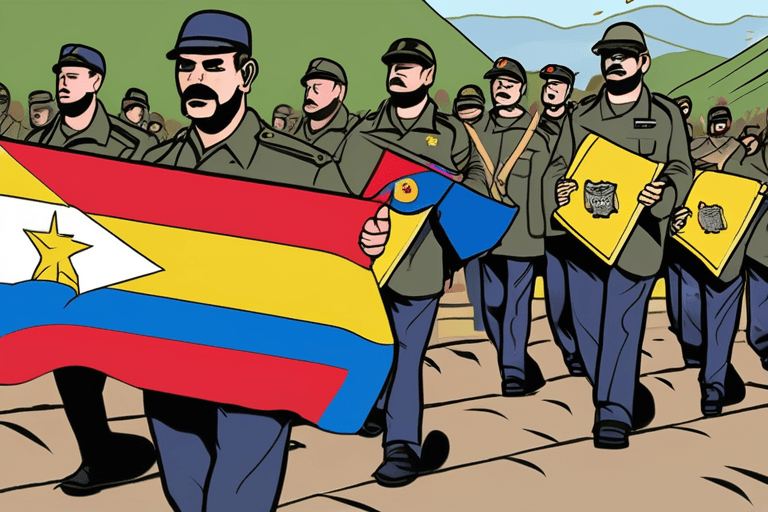
The Colombian government expressed alarm and announced the fortification of its eastern border with Venezuela on Saturday, following the United States military's capture of Venezuelan President Nicolas Maduro. The early morning operation on January 3, 2026, involved strikes on military targets within Venezuela, prompting immediate condemnation from Bogota and raising concerns about regional stability.
Colombia's 2,219-kilometer (1,378-mile) border with Venezuela has historically been a volatile area, plagued by the presence of armed groups, drug trafficking, and smuggling. The Colombian government fears that the power vacuum created by Maduro's removal could exacerbate these existing problems and potentially lead to an influx of refugees seeking safety across the border.
"We are deeply concerned about the implications of this intervention for the stability of the region," a Colombian government spokesperson stated in a press conference. "Our priority is to protect our citizens and maintain the integrity of our borders."
Security analysts have echoed the government's concerns, warning of potential spillover effects from the Venezuelan crisis. "The removal of Maduro creates a dangerous uncertainty," said Isabel Valencia, a security analyst based in Medellin. "It could embolden armed groups operating in the border region and lead to increased violence and instability."
The United States' intervention in Venezuela marks a significant escalation in its long-standing policy towards the Maduro regime, which Washington has accused of corruption, human rights abuses, and undermining democracy. The move has drawn comparisons to previous U.S. interventions in Latin America, such as the capture of Panamanian leader Manuel Noriega in 1989 and the invasion of Grenada in 1983.
The international community has reacted with a mix of condemnation and support. Some countries have criticized the U.S. for violating Venezuela's sovereignty, while others have argued that Maduro's removal was necessary to restore democracy and address the country's humanitarian crisis. The United Nations Security Council is expected to hold an emergency session to discuss the situation.
The immediate future of Venezuela remains uncertain. It is unclear who will assume power in Maduro's absence, and the potential for further conflict and instability remains high. Colombia is bracing for the possibility of a significant influx of Venezuelan refugees, adding further strain to its already stretched resources. The Colombian government is working with international organizations to prepare for a potential humanitarian crisis along the border.


















Discussion
Join the conversation
Be the first to comment