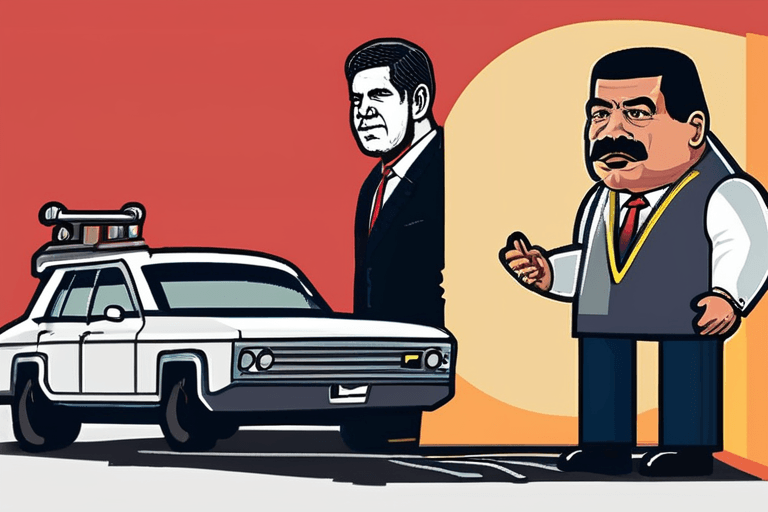
The capture of Nicolás Maduro in Caracas, Venezuela, by U.S. forces on Saturday triggered sharply divided reactions among U.S. politicians, reflecting deep partisan fault lines on foreign policy and interventionism. Republicans largely celebrated the action as the enforcement of a 2020 U.S. narco-trafficking indictment against the Venezuelan leader, while Democrats criticized it as a violation of Venezuela's sovereignty and a potential catalyst for further conflict.
U.S. Attorney General Pam Bondi stated on X that Maduro and his wife, Cilia Flores, had been indicted in the Southern District of New York on charges including narco-terrorism conspiracy, cocaine importation conspiracy, possession of machine guns and destructive devices, and conspiracy to possess machine guns and destructive devices. The indictment, unsealed in March 2020, accuses Maduro and other top Venezuelan officials of conspiring with Colombian guerrillas and elements within the Venezuelan military to flood the United States with cocaine. The U.S. government had offered a $15 million reward for information leading to Maduro's arrest.
The capture occurs against a backdrop of years of political and economic turmoil in Venezuela. Maduro, the successor to Hugo Chávez, has presided over a period of hyperinflation, shortages of basic goods, and mass emigration. His government has been accused of widespread human rights abuses and electoral fraud, leading to international condemnation and sanctions from the U.S. and other countries. The U.S. has long recognized opposition leader Juan Guaidó as the interim president of Venezuela, though Guaidó's support within the country has waned.
The situation in Venezuela has become a focal point of geopolitical tensions, with Russia, China, and Cuba maintaining close ties with the Maduro government. These countries have consistently denounced U.S. intervention in Venezuela's internal affairs. The capture of Maduro is likely to further strain relations between the U.S. and these nations.
The long-term consequences of Maduro's capture remain uncertain. It is unclear what impact his removal will have on the stability of Venezuela or the prospects for a peaceful transition to democracy. Some analysts fear that it could lead to a power vacuum and further instability, while others hope it will pave the way for free and fair elections. The legal proceedings against Maduro in the U.S. are expected to be complex and could take years to resolve. The international community is closely watching developments in Venezuela, with many calling for a peaceful and negotiated solution to the country's political crisis.
















Discussion
Join the conversation
Be the first to comment