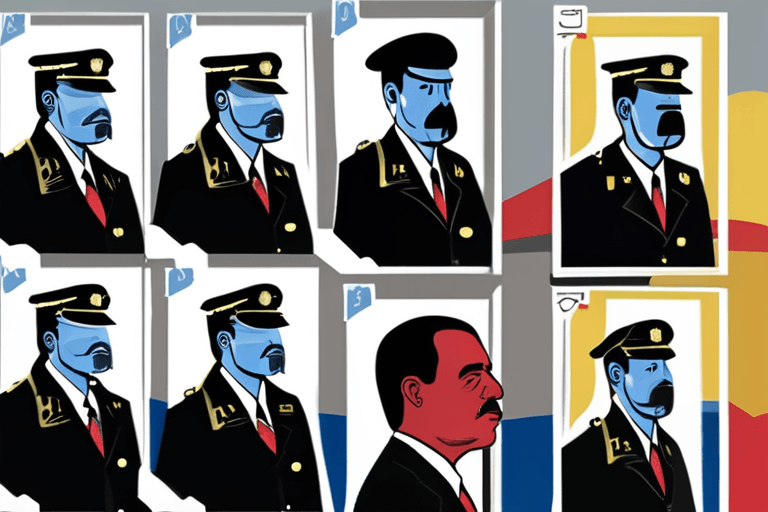
U.S. President Donald Trump announced the capture of Venezuelan President Nicolás Maduro following a large-scale operation in Venezuela conducted in conjunction with U.S. law enforcement. Maduro and his wife were flown to New York, where they face charges related to drug and weapons offenses, according to Trump's Saturday press conference. The capture followed reports of explosions in Caracas early Saturday morning, including incidents at military bases, prompting the Venezuelan government to deploy its armed forces and declare a national emergency.
The U.S. action comes amid escalating tensions between Washington and Caracas. The U.S. has recently targeted boats in the Caribbean, alleging they were being used for drug trafficking. Washington has repeatedly accused Maduro of direct involvement in drug smuggling and has questioned the legitimacy of his leadership. Maduro, in turn, has accused the U.S. of intimidation and of seeking to exploit Venezuela's oil reserves.
During the press conference, President Trump stated the U.S. would "run" Venezuela "until a s[table situation is achieved]," though he did not elaborate on the specific mechanisms or duration of this proposed U.S. administration. The White House has not yet released a detailed plan for the interim governance of Venezuela.
The Venezuelan government has yet to issue a formal statement beyond the initial declaration of a national emergency. Regional reactions have been mixed, with some nations expressing concern over the intervention and others remaining silent. The United Nations has not yet commented on the situation.
The charges against Maduro in New York are expected to be formally presented in the coming days. The legal proceedings and the U.S. plan for governing Venezuela are likely to face significant international scrutiny and legal challenges. The immediate future of Venezuela remains uncertain as the U.S. outlines its strategy for the country's administration.
















Discussion
Join the conversation
Be the first to comment