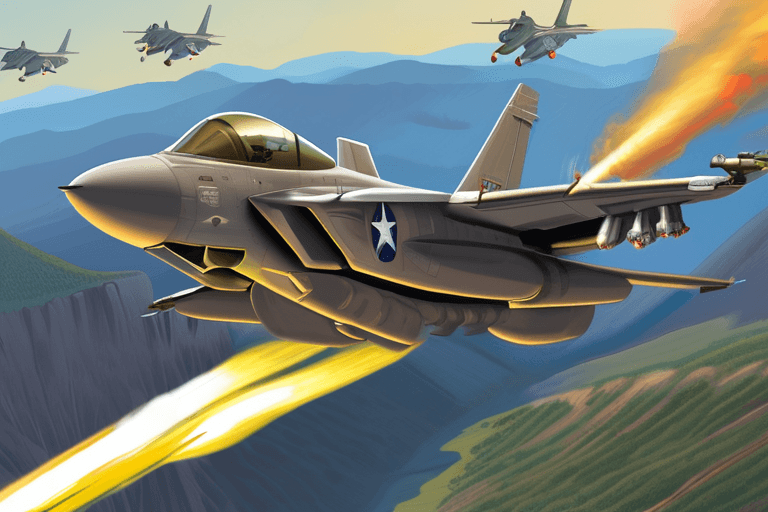
The pre-dawn sky over Venezuela crackled with an unseen force, a silent armada of American air power poised to execute a mission of unprecedented audacity. More than 150 U.S. military aircraft, a mix of stealth fighters, bombers, and specialized support planes, were deployed in a high-stakes operation to capture Venezuelan President Nicolás Maduro, a move that would send shockwaves through the international community. The mission, personally authorized by President Trump, aimed to bring Maduro to the United States to face trial.
The roots of this dramatic intervention lie in the escalating tensions between the U.S. and Venezuela. Years of political instability, economic collapse, and accusations of corruption had painted Maduro as an authoritarian figure in the eyes of the U.S. government. The Trump administration had long sought to isolate Maduro, imposing sanctions and recognizing opposition leader Juan Guaidó as the legitimate president. This military operation represented a significant escalation, a bold gamble with potentially far-reaching consequences.
The operation itself was a complex dance of technology and human action. According to President Trump's account on Fox Friends Weekend, Maduro was holed up in a heavily fortified presidential palace, a virtual fortress designed to withstand external threats. "Maduro was in a fortress," Trump stated, emphasizing the security measures surrounding the Venezuelan leader. The American forces, equipped with advanced surveillance technology and weaponry, including "massive blowtorches" to breach steel walls, were prepared for a protracted siege. Trump described Maduro's near miss, "He didnt get that space closed. He was trying to get into it, but he got bum-rushed right so." The narrative paints a picture of a desperate attempt to secure himself in a safe room, only to be apprehended before he could fully seal himself off. Maduro and his wife, Cilia Flores, were then reportedly transported by helicopter to a U.S. warship, marking the culmination of the operation.
The sheer scale of the air power involved raises questions about the role of artificial intelligence in modern warfare. AI algorithms are increasingly used in military operations for tasks ranging from target identification and threat assessment to autonomous navigation and drone control. The ability to coordinate and manage over 150 aircraft in a complex, time-sensitive mission likely relied heavily on AI-powered systems. These systems can analyze vast amounts of data in real-time, optimizing flight paths, allocating resources, and predicting potential threats.
"AI is transforming the battlefield," explains Dr. Anya Sharma, a leading expert in AI and national security at the Center for Strategic Studies. "It allows for faster decision-making, increased precision, and reduced risk to human soldiers. However, it also raises ethical concerns about accountability and the potential for unintended consequences."
The use of AI in such operations also has implications for international law and the future of warfare. As AI systems become more sophisticated, the lines between human and machine decision-making become increasingly blurred. This raises questions about who is responsible when an AI system makes a mistake or causes unintended harm.
The capture of Maduro, if the details as presented are accurate, represents a significant victory for the U.S. government. However, it also carries the risk of destabilizing the region and further alienating Venezuela. The long-term consequences of this operation remain to be seen, but it is clear that the use of advanced technology, including AI, will continue to play an increasingly important role in shaping the future of international relations and military conflict. The ethical and legal implications of these technologies must be carefully considered as they become more integrated into the fabric of modern warfare.















Discussion
Join the conversation
Be the first to comment