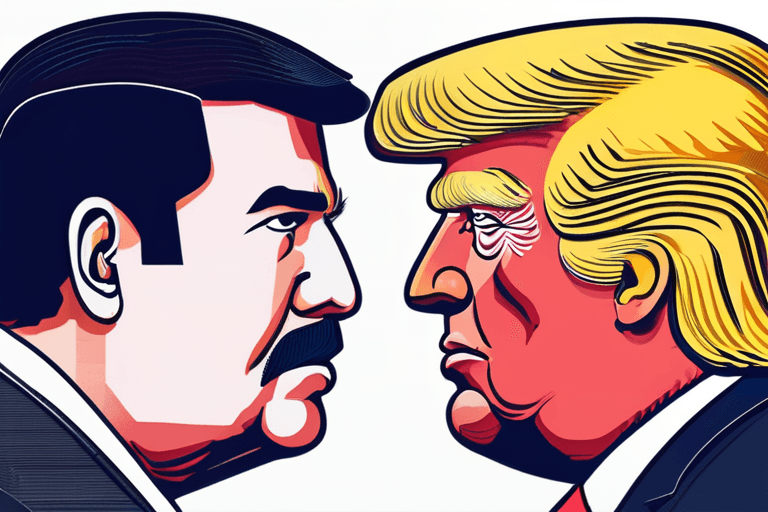
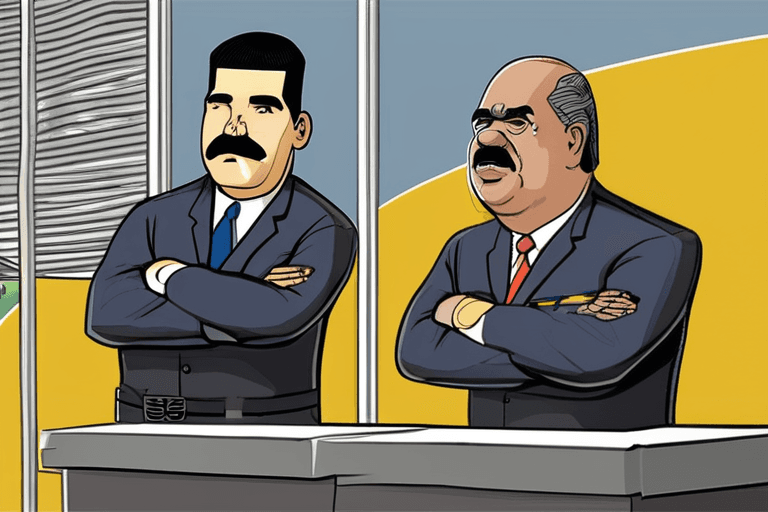
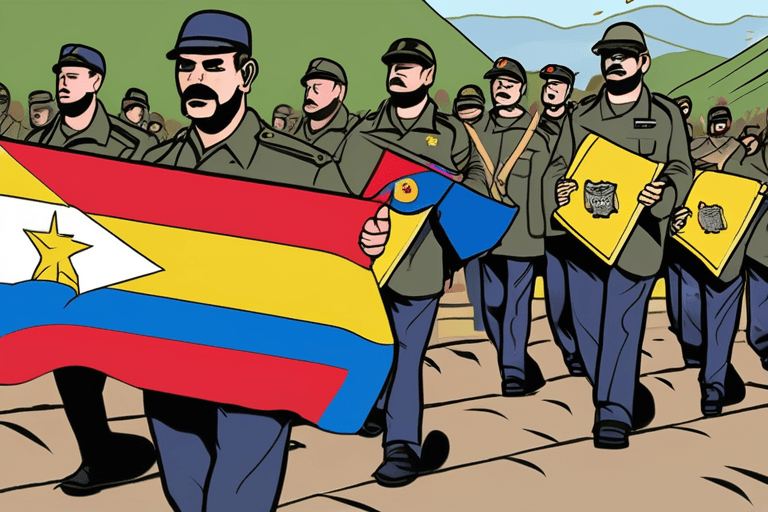
The world watched, stunned, as news broke on a Saturday morning: US forces had captured Venezuelan President Nicolás Maduro. President Trump, in a televised address, declared the operation a success, stating Maduro was en route to New York to face justice. But behind this dramatic capture lies a complex web of escalating tensions, geopolitical strategy, and the ever-present influence of artificial intelligence in modern conflict.
The seeds of this event were sown long before the military operation. For months, the US had ratcheted up pressure on Maduro's regime, citing human rights abuses, corruption, and the country's economic collapse. Sanctions, diplomatic isolation, and support for the opposition had become the hallmarks of US policy. The situation was a powder keg, and the capture of Maduro was the spark.
The military operation itself was a marvel of modern warfare, heavily reliant on AI-driven intelligence gathering and analysis. Sophisticated algorithms sifted through massive datasets – satellite imagery, social media chatter, intercepted communications – to pinpoint Maduro's location and predict his movements. AI-powered drones provided real-time surveillance, while autonomous vehicles secured the perimeter. The entire operation was orchestrated with a level of precision previously unimaginable, showcasing the growing role of AI in military strategy.
"AI is no longer a futuristic concept; it's an integral part of modern warfare," explains Dr. Anya Sharma, a leading expert in AI and international security at the Institute for Strategic Studies. "It allows for faster decision-making, improved situational awareness, and the ability to execute complex operations with minimal human risk."
However, the use of AI in such a sensitive operation raises profound ethical and societal questions. The potential for algorithmic bias, the lack of human oversight, and the risk of unintended consequences are all serious concerns. Critics argue that relying too heavily on AI can dehumanize warfare and erode accountability.
"We need to have a serious conversation about the ethical implications of AI in military operations," warns Professor David Chen, a philosopher specializing in AI ethics at the University of California, Berkeley. "Who is responsible when an AI makes a mistake? How do we ensure that AI is used in accordance with international law and human rights principles?"
The capture of Maduro serves as a stark reminder of the transformative power of AI in shaping global events. As AI technology continues to advance, its influence on international relations, military strategy, and the very nature of conflict will only grow. Understanding the capabilities and limitations of AI, as well as addressing the ethical challenges it poses, is crucial for navigating the complex and uncertain future of international relations. The world must grapple with these questions to ensure that AI serves humanity, rather than the other way around.














Discussion
Join the conversation
Be the first to comment