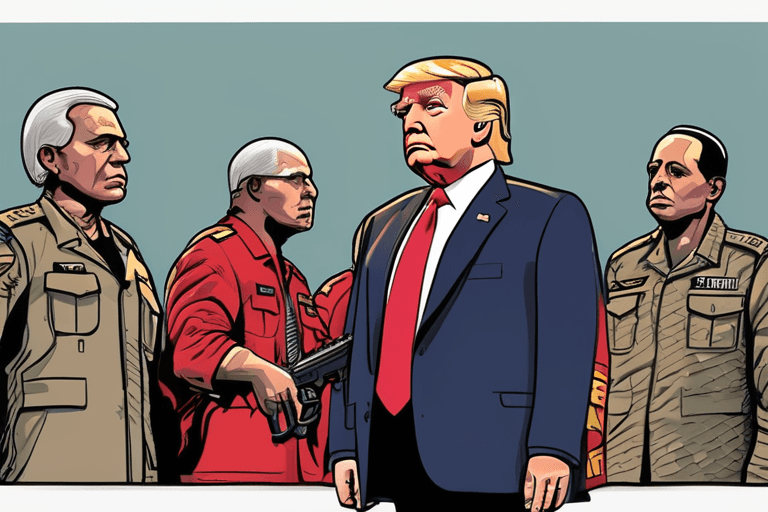
A tense calm settled over Caracas as dawn broke on January 3, 2026. The previous day, the world watched in stunned disbelief as US forces, under the direction of then-President Donald Trump, executed a daring military operation culminating in the capture of Venezuelan President Nicolás Maduro. The news, delivered via Trump's characteristic morning announcement, sent shockwaves through the international community, raising profound questions about sovereignty, intervention, and the increasingly blurred lines of 21st-century warfare. But what chain of events led to this unprecedented act?
The seeds of this dramatic intervention were sown long before the predawn raids. For months, tensions between the US and Venezuela had been steadily escalating. Washington, accusing Maduro's regime of corruption, human rights abuses, and undermining democratic institutions, had imposed a series of sanctions aimed at crippling the Venezuelan economy. These sanctions, while intended to pressure Maduro, exacerbated an already dire humanitarian crisis, pushing millions into poverty and fueling mass emigration.
The US also recognized opposition leader Juan Guaidó as the legitimate president of Venezuela, further isolating Maduro on the world stage. This recognition, coupled with increasingly bellicose rhetoric from the Trump administration, created a powder keg atmosphere. The US justified its actions by invoking the Responsibility to Protect (R2P) doctrine, a controversial principle that asserts a nation's right to intervene in another country when its government fails to protect its own citizens from mass atrocities.
The actual operation, as described by Trump, involved large-scale strikes on Venezuelan military targets, followed by a targeted extraction of Maduro. The speed and precision of the operation suggested the use of advanced intelligence gathering and potentially, autonomous weapons systems. While details remain classified, analysts speculate that AI-powered surveillance drones played a crucial role in locating and tracking Maduro's movements. These drones, equipped with facial recognition technology and advanced data analytics, could have provided real-time intelligence, enabling US forces to execute the capture with minimal risk.
"The use of AI in modern warfare is no longer a futuristic fantasy; it's a present-day reality," explains Dr. Anya Sharma, a professor of international relations at MIT specializing in the ethics of AI in warfare. "AI algorithms can analyze vast amounts of data, identify patterns, and make predictions with speed and accuracy that far exceeds human capabilities. This can provide a significant advantage in military operations, but it also raises serious ethical concerns about accountability and the potential for unintended consequences."
The capture of Maduro raises complex questions about the future of international relations and the role of AI in shaping geopolitical events. While proponents argue that such interventions are necessary to prevent humanitarian disasters and uphold democratic values, critics warn that they undermine international law and set a dangerous precedent for unilateral action. The use of AI in these operations further complicates the ethical landscape, raising concerns about the potential for algorithmic bias and the erosion of human control over lethal force.
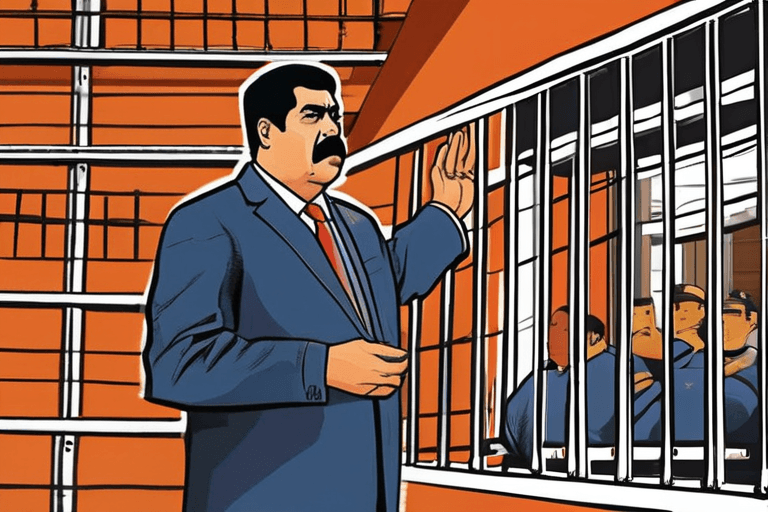
As Maduro awaits trial in New York, the world grapples with the implications of this unprecedented event. The capture serves as a stark reminder of the evolving nature of warfare and the urgent need for international dialogue on the ethical and legal implications of AI in military operations. The future of international relations may well depend on our ability to navigate these complex challenges and ensure that technology serves humanity, rather than the other way around.














Discussion
Join the conversation
Be the first to comment