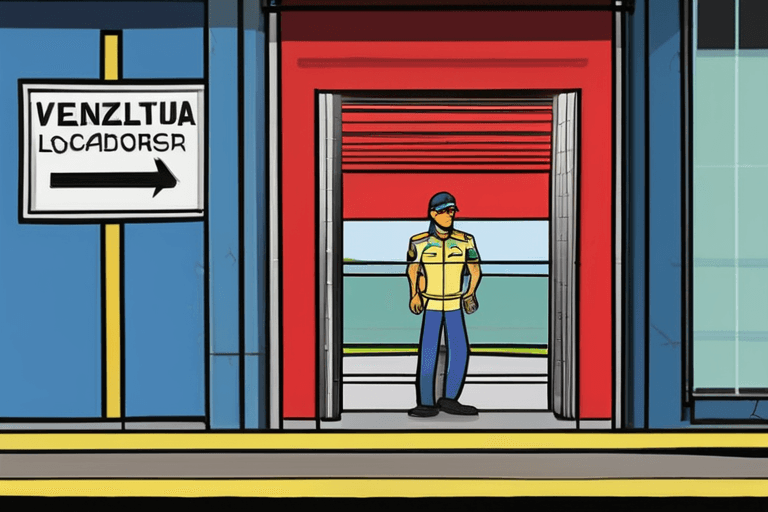
Venezuela temporarily closed its border with Brazil on Saturday following a United States military attack on Caracas, during which U.S. forces captured President Nicolas Maduro and his wife, Cilia Flores. The border crossing between Pacaraima, Brazil, and Santa Elena de Uairen, Venezuela, was closed on the Venezuelan side for approximately five hours, preventing citizens from entering Brazil, according to a Brazilian military official who spoke to Al Jazeera.
The closure occurred without formal notification regarding entry and exit criteria. The official stated that while Brazilians were permitted to leave Venezuela, Venezuelans were blocked from entering Brazil. The reason for the border closure has not been officially stated by Venezuelan authorities beyond the context of the U.S. military action.
The U.S. attack on Caracas and the capture of Maduro have triggered varied reactions. Protesters gathered outside Venezuela's Embassy in Brasilia on Saturday to demonstrate against the U.S. intervention. Domestically, the U.S. action has drawn criticism from some Democrats, who have called the attack illegal. Former President Trump has stated that the U.S. will administer Venezuela following Maduro's removal. Neighboring Colombia is reportedly bracing for potential instability following the change in leadership in Venezuela.
The situation highlights the increasing role of artificial intelligence in international relations and military strategy. AI algorithms are being used to analyze geopolitical risks, predict potential conflicts, and even guide military operations. The U.S. military, for example, has invested heavily in AI-powered surveillance systems that can monitor borders and identify potential threats. The speed and scale at which AI can process information allows for quicker decision-making, but also raises ethical concerns about bias and accountability.
The use of AI in military operations also has implications for international law. The question of who is responsible when an AI system makes a mistake or causes unintended harm is a complex one. Some experts argue that AI systems should be subject to the same rules of engagement as human soldiers, while others believe that new legal frameworks are needed to address the unique challenges posed by AI.
As of Sunday, the border between Brazil and Venezuela has reportedly reopened, but tensions remain high. The long-term implications of Maduro's removal and the U.S. intervention for regional stability and the future of Venezuelan-Brazilian relations are still unfolding. The situation is being closely monitored by international organizations and governments around the world.















Discussion
Join the conversation
Be the first to comment