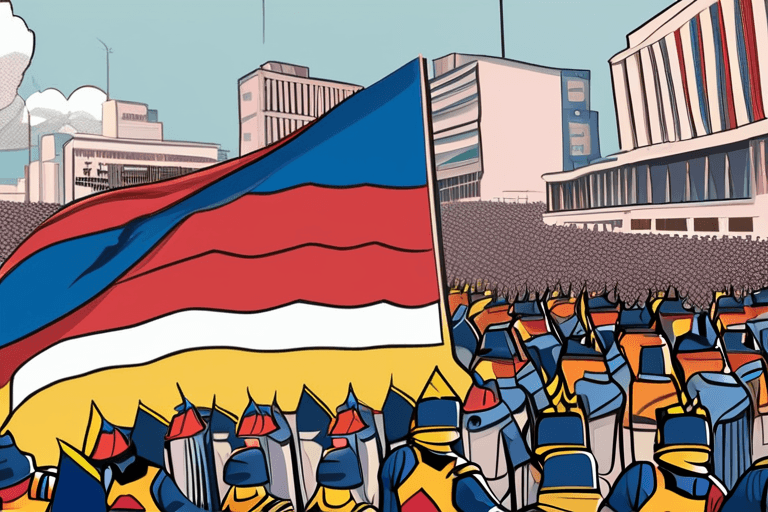
U.S. special forces seized Venezuelan President Nicolas Maduro and his wife in an operation that took place on January 3, 2026, according to reports. The unexpected action has sent shockwaves through Venezuela and the international community, raising serious questions about the future of the country and U.S. foreign policy in Latin America.
The U.S. government has long accused Maduro of heading a narcotics cartel, allegations he has consistently denied. The operation’s specifics remain unclear, but the implications are far-reaching, potentially destabilizing the already fragile political landscape of Venezuela and impacting international relations.
"This is an unprecedented move that violates international law and the sovereignty of Venezuela," said Temir Porras, foreign policy advisor to former Venezuelan President Hugo Chavez and former chief of staff to Maduro. "It will undoubtedly escalate tensions in the region and could lead to further instability."
Venezuela has been grappling with a severe economic crisis, political turmoil, and widespread social unrest for years. Maduro's leadership has been heavily criticized by international organizations and many countries, who accuse him of authoritarianism and human rights abuses. The U.S. has previously imposed sanctions on Venezuelan officials and entities in an attempt to pressure Maduro to step down.
Richard Weitz, a U.S. security analyst and senior fellow at the NATO Defense College, noted the potential ramifications for U.S. foreign policy. "This action could be seen as a dangerous precedent, potentially emboldening other nations to intervene in the affairs of sovereign states," Weitz stated. "It also raises questions about the long-term strategy for Venezuela and the region."
The move has drawn condemnation from some international actors, who view it as a violation of international law and an infringement on Venezuelan sovereignty. Other nations have expressed cautious support, citing concerns about human rights and the rule of law in Venezuela.
Phil Gunson, senior analyst for the Andes Project at the International Crisis Group, emphasized the uncertainty surrounding the situation. "The immediate aftermath will likely be marked by heightened tensions and a power vacuum in Venezuela," Gunson said. "The key question is who will step in to fill that void and what role the international community will play in shaping the country's future."
The current status of Maduro and his wife is unknown. The U.S. government has yet to issue a formal statement regarding the operation, but officials are expected to address the situation in the coming days. The international community is closely monitoring developments, and diplomatic efforts are underway to de-escalate tensions and find a peaceful resolution to the crisis. The future of Venezuela and its relationship with the U.S. remains uncertain.













Discussion
Join the conversation
Be the first to comment