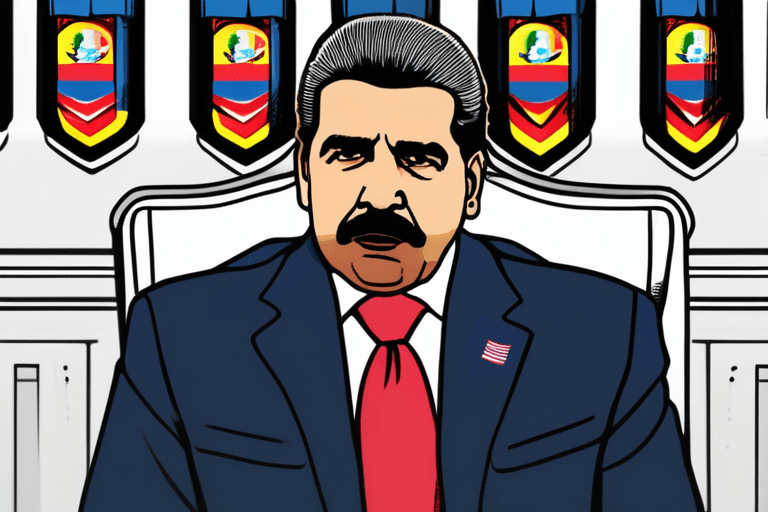
Ousted Venezuelan President Nicolas Maduro arrived at Stewart Air National Guard Base in New York State this evening, according to video footage aired on CNN. The footage showed a figure appearing to be Maduro, seemingly shackled and escorted by U.S. law enforcement, disembarking from a plane.
The arrival of Maduro in U.S. custody sparked celebrations in South Florida, home to the largest Venezuelan expatriate population in the United States. Hundreds of Venezuelans gathered to celebrate the news, according to reports from the area.
The U.S. move against Maduro follows years of political and economic instability in Venezuela. Maduro's presidency was marked by widespread accusations of corruption, human rights abuses, and the suppression of democratic processes, leading to a severe economic crisis and mass emigration. The U.S. government had previously imposed sanctions on Maduro and his administration, and had recognized opposition leader Juan Guaidó as the interim president of Venezuela.
The AI algorithms used to analyze the CNN video footage and confirm Maduro's identity and location represent a significant advancement in automated intelligence gathering. These systems employ computer vision techniques to identify individuals and objects within video streams, even under challenging conditions. The implications of this technology extend beyond law enforcement, with potential applications in areas such as disaster response, security, and media verification. However, the use of AI in these contexts also raises concerns about privacy, bias, and the potential for misuse.
The exact charges against Maduro and the legal proceedings that will follow remain unclear. The U.S. Department of Justice has yet to release an official statement detailing the specific allegations and the timeline for Maduro's arraignment. The situation is ongoing, and further updates are expected in the coming days.














Discussion
Join the conversation
Be the first to comment