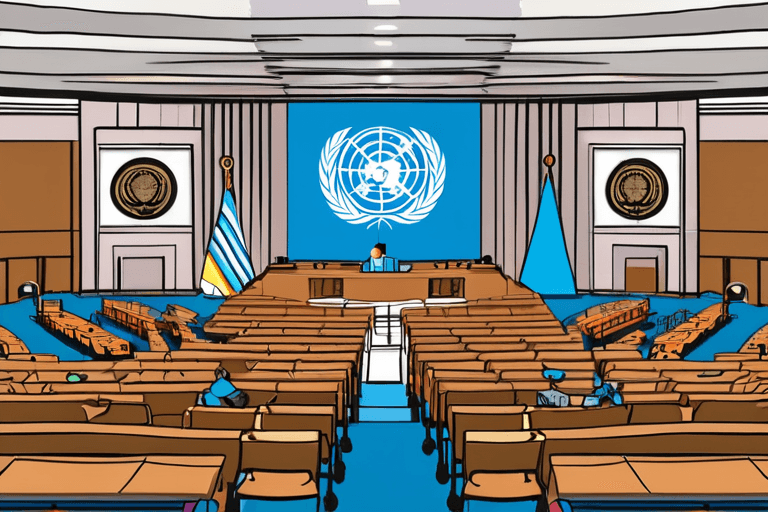
Baerbock emphasized the need for the UN to adapt to the evolving geopolitical landscape, acknowledging that progress towards ending hunger and reducing inequality has stalled, despite pledges made three decades ago. She pointed to the proliferation of wars and the paralyzing effect of vetoes within the UN Security Council as major impediments to effective action. The UN Security Council, composed of 5 permanent members (China, France, Russia, the United Kingdom, and the United States) each holding veto power, has long been criticized for its inability to respond decisively to conflicts due to disagreements among its members.
The discussion also explored the potential for the UN General Assembly, which includes all 193 member states, to play a more assertive role in driving reform. While the Security Council holds primary responsibility for maintaining international peace and security, the General Assembly can serve as a platform for broader discussions and resolutions on global issues. Baerbock suggested that a more empowered General Assembly could help to overcome the gridlock within the Security Council and accelerate progress towards the Sustainable Development Goals.
The Sustainable Development Goals, adopted by all UN member states in 2015, represent a comprehensive agenda for achieving a more sustainable and equitable world by 2030. They address a wide range of issues, including poverty, hunger, health, education, climate change, and inequality. However, with less than a decade remaining, progress towards many of these goals is lagging, raising concerns about the UN's ability to deliver on its promises.
The interview with Baerbock comes at a time of increasing skepticism towards multilateral institutions. Critics argue that the UN is too bureaucratic, inefficient, and beholden to the interests of powerful member states. Others maintain that the UN remains an indispensable forum for international cooperation and a vital tool for addressing global challenges. The debate over the UN's role and effectiveness is likely to continue as the world grapples with complex and interconnected crises.














Discussion
Join the conversation
Be the first to comment