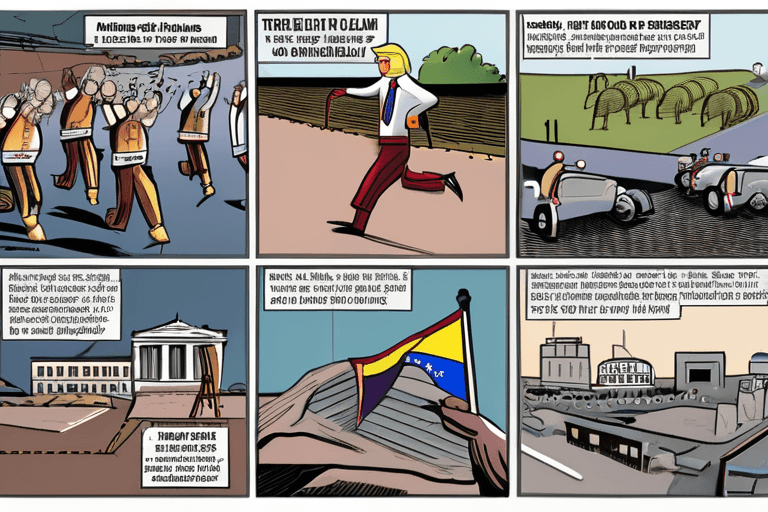
U.S. President Donald Trump stated that the U.S. is going to "run" Venezuela, raising questions about the future of U.S. involvement in the South American nation and its implications for Venezuelan sovereignty. The statement, made during a press conference at Mar-a-Lago in Palm Beach, Florida, on Saturday, followed a Delta Force raid on a safe house in Venezuela, which resulted in Nicolás Maduro being removed from power.
The remark has sparked international debate, with some interpreting it as a sign of increased U.S. interventionism in the region. The U.S. has been building up military forces around Venezuela for months, targeting alleged drug boats and seizing sanctioned oil tankers, actions that have already strained relations with Maduro's government.
Venezuela has been in a state of political and economic crisis for years, marked by hyperinflation, shortages of basic goods, and widespread emigration. Maduro, who assumed the presidency in 2013 after the death of Hugo Chávez, has faced accusations of authoritarianism and human rights abuses. The U.S. and other countries have recognized opposition leader Juan Guaidó as the legitimate interim president of Venezuela, though Maduro has maintained control of the government.
The concept of one nation "running" another evokes historical precedents of colonialism and neocolonialism, raising concerns about the potential erosion of Venezuelan self-determination. Latin America has a long history of U.S. intervention, from the Monroe Doctrine in the 19th century to support for military dictatorships during the Cold War. These interventions have often been justified in the name of promoting democracy or protecting U.S. interests, but have frequently resulted in political instability and resentment.
Critics of U.S. policy toward Venezuela argue that intervention, whether military or economic, risks exacerbating the crisis and undermining regional stability. They advocate for a negotiated solution involving all Venezuelan stakeholders, as well as international actors such as the United Nations and the European Union.
The future of Venezuela remains uncertain. The U.S. government has not yet clarified what Trump's statement means in concrete terms. The international community is watching closely to see how the situation unfolds and what role the U.S. will play in shaping Venezuela's future.















Discussion
Join the conversation
Be the first to comment