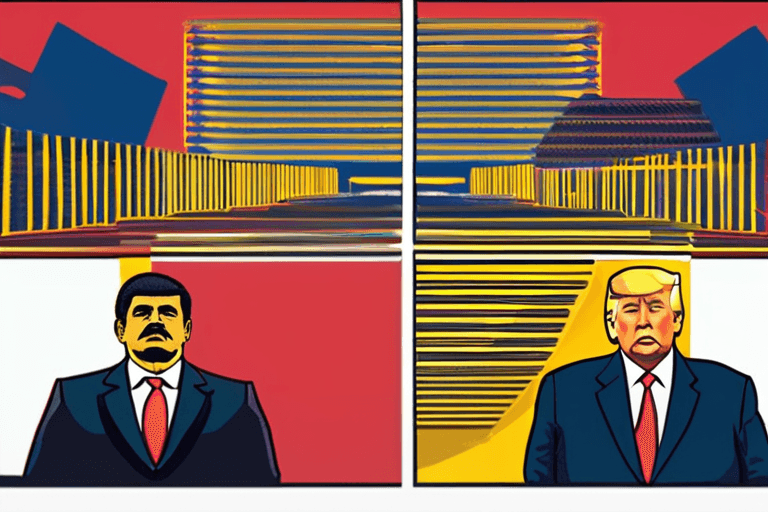
On orders from U.S. President Donald Trump, Venezuelan leader Nicolás Maduro is in U.S. custody, marking a significant escalation in U.S. foreign policy and raising concerns about the potential for authoritarian regimes to emulate this action globally. Trump announced the development at a news conference at his Mar-a-Lago resort in Florida, stating that the U.S. would be in charge of Venezuela "until such time as we can do a safe, proper and judicious transition."
The U.S. president's decision to seize Maduro demonstrates a willingness to use military force to achieve political objectives, a move that international editor Jeremy Bowen described as potentially setting a precedent for authoritarian powers worldwide. Trump indicated a readiness to deploy troops if necessary, stating, "We're not afraid of boots on the ground if we have to have them."
Secretary of State Marco Rubio reportedly spoke with Venezuelan Vice-President Delcy Rodríguez, who, according to Trump, indicated a willingness to cooperate, stating "we'll do whatever you need... She, I think, was quite gracious, but she really doesn't have a choice."
The situation raises questions about the long-term implications for international relations and the potential for other nations to justify interventionist policies based on this precedent. The lack of specific details from Trump regarding the transition process in Venezuela also adds uncertainty to the situation.
The U.S. has long been involved in Venezuelan politics, with previous administrations expressing concerns about Maduro's leadership and the country's economic crisis. This latest action, however, represents a significant departure from previous strategies, marking a direct intervention in the country's leadership. The immediate future of Venezuela remains uncertain, with the U.S. now tasked with managing the country's transition.














Discussion
Join the conversation
Be the first to comment