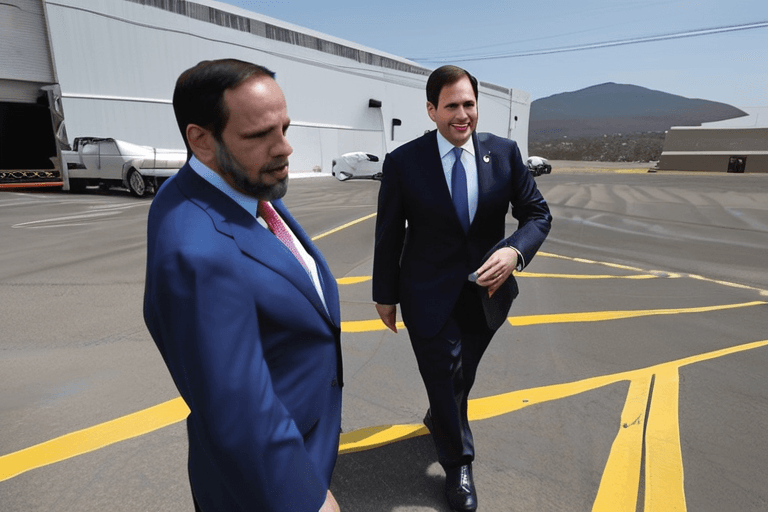
U.S. Secretary of State Marco Rubio indicated on Sunday that the United States would not engage in day-to-day governance of Venezuela beyond enforcing an existing oil quarantine, a statement that followed President Donald Trump's announcement a day earlier suggesting a more direct U.S. role in running the country after the removal of Nicolás Maduro. Rubio's remarks, made during television appearances, appeared to address concerns that the U.S. action to facilitate regime change could lead to a protracted foreign intervention or a failed nation-building effort, reminiscent of past experiences in regions like Iraq and Afghanistan.
Rubio's statements contrasted with Trump's broader assertions that the U.S. would at least temporarily oversee the oil-rich nation, implying a governing structure under Washington's control. "And so that's the sort of control the president is pointing to when he says that," Rubio said on CBS' "Face the Nation," clarifying the extent of U.S. involvement. "We continue to enforce an oil quarantine that was already in place on sanctioned tankers before Maduro was removed from power early Saturday and use that leverage as a means to press policy changes in Venezuela."
The existing oil quarantine, a key component of U.S. sanctions against the Maduro regime, aims to restrict Venezuela's access to international oil markets, a crucial source of revenue for the country. These sanctions, initially imposed in 2019, were designed to pressure Maduro to step down and allow for free and fair elections. The U.S. has long accused Maduro of authoritarianism, human rights abuses, and economic mismanagement, contributing to a severe humanitarian crisis in Venezuela.
The situation in Venezuela has drawn international attention and sparked debate over the legitimacy of external intervention in sovereign nations. While the U.S. and several other countries recognized opposition leader Juan Guaidó as the interim president in 2019, Maduro maintained power with the support of the military and allies like Russia, China, and Cuba. These nations have consistently condemned U.S. sanctions and interference in Venezuela's internal affairs, viewing them as violations of international law and sovereignty.
The prospect of direct U.S. governance in Venezuela raised concerns among some international observers, who pointed to the potential for exacerbating existing political divisions and undermining the country's long-term stability. The history of U.S. involvement in Latin America, including interventions in Chile, Panama, and Grenada, has fueled skepticism about Washington's motives and the potential consequences of its actions.
As of Monday, the specifics of the U.S. approach to Venezuela remained somewhat unclear, with Rubio's emphasis on the oil quarantine suggesting a more limited and targeted strategy than initially indicated by President Trump. The international community continues to monitor the situation closely, with many calling for a peaceful and negotiated resolution to the political crisis that respects Venezuela's sovereignty and allows its people to determine their own future.















Discussion
Join the conversation
Be the first to comment