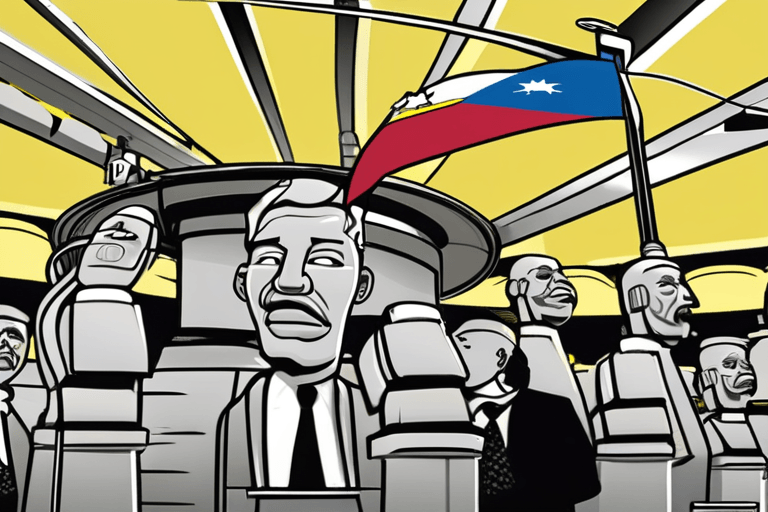
Following the U.S. seizure and removal of Venezuela's president, the question of who holds power in the nation remains complex. Manuel Rueda, reporting from Bogotá, Colombia, indicates a power vacuum exists, prompting uncertainty about the country's leadership.
The U.S. action, the details of which are still emerging, has created a situation where traditional lines of authority are blurred. The removal of the president raises questions about the legitimacy of any successor and the potential for instability.
Historically, Venezuela has experienced periods of political turmoil and economic hardship. The nation's vast oil reserves have often been at the center of political struggles, attracting international interest and intervention. The current situation echoes past instances where external forces have influenced Venezuelan politics.
The implications of this power vacuum are far-reaching. Without a clear leader, Venezuela could face challenges in maintaining order, managing its economy, and engaging with the international community. Neighboring countries and international organizations are likely monitoring the situation closely, considering their response.
As of January 4, 2026, the specific mechanisms for establishing new leadership in Venezuela are unclear. The U.S. has not yet outlined its long-term plans for the country, and various factions within Venezuela may be vying for power. The coming days and weeks will be crucial in determining the future of Venezuelan governance.












Discussion
Join the conversation
Be the first to comment