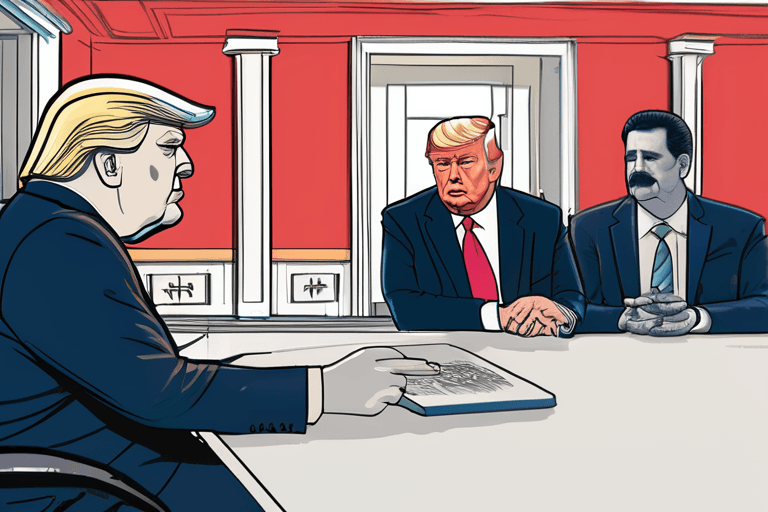
On orders from U.S. President Donald Trump, Venezuelan leader Nicolás Maduro is in U.S. custody, marking a significant escalation in U.S. foreign policy and raising concerns about the potential for authoritarian regimes to emulate this action globally. Trump announced the development at a news conference at his Mar-a-Lago resort in Florida, stating that the U.S. would be in charge of Venezuela "until such time as we can do a safe, proper and judicious transition."
The U.S. president’s decision to seize Maduro demonstrates a willingness to use military force to achieve political objectives, according to Jeremy Bowen, international editor at the BBC. This action could establish a precedent that other nations might follow, potentially destabilizing international relations and undermining established norms of sovereignty.
Trump indicated a readiness to deploy troops if necessary, stating, "We're not afraid of boots on the ground if we have to have them." He also mentioned that Secretary of State Marco Rubio had spoken with Venezuelan Vice-President Delcy Rodríguez, who reportedly expressed a willingness to cooperate.
The details of how the U.S. intends to govern Venezuela remain unclear. The situation raises questions about the long-term implications of intervening in the internal affairs of sovereign nations and the potential for unintended consequences.
The U.S. action in Venezuela occurs against a backdrop of ongoing political and economic instability in the country. Maduro's government has faced widespread criticism for its human rights record and economic policies, leading to protests and international condemnation. The U.S. has long been critical of Maduro's regime, imposing sanctions and supporting opposition forces.
The current status of Venezuela's government and the immediate plans for a transition remain uncertain. The international community is closely watching the situation, with some nations likely to condemn the U.S. intervention while others may offer support. The next steps will likely involve negotiations between the U.S. and Venezuelan officials, as well as discussions with other international actors, to determine the future of Venezuela's leadership and governance.














Discussion
Join the conversation
Be the first to comment